To Lam Affirms Vietnam as a Socio-Economic Model and Expands Strategic Partnerships at the 20th Francophonie Summit

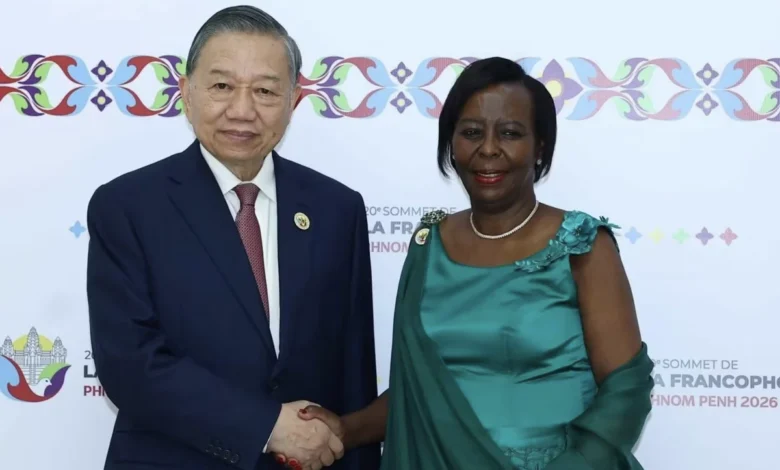
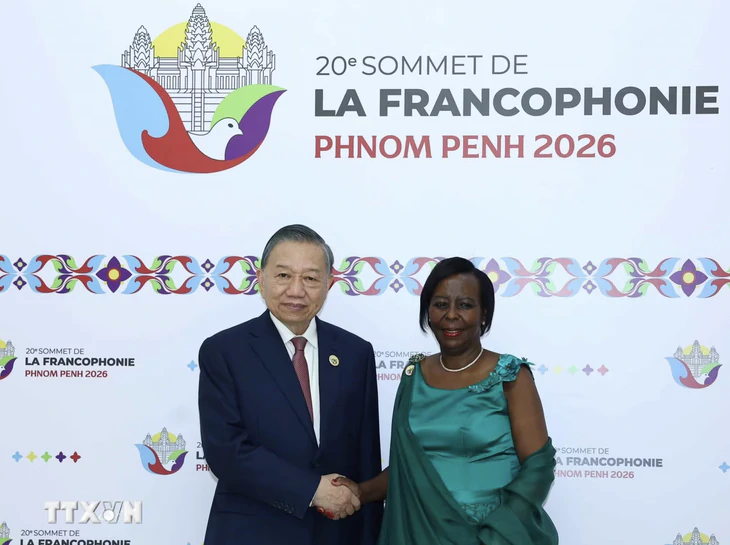
The 20th Francophonie Summit (Sommet de la Francophonie), convened in Phnom Penh, Cambodia, served as a high-level diplomatic stage where Vietnam’s leadership actively reinforced its geopolitical and economic footprint. General Secretary and President To Lam engaged in a series of crucial bilateral meetings on the sidelines of the summit on November 15, holding strategic discussions with high-ranking dignitaries, including International Organisation of La Francophonie (OIF) Secretary-General Louise Mushikiwabo, Bulgarian President Iliana Yotova, and Benin President Romuald Wadagni.
Concurrently, Vietnamese Deputy Minister of Foreign Affairs Le Hoai Trung spearheaded parallel diplomatic engagements with ministerial counterparts from Côte d’Ivoire, Angola, and Cameroon. These discussions underscored Vietnam’s multi-directional foreign policy, which values traditional multilateral frameworks while systematically cultivating deeper south-south cooperation, particularly with emerging economies in Africa and Eastern Europe.
Deepening Vietnam-OIF Partnership and Economic Diplomacy
During the bilateral meeting between General Secretary and President To Lam and OIF Secretary-General Louise Mushikiwabo, the leadership of the international organization lauded Vietnam’s strategic socio-economic development trajectory. Secretary-General Mushikiwabo explicitly designated Vietnam as a role model for economic and social advancement among the 88 member states and governments of the Francophone community.
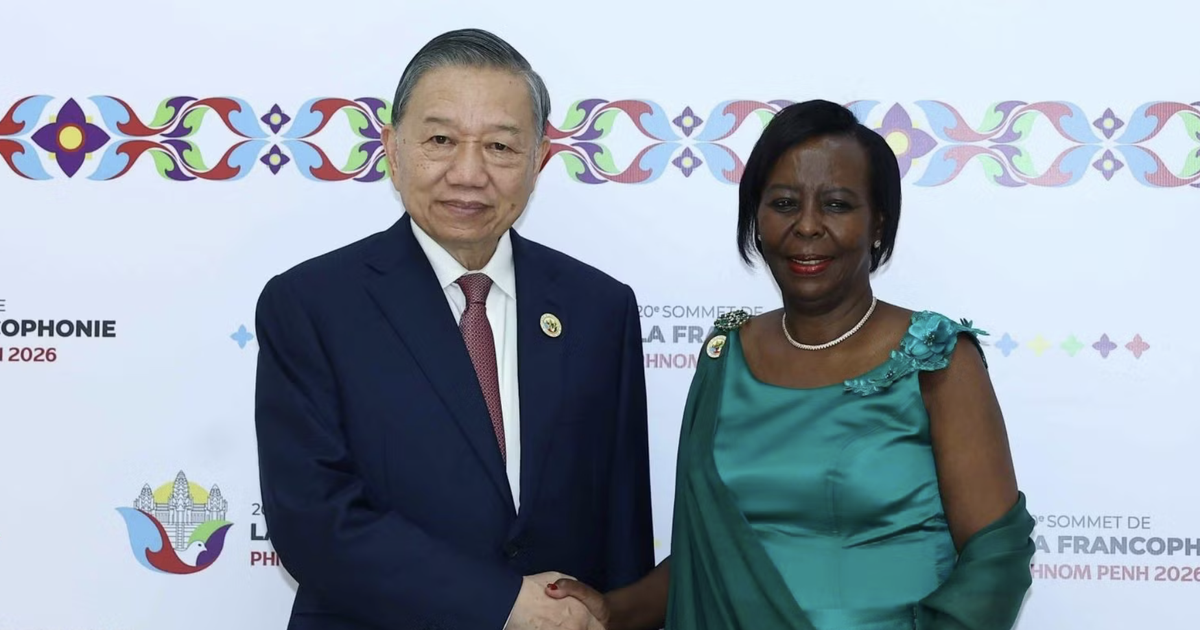
The dialogue focused heavily on enhancing functional cooperation between Vietnam and the OIF. Both parties committed to bolstering collaboration in key sectors, including French-language education and promotion, trade and investment, science and technology, sustainable agriculture, and green transition initiatives. Recognizing the dynamic potential of the African continent, where a significant portion of Francophone nations reside, Mushikiwabo affirmed the OIF’s readiness to act as a institutional bridge linking Vietnam with African markets, leveraging both organizational and personal networks to facilitate trade.
General Secretary and President To Lam expressed gratitude for the OIF’s continued support and outlined Vietnam’s strategic vision for the organization in an increasingly complex global landscape. The Vietnamese leader emphasized that the OIF must proactively amplify its core strengths in promoting international dialogue, strengthening solidarity, consolidating mutual trust, preventing conflicts, and advancing peaceful resolutions to global disputes. Furthermore, To Lam urged the organization to unlock the economic potential of the Francophone space by accelerating trade, commerce, and investment ties.
To further cement this partnership, the Vietnamese leader proposed that the OIF expand its technical assistance programs tailored for Vietnam. This includes specialized French-language training for diplomats, civil servants, and Vietnamese personnel deployed to United Nations peacekeeping operations, thereby cementing Vietnam’s role as an active and responsible contributor to global security.
Strengthening Historic Ties and High-Tech Ventures with Bulgaria
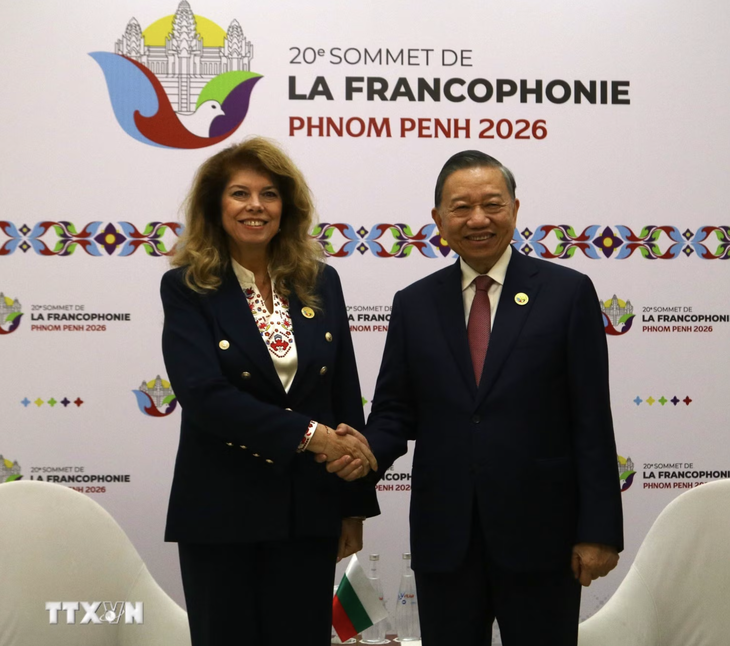
Moving beyond multilateral platforms, General Secretary and President To Lam held a substantive meeting with newly elected Bulgarian President Iliana Yotova. Commemorating 76 years of unbroken diplomatic relations, both leaders reflected on the robust historical foundations linking Hanoi and Sofia. President Yotova noted that the landmark state visit to Bulgaria by the Vietnamese leader in 2025 marked a historic turning point, creating a fresh and dynamic momentum in bilateral relations.
Looking forward to the upcoming 70th anniversary of President Ho Chi Minh’s historic visit to Bulgaria in 2027, the two heads of state agreed to elevate their bilateral Strategic Partnership to new heights. Economic cooperation took center stage, with both leaders setting a resolute target to push bilateral trade turnover past the $500 million threshold in the near term, accompanied by mechanisms to scale it up further.
To achieve these economic goals, Hanoi and Sofia agreed to catalyze joint ventures and capital investments in high-potential, high-tech domains. These include artificial intelligence, digital transformation, semiconductor manufacturing, innovation ecosystems, and defense industry cooperation. Building upon previous high-level exchanges—such as To Lam’s visit to specialized defense and drone facilities in Bulgaria—both nations recognized the natural complementarities of their knowledge-based economies. President Yotova expressed profound admiration for Vietnam’s rapid advancements in science and technology, confirming that numerous Bulgarian enterprises specializing in artificial intelligence are actively seeking partnership opportunities within the Vietnamese market. The leaders concluded their meeting by exchanging invitations for reciprocal high-level state visits.
Fostering South-South Cooperation and Administrative Reform with Benin
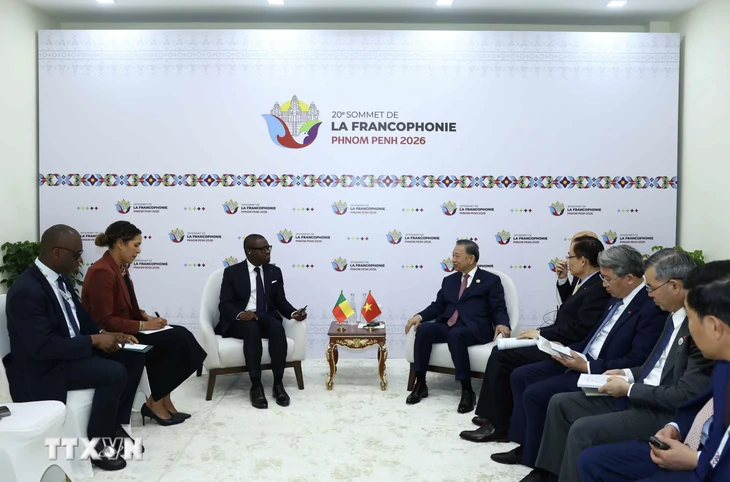
In his meeting with Benin President Romuald Wadagni, General Secretary and President To Lam welcomed the West African leader to their historic first face-to-face dialogue. President Wadagni affirmed that Benin regards Vietnam as a premier strategic partner in Asia, expressing deep admiration for Vietnam’s economic resilience, poverty alleviation achievements, and the Party and State’s successful administrative streamlining and governance models.
Recognizing Benin as one of West Africa’s most dynamic economies, both leaders agreed that bilateral economic cooperation currently operates far below its actual potential. To rectify this, To Lam proposed the swift operationalization and implementation of existing Memorandums of Understanding (MOUs) concerning agricultural cooperation. The leaders emphasized the necessity of prioritizing high-potential commodities—such as cashew nuts, cotton, and rice—while expanding cooperation into freshwater aquaculture and port-to-port logistics.
To Lam formally requested that the government of Benin establish a more hospitable legal, regulatory, and institutional framework to facilitate long-term investments by Vietnamese enterprises operating within West Africa. The meeting concluded with a mutual commitment to fortify political trust through regular high-level delegations, culminating in To Lam’s official invitation for President Wadagni to visit Vietnam at the earliest convenience.
Broadening Ministerial Engagements with African Counterparts
Expanding upon the presidential agenda, Deputy Minister of Foreign Affairs Le Hoai Trung conducted high-level diplomatic consultations on the same day with Côte d’Ivoire’s Minister of Foreign Affairs and International Cooperation Nialé Kaba, Angola’s Minister of Foreign Affairs Téte António, and Cameroon’s Minister of External Relations Lejeune Mbella Mbella.
During these discussions, Deputy Minister Trung reiterated Vietnam’s unwavering commitment to Africa as a vital pillar of its foreign policy. He advocated for the expansion of trade corridors, agricultural technical assistance, mining and mineral processing, telecommunications, digital infrastructure, civil construction, and electric mobility. To facilitate these commercial bridges, Trung urged African partner governments to optimize institutional frameworks, banking and payment systems, and legal protections for Vietnamese investors. He reaffirmed that Vietnam stands fully prepared to act as a strategic gateway connecting African nations with ASEAN markets and the broader Asia-Pacific region.
Minister Nialé Kaba of Côte d’Ivoire expressed a strong desire to deepen comprehensive cooperation with Vietnam, with a particular focus on agricultural productivity models. Meanwhile, Angolan Foreign Minister Téte António acknowledged the valuable developmental contributions made by Vietnamese expatriate businesses operating in Angola. He confirmed that Luanda is actively expediting negotiations to finalize a Bilateral Investment Promotion and Protection Agreement. Similarly, Cameroon’s External Relations Minister Lejeune Mbella Mbella voiced strong enthusiasm for joint ventures in infrastructure development, telecommunications, and artificial intelligence. Cameroon pledged to fast-track bilateral negotiations regarding double-taxation avoidance agreements and investment protection treaties to ensure a secure legal environment for future economic exchanges.
Broader Implications and Strategic Analysis
The intense diplomatic choreography observed at the 20th Francophonie Summit in Phnom Penh signals a calculated maturation of Vietnam’s foreign policy framework. By simultaneously engaging international multilateral bodies like the OIF and strengthening traditional bilateral ties with Eastern European partners like Bulgaria and emerging African powerhouses like Benin, Angola, Côte d’Ivoire, and Cameroon, Vietnam is diversifying its economic dependencies and solidifying its role as a middle power with global reach.
Analysts note that Vietnam’s positioning as both an economic development model and a diplomatic facilitator addresses multiple strategic objectives. Economically, pivoting toward Africa and Eastern Europe opens untapping export markets for Vietnamese agricultural goods, technology products, and construction services, mitigating vulnerabilities associated with traditional Western markets. Politically, these engagements reinforce Vietnam’s commitment to South-South cooperation, multilateralism, and active international integration, thereby enhancing its national prestige and expanding its network of reliable allies on the global stage.