Navigating the Financial Mechanics of Land Use: Risks, Realities, and Reforms Under the Revised Land Law


The ongoing deliberations surrounding the implementation and refinement of the amended Land Law have thrust Vietnam’s real estate financial mechanisms into the national spotlight. At the core of the current debate is the proposed shift from traditional, individualized land valuation methods to a standardized formula: multiplying the official land price list by the market adjustment coefficient, widely known as "Coefficient K." While this administrative evolution is designed to streamline valuation procedures, reduce procedural bottlenecks, and curb compliance costs, it has simultaneously ignited widespread concern among economists, industry associations, and business leaders. Industry forecasts suggest that applying this formula across the board could elevate land-use fees by two to two-and-a-half times compared to historical benchmarks, directly threatening broader housing affordability and compounding upward pressure on nationwide property prices.
Background Context and the Evolution of Vietnam’s Land Valuation Framework
To understand the gravity of the current legislative discussions, one must examine the evolutionary trajectory of Vietnam’s land management policies. Historically, the process of determining land-use fees—the compulsory financial obligation citizens and enterprises must fulfill when the State allocates land, leases land with one-time payment for the entire lease period, recognizes land use rights, or permits a change in land purpose—has been complex, time-consuming, and frequently contentious.
Under previous legislative frameworks, authorities relied heavily on case-by-case valuation methods. Independent appraisal agencies were routinely commissioned to evaluate specific parcels of land based on prevailing market conditions, comparable recent transactions, and potential development yields. However, this individualized approach proved to be a major administrative chokepoint. The valuation process often dragged on for months or even years, creating severe compliance bottlenecks that paralyzed real estate development projects, inflated operational costs, and contributed significantly to supply shortages in urban centers.
Recognizing the urgent need for administrative reform, policymakers sought to establish a more transparent, predictable, and expedited mechanism. The proposed solution involves leveraging official land price lists issued periodically by provincial authorities, calibrated dynamically using Coefficient K to reflect real-time market fluctuations. In theory, this methodology promises to replace subjective assessments with an objective, formulaic approach that minimizes bureaucratic discretion and accelerates project approval timelines. However, as the legislative drafting process enters its critical phases, stakeholders have raised serious alarms regarding the rigidity of these formulas and the potential unintended consequences of sweeping implementation.
Current Empirical Data and Regional Variations
Recent comprehensive reviews conducted by the Vietnam Association of Real Estate Realtors (VARS) and the Institute for Real Estate Market Research across 22 provinces and municipalities shed light on the stark divergence in how Coefficient K is currently being conceptualized and applied. The empirical findings reveal that approximately one-third of the surveyed localities have opted to apply Coefficient K uniformly at a baseline of 1.0. Meanwhile, other administrative regions have adopted differentiated tiers shaped by local zoning conditions, infrastructure maturity, and localized demand pressures.
Crucially, economic hubs exhibit significantly higher baseline adjustments even before accounting for broader market shifts. In Hanoi, the baseline Coefficient K stands at 1.45, while in Ho Chi Minh City, it reaches a staggering 1.7. Crucially, experts emphasize that these figures represent merely component coefficients, omitting volatile market variables, localized supply-demand dynamics, and infrastructure maturation premiums. When these foundational multipliers are compounded with the newly proposed land price lists, the cumulative financial burden on developers and citizens scales exponentially.
The implications of such aggressive scaling extend far beyond government ledger books. Real estate development is capital-intensive, with land-use fees often representing one of the single largest upfront capital outlays for corporate developers. When land acquisition and conversion costs surge unexpectedly, corporate cash flows are severely disrupted. This financial strain directly compromises investment efficiency, extends project development lifecycles, and creates insurmountable barriers to entry for medium and small-scale developers, ultimately constricting the aggregate supply of residential real estate.
Economic Implications and the Risk of Inflationary Spirals
The debate over Coefficient K touches upon a fundamental paradox in public finance and macroeconomic management: the delicate balance between maximizing short-term budgetary revenues and fostering long-term economic stability.
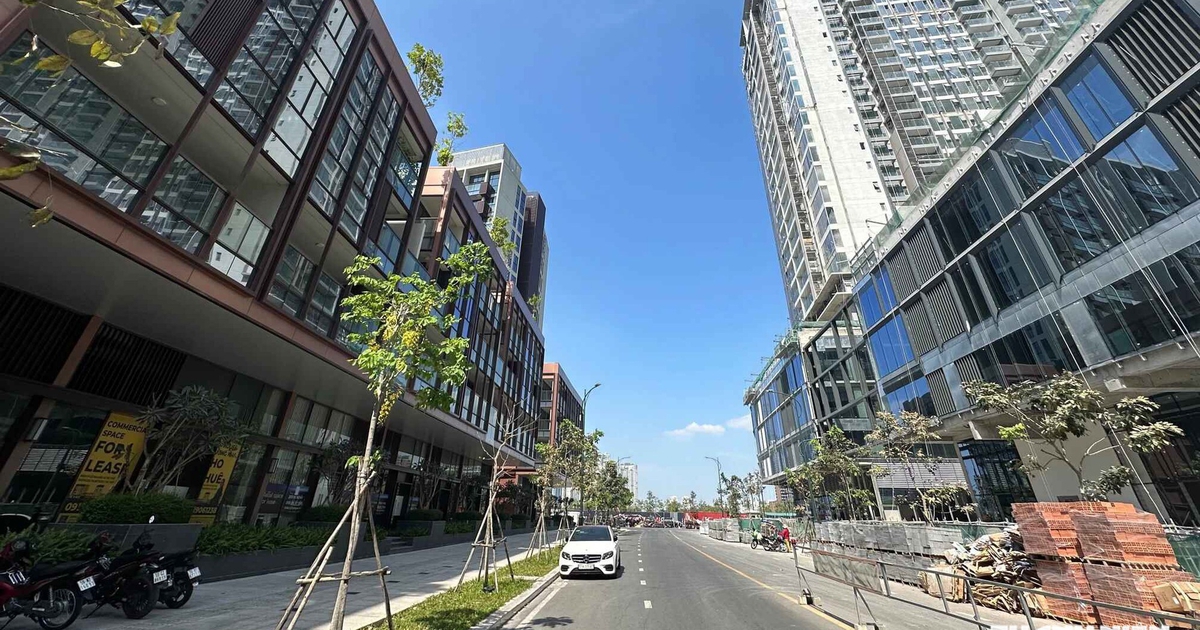
Government leaders have increasingly voiced concerns that artificially inflated land prices can provide a temporary windfall for local state budgets, yet inflict deep, structural scars on the broader economy. Elevated land-use fees inevitably translate into higher development costs, which developers pass down to end-users through inflated housing prices. Consequently, the dream of homeownership slips further out of reach for average wage earners, exacerbating social inequality and stifling urban mobility.
Furthermore, economic analysts point out a dangerous feedback loop inherent in rigid land pricing policies. If Coefficient K is continuously adjusted upward under the assumption that property values only appreciate, it ceases to function as a responsive market tool and instead becomes an artificial inflationary driver. In cyclical real estate markets where asset prices experience natural corrections, downturns, and periods of stagnation, a static or rigidly upward-moving coefficient disconnects official administrative valuations from economic realities.
If landowners and corporate developers are compelled to calculate tax liabilities, land-use conversion fees, and compensation packages based on inflated administrative formulas that bear no resemblance to actual market liquidity, the propensity for commercial disputes escalates dramatically. Cases of disgruntled citizens protesting delayed compensation packages, stalled urban projects, and encumbered livelihoods due to valuation discrepancies underscore the urgent need for a balanced, empirically grounded regulatory framework.
Industry Recommendations and the Path Toward Institutional Harmony
In response to these systemic risks, industry leaders and academic experts have put forward a series of comprehensive, constructive recommendations aimed at harmonizing the interests of the State, the business community, and individual citizens.
Mr. Nguyen Van Dinh, Chairman of VARS, has consistently advocated for clarifying the core economic essence of Coefficient K. Rather than viewing it as an instrument for maximizing revenue collection, policymakers should recognize Coefficient K as a dynamic reflection mechanism—a ratio linking real-time market transaction prices with baseline administrative land prices. To maintain this delicate equilibrium, VARS recommends that both land price lists and Coefficient K be subjected to mandatory annual reviews, with statutory triggers activated when market fluctuations exceed a predefined threshold—suggested by experts to be around 20%. Furthermore, authorities should mandate a public consultation and notification period of no less than six months prior to implementing any upward fiscal adjustments, thereby granting businesses and households adequate time to absorb policy shifts and adjust their financial planning.
Complementing these policy recommendations, Dr. Pham Viet Thuan, Director of the Institute of Economics of Natural Resources and Environment, emphasizes the necessity of establishing robust, independent valuation councils. These bodies should operate transparently, incorporating inputs from independent appraisers, economic researchers, and socio-professional organizations. Dr. Thuan argues that the ultimate success of the amended Land Law hinges on the establishment of an exhaustive, verifiable database of real estate transactions. Without accurate baseline data, any administrative formula risks producing arbitrary outcomes that destabilize market confidence.
Moreover, industry stakeholders have highlighted the necessity of adopting transitional mechanisms for ongoing projects, mixed-use developments, and large-scale master-planned communities located in areas with sparse transactional data. For these complex projects, maintaining traditional individualized land valuation methods as a secondary, auxiliary mechanism is deemed essential to prevent administrative miscalculations and systemic market disruptions.
Conclusion: Securing Long-Term Market Sustainability
As the legislative bodies deliberate the final provisions of the amended Land Law, the decisions made today will reverberate across Vietnam’s macroeconomic landscape for decades to come. The transition toward standardized land pricing models and Coefficient K represents a commendable effort to modernize administrative procedures and enhance market transparency. However, administrative efficiency must not come at the expense of market stability and economic equity.
By embracing flexible calculation methodologies, establishing transparent data collection infrastructures, incorporating market-sensitive adjustment thresholds, and protecting the legitimate interests of all participating stakeholders, policymakers can successfully defuse investment bottlenecks. Ultimately, a well-calibrated valuation framework will not only secure sustainable budgetary revenues for the State but also restore affordability to the housing market, safeguard the financial health of developers, and lay a robust foundation for the long-term, sustainable growth of Vietnam’s real estate sector.