Yandex sees Vietnam as a strategic hub for app developers targeting Russian-speaking markets


The global digital landscape is undergoing a profound transformation, with Vietnam emerging as a pivotal player in the mobile application economy. Recent industry data reveals that Vietnam is not only fostering a robust domestic app market but is also positioning its developers as significant contributors to the international software ecosystem. A notable development in this trajectory is the interest expressed by Yandex—the Russian technology giant—which has identified Vietnam as a high-potential source of talent and innovation for apps targeting Russian-speaking audiences. This partnership marks a shift in how Vietnamese developers are accessing global markets, moving beyond mere local utility to creating products that resonate across the Commonwealth of Independent States (CIS) and the broader Russian-speaking world.
The Rise of the Vietnamese App Economy
The domestic app sector in Vietnam has experienced an extraordinary growth phase over the past several years. According to recent statistics from the Ministry of Information and Communications, Vietnam has solidified its position as a global leader in mobile engagement. In the first half of 2024, the country maintained its ranking as the 11th largest market globally in terms of total mobile app downloads. Even more impressively, the country holds the 31st position in terms of in-app payment revenue, signaling a maturation of the consumer base.
While the volume of free app downloads has seen a slight decline, this is arguably offset by a more critical trend: an 11% increase in paid app downloads compared to the same period in the previous year. This growth is underpinned by a deep bench of successful digital products. Currently, Vietnam boasts seven applications with over 10 million active users, 10 applications with 5 to 10 million users, and 43 applications with 1 to 5 million users. These figures represent a significant evolution from a decade ago, when the focus was primarily on basic software utilities.
Data-Driven Growth: The User Engagement Surge
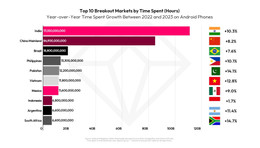
Data provided by the mobile intelligence firm Data.ai offers further context into this rapid expansion. In 2023, Vietnamese users increased their time spent on mobile applications by 11.8 billion hours compared to 2022—a staggering 12.8% year-on-year increase specifically on Android devices. This surge in engagement has not gone unnoticed by global tech platforms.

The growth is not merely a product of increased hardware penetration, but of a fundamental shift in user behavior. As smartphone adoption has reached saturation in urban areas, the "app economy" has become a central pillar of daily life in Vietnam, covering everything from e-commerce and ride-hailing to entertainment and specialized financial services. This high level of engagement makes Vietnam a fertile testing ground for developers who intend to scale their operations internationally.
Yandex and the Strategic Pivot to Southeast Asia
Yandex, often described as the "Google of Russia," has recently turned its gaze toward Southeast Asia, with a particular focus on Vietnam as an entry point. During recent discussions, representatives from Yandex Ads emphasized that the region’s high smartphone adoption rates and technical proficiency make it an ideal partner for global growth.
Nana Phan, the Strategy Relations lead for Yandex Ads in Southeast Asia, noted that the company views Vietnam as a "model market." According to Phan, the business of mobile apps in Vietnam is not just growing; it is becoming increasingly sophisticated. Projections indicate that in-app advertising revenue will soon account for more than half of the total revenue for many Vietnamese app developers.
"With our experience, I am completely confident that Vietnam is one of the most promising markets for mobile advertising investment in Asia," Phan stated. "The market trends for applications in Vietnam are quite synchronized with global standards, which allows for seamless cross-border integration."
Bridging the Gap: From Local Success to Global Reach
The collaboration between Yandex and Vietnamese developers is not accidental. It is based on the proven capability of local studios to produce high-quality products. Companies like Falcon Studio, Wolffun, Amanote, Funtap, and iKame have already demonstrated success in international markets, validating the "go global" strategy that many domestic firms have adopted.
The synergy between Vietnamese developers and the Russian-speaking market is particularly strong in sectors such as mobile gaming, photo editing, and travel-oriented utilities. A prime example of this success is the game "Traffic Jam 3D" by IndieZ, which has gained significant traction in Russia and across the nine countries that constitute the CIS. By leveraging Yandex’s advertising infrastructure, these developers can bypass the complex regulatory and cultural barriers that often hinder small-to-medium enterprises when entering foreign markets.
The Mechanics of International Expansion
For developers looking to replicate this success, Yandex provides a blueprint that emphasizes the importance of localized data. Simply translating an interface is insufficient; developers must understand the specific monetization mechanisms and user preferences of the target demographic.
Yandex suggests that in addition to revenue generation through paid subscriptions or in-app purchases, developers should integrate robust online advertising networks. These networks offer insights into user behavior that are often opaque to outsiders. Furthermore, Yandex emphasizes the need for developers to be well-versed in the "legal corridors" of their target countries. Compliance with regional data privacy laws, tax regulations, and local advertising standards is, according to Yandex, the most significant hurdle for Vietnamese firms seeking to expand.
Future Implications and The AI Frontier
The broader implication of this partnership is the potential for Vietnam to become a regional leader in software exports. This is bolstered by the country’s growing readiness to adopt Artificial Intelligence (AI). Recent reports indicate that Vietnam’s AI readiness index currently exceeds the global average, providing a technological foundation that will likely catalyze the next generation of mobile app development.
However, challenges remain. As the industry matures, the pressure for better governance and regulation grows. Experts, including those from firms like IBM Vietnam, have frequently called for clearer regulatory frameworks and AI governance models to ensure that the rapid growth of the app economy does not outpace the country’s ability to protect user data and maintain cybersecurity standards.

Looking ahead, the integration of AI-driven analytics, which Yandex is actively promoting, will likely become the standard for mobile development in Vietnam. This will allow developers to optimize their content in real-time, matching the specific tastes of users in distant markets like Russia and the CIS with unprecedented accuracy.
Conclusion: A New Era for Vietnamese Tech
The convergence of Vietnam’s high-growth digital ecosystem and the established infrastructure of a global tech leader like Yandex represents a significant milestone in the country’s economic development. By successfully tapping into the Russian-speaking market, Vietnamese developers are proving that their software is competitive on the global stage.
As these partnerships evolve, the focus will likely shift from simple volume-based expansion to a more nuanced, value-driven strategy. For Vietnam, the challenge and the opportunity lie in sustaining this momentum, fostering a workforce capable of advanced software engineering, and navigating the complex, often volatile, international landscape of digital commerce. The story of Yandex in Vietnam is not just about advertising—it is a testament to the country’s emergence as a serious, capable participant in the global digital economy. As long as local developers continue to prioritize quality, innovation, and international compliance, the potential for growth remains, in the words of industry leaders, truly "enormous."
Related posts: