Vietnam Tech Sector Sets Ambitious International Expansion Targets Amidst Global 5G Success

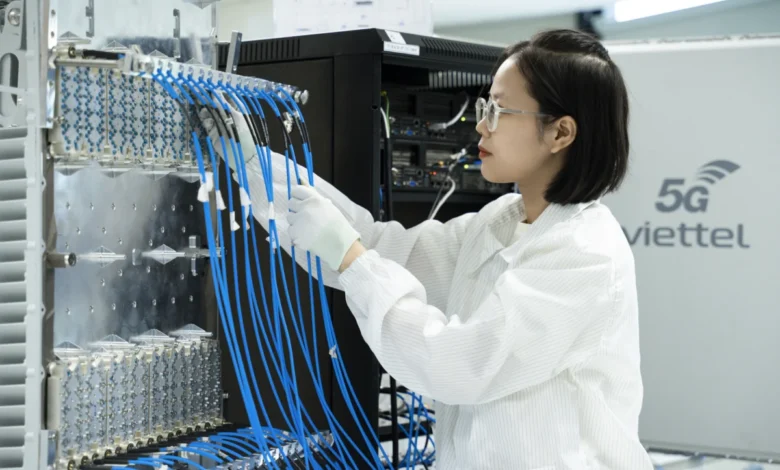
The Vietnamese information and communications technology (ICT) sector is currently navigating a period of profound transformation, transitioning from a domestic-focused industry into a competitive global player. Driven by the strategic "Make in Vietnam" initiative, domestic enterprises are steadily fulfilling the aspiration of mastering core technologies and expanding their footprint into international markets. Recent data suggests that the international revenue of Vietnamese tech firms is projected to reach approximately $10 billion by the end of 2024, a significant milestone that underscores the nation’s rising status in the global digital economy. Furthermore, Vietnam has solidified its position as one of only five countries worldwide capable of manufacturing 5G network equipment, marking a technological breakthrough that places it alongside leaders like Taiwan, Finland, South Korea, and China.
A Legacy of Innovation and Strategic Evolution
The current momentum within the ICT sector is not an isolated development but rather the culmination of decades of strategic planning and a deeply ingrained culture of national self-reliance. During a recent meeting with veteran officials of the Ministry of Information and Communications (MIC) in Northern Vietnam, leaders reflected on the evolution of the industry. The event served as both a bridge between generations and a reminder of the sector’s historical commitment to national development.

Nearly 40 years ago, when the industry faced severe infrastructure limitations, the leadership—most notably exemplified by former Director General of the General Department of Post and Telecommunications, Dang Van Than—pioneered a bold strategy. Facing a lack of state funding, the leadership made the unconventional decision to bypass intermediate legacy technologies and jump directly into digital telecommunications. By securing external financing and prioritizing internal capacity building, the post and telecommunications sector transformed from an underdeveloped entity into a catalyst for national socioeconomic growth. This "dare to think, dare to do" spirit remains the foundational ethos of the modern Vietnamese tech landscape.
Mastery of 5G and the "Make in Vietnam" Strategic Shift
The production of 5G base station equipment stands as the most prominent indicator of Vietnam’s technological maturity. Developed by Viettel based on the Open RAN standard, these base stations represent a significant departure from reliance on foreign vendors. The successful deployment of this equipment in regions such as Hanoi, Ha Nam, and Ninh Thuan, with further expansion planned for Ho Chi Minh City and Da Nang, demonstrates the scalability and reliability of domestic hardware.
Viettel’s international reach has also expanded, with the company securing contracts to export this 5G technology to markets such as India. This transition from a net importer of telecommunications infrastructure to an exporter of high-tech hardware is a direct result of the "Make in Vietnam" policy, which encourages companies to shift from assembling and outsourcing to researching, designing, and manufacturing products that solve both local and global problems.

Quantitative Growth and Economic Impact
The statistical trajectory of the Vietnamese tech sector is robust. As of July 2024, the number of active digital technology enterprises in Vietnam stood at approximately 51,038, reflecting an increase of nearly 6,000 companies compared to August 2023. Of this total, roughly 1,500 companies have successfully generated revenue from international markets.
The economic implications of this shift are significant. In 2023, international revenue from these tech firms was recorded at $7.5 billion. With a projected growth rate of 30% for 2024, reaching the $10 billion threshold is widely considered an attainable target. Minister of Information and Communications Nguyen Manh Hung has frequently highlighted that this revenue stream is increasingly offsetting the capital expenditure formerly required for importing foreign telecommunications equipment. This shift—from "depending on others" to "going out to the world"—is viewed as a vital step in Vietnam’s objective to reach high-income country status by 2045. The long-term goal established by the Ministry is for international revenue from ICT enterprises to eventually surpass the export value of the country’s agricultural products, signaling a fundamental structural change in the national economy.
Digital Governance and Institutional Support
To sustain this growth, the Ministry of Information and Communications has institutionalized its support through a comprehensive legislative and administrative framework. The establishment of the Department of Information and Communications Technology Industry and the ongoing development of the Law on Digital Technology Industry are central to these efforts.

The strategy focuses on three core pillars:
- Digital Government: Streamlining internal administration and service delivery through digital transformation.
- Digital Economy: Fostering an environment where tech startups and established firms can innovate and compete on a global scale.
- Digital Society: Ensuring that the benefits of technological advancement reach all segments of the population.
The government has also implemented specific programs to encourage research and development (R&D). By incentivizing firms to invest in emerging technologies such as Artificial Intelligence (AI), semiconductors, and advanced telecommunications, the Ministry aims to build a sustainable ecosystem that can withstand global market volatility.
Bridging Generations: Lessons from the Past
The recent engagement with retired ministry officials underscored the importance of institutional memory. During the meeting, former Minister of Posts and Telecommunications Do Trung Ta recounted the challenges faced in 1991, when the country still relied heavily on foreign equipment and expertise. He noted that the success of the current generation in building a self-reliant tech industry is a validation of the sacrifices and vision of those who laid the groundwork in the 1990s.

This sense of continuity is emphasized by the "Ten Golden Words" of the sector: Loyalty – Courage – Integrity – Creativity – Compassion. These values are not merely symbolic; they are integrated into the daily operations and long-term planning of the Ministry. By fostering a culture that respects history while aggressively pursuing future-oriented technologies, the sector is ensuring that its workforce remains committed to the national mission.
Challenges and Future Outlook
Despite the progress, the road ahead involves complex challenges. The global semiconductor shortage, increasing competition from established tech giants in the region, and the need for a highly skilled labor force remain significant hurdles. To address these, the government is intensifying efforts to integrate AI and semiconductor manufacturing into the national development strategy. The focus is not just on volume, but on value-added production that allows Vietnamese firms to move up the global value chain.
The Ministry’s roadmap for 2030 and 2050 emphasizes the creation of a robust domestic industry that can design, develop, and deploy complex solutions. By creating an environment that encourages "Make in Vietnam" products, the government expects to see a surge in the number of Vietnamese tech firms establishing R&D centers and operational hubs in key international markets, including Japan, the United States, and the European Union.

Conclusion: A New Era for Vietnamese Tech
Vietnam is at a pivotal juncture. The transition to a digital-first economy is no longer a peripheral goal but a central component of its national development strategy. With the successful deployment of 5G infrastructure, a rapidly growing number of export-oriented tech companies, and a clear legislative roadmap, the sector is well-positioned to meet its ambitious growth targets.
The $10 billion revenue target for 2024 is more than just a financial milestone; it is a signal to the world that Vietnam has evolved into a significant player in the global technology arena. By maintaining the balance between traditional values and modern innovation, the ICT sector is not only securing its own future but is also playing a decisive role in shaping the economic trajectory of the nation for the coming decades. As the industry continues to expand its international footprint, the focus will remain on technological mastery, institutional stability, and the cultivation of a generation of professionals capable of navigating the complexities of the global digital market.
Related posts: