Khanh Hoa province celebrates Great National Unity Day as a catalyst for sustainable development and cultural preservation among the Raglai community

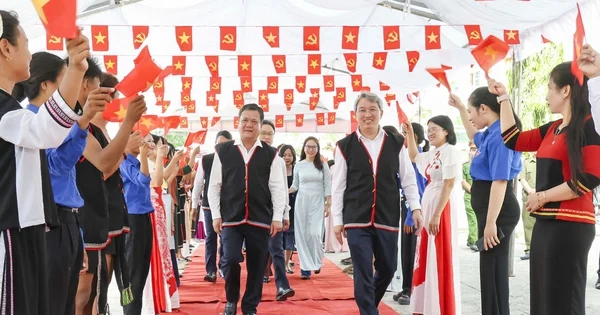
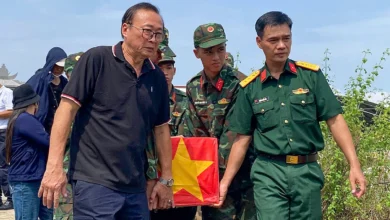
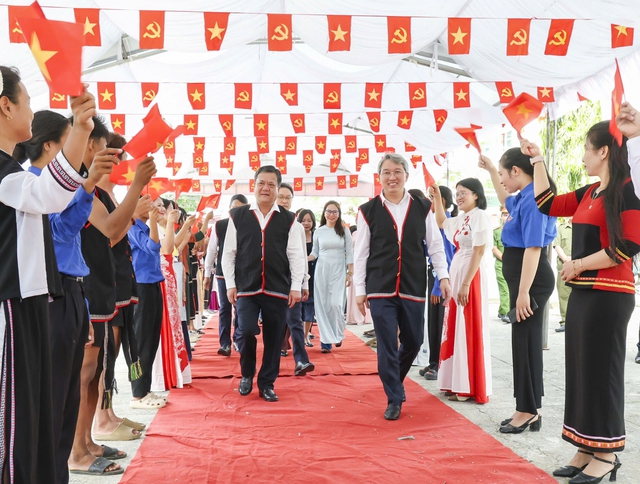
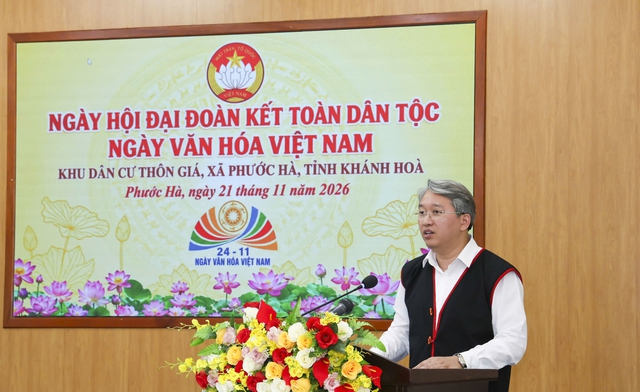
On November 21, 2026, the village of Gia, located in Phuoc Ha commune, Khanh Hoa province, became the center of a significant celebration as residents and local leaders gathered for the Great National Unity Day. This event, which coincided with the 2026 Vietnam Cultural Day, served as both a festive occasion for the community and a strategic platform for reviewing the progress of local socio-economic initiatives. The gathering was attended by high-ranking officials, including Nguyen Hai Ninh, Member of the Party Central Committee and Chief of the Office of the Party Central Committee, alongside Tran Phong, Member of the Party Central Committee and Secretary of the Khanh Hoa Provincial Party Committee.
The event, held against the backdrop of the vibrant culture of the Raglai people, showcased the tangible improvements in living standards and the resilience of traditional values. For the residents of Gia village—where the Raglai ethnic group accounts for nearly 97 percent of the 1,365 inhabitants—the day was a testament to the effectiveness of recent poverty reduction programs and community integration policies.
A Chronology of Progress and Community Integration
The Great National Unity Day in Vietnam has historically been a cornerstone of the nation’s social cohesion strategy. Established to strengthen the bonds between the government and its diverse ethnic populations, the event has evolved from a symbolic gesture into an operational mechanism for progress. In the context of Gia village, the 2026 celebration was the culmination of a year-long effort to bridge the development gap.
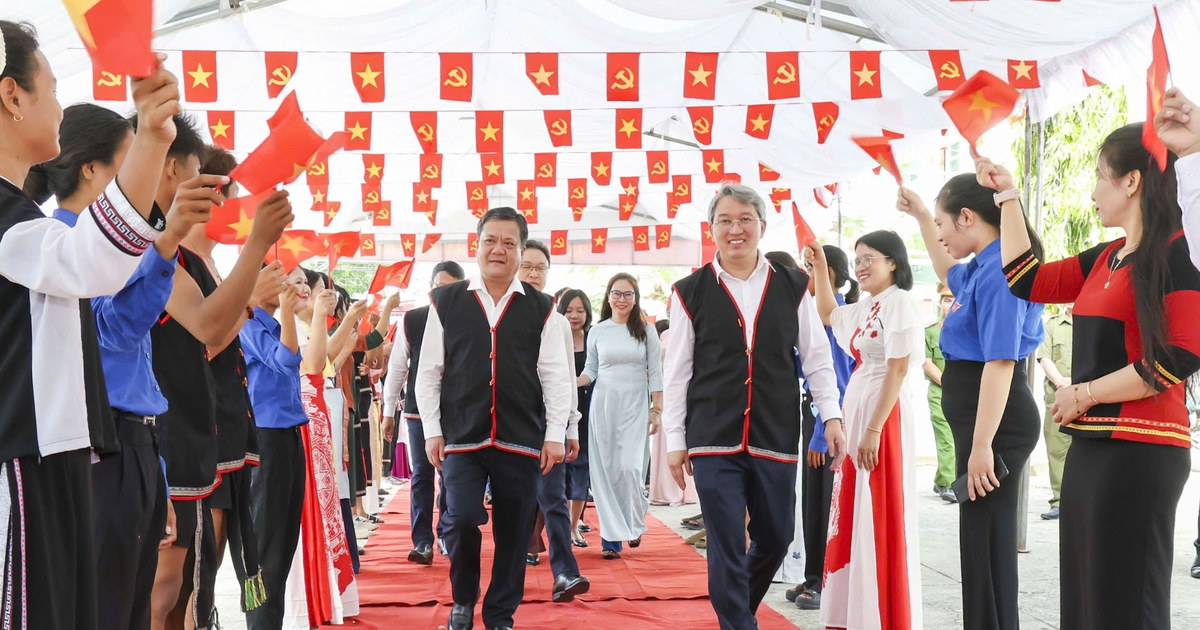
Throughout 2026, Phuoc Ha commune witnessed a systematic transformation. The local administration, supported by provincial and central mandates, focused on a multi-pronged approach: infrastructural development, economic empowerment, and cultural safeguarding. The trajectory of this progress is best reflected in the village’s recent poverty alleviation statistics. As of the end of November 2026, 15 out of 41 households previously classified as living in poverty have successfully crossed the threshold, representing a 36.59 percent reduction. Simultaneously, 23 out of 59 households categorized as "near-poor" have moved into financial stability, marking an improvement rate of 38.98 percent.
This rapid improvement is not coincidental. It follows a structured timeline of intervention that began in early 2026, focusing on housing security and social welfare. By the time the November celebration took place, the local government had already completed the construction of 16 "Great Unity" houses, a project backed by a budget exceeding 1.9 billion VND. These structures serve as symbols of the collective effort to ensure that no citizen, particularly those from vulnerable ethnic minority groups, is left behind in the province’s developmental push.
Supporting Data and Social Welfare Metrics
The success of the local initiatives in Gia village can be quantified through several key performance indicators. Education and healthcare have been the primary pillars of this stability. Currently, 100 percent of school-age children in the village are enrolled in the formal education system, a vital statistic that ensures the long-term upward mobility of the younger generation. Furthermore, full coverage of health insurance for all residents has been achieved, providing a safety net that prevents households from falling back into poverty due to medical emergencies.
The social fabric of the village is also remarkably strong, with 338 out of 342 households—or 98.8 percent—officially recognized as "Cultural Families." This title, while administrative, reflects the active participation of the community in local governance models such as "Health Movement Clubs," farmers’ environmental protection associations, and neighborhood security patrols. These grassroots organizations play a critical role in maintaining social order and promoting hygiene and environmental stewardship within the village.
Official Responses and Strategic Directions
Speaking at the ceremony, Nguyen Hai Ninh underscored the historical importance of 2026, as it marks the inaugural year that Vietnam Cultural Day has been observed following official resolutions passed by the National Assembly. He emphasized that the preservation of ethnic identity is not a static endeavor but one that must evolve alongside modern economic needs.
"The preservation of the Raglai cultural identity must be intrinsically linked to the development of community-based tourism," Mr. Ninh stated. "By leveraging our unique cultural heritage, we can create sustainable income streams for the villagers, ensuring that tradition becomes a catalyst for economic prosperity rather than a barrier to it."
Mr. Ninh further directed the provincial authorities to maintain a high level of vigilance regarding the sustainability of these gains. He urged the local leadership to move beyond basic poverty reduction and focus on creating value-added industries. The instruction to prioritize the construction of essential infrastructure and cultural facilities was accompanied by a clear mandate: all projects must be completed on schedule and with the highest standards of quality.
To further support these objectives, the Office of the Party Central Committee, in partnership with private enterprises and philanthropic organizations, has mobilized an additional 2 billion VND to fund the construction of a new Community Living House in Gia village. This facility is envisioned as a multifunctional hub where residents can engage in traditional cultural performances, conduct village meetings, and host educational workshops, effectively serving as the heart of the community.
Broader Impact and Future Implications
The model implemented in Gia village serves as a micro-case study for the broader national strategy regarding ethnic minority development in Vietnam. By integrating cultural preservation with economic development, the government aims to mitigate the "development gap" that often exists between rural, mountainous areas and urban centers.
The emphasis on community-based tourism is particularly noteworthy. For the Raglai people, their traditional crafts, music, and social customs possess significant potential as tourism assets. If managed correctly, this approach could transition the village from a state of dependence on welfare to one of economic self-sufficiency.
However, the transition is not without challenges. Maintaining the authenticity of cultural practices while adapting them for public consumption requires a delicate balance. Analysts note that the long-term success of this initiative will depend on the community’s ability to lead these efforts themselves, rather than relying solely on government subsidies. The emphasis placed by Mr. Ninh on the responsibility of local village elders and craftsmen to pass down traditional values to the next generation is a recognition that cultural sustainability is the most vital component of long-term development.
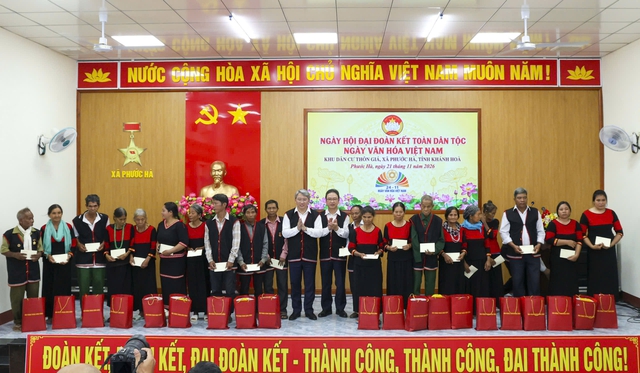
Furthermore, the integration of 682 relief packages, valued at nearly 875 million VND, demonstrates that while the long-term goal is economic independence, the immediate priority remains the protection of the most vulnerable citizens. This two-track approach—providing immediate support while building the infrastructure for long-term growth—is indicative of a mature policy framework that acknowledges the complexities of rural development in Vietnam.
Conclusion: A Blueprint for the Future
As the sun set on the celebrations in Gia village, the atmosphere was one of cautious optimism. The accomplishments of 2026 have set a clear precedent for what can be achieved when provincial, local, and private resources are aligned toward a common goal. For the people of Phuoc Ha commune, the focus now shifts toward the sustained maintenance of their new infrastructure and the careful development of their local economy.
The event served as a reminder that the "Great Unity" is not merely a slogan, but a functional necessity for the continued growth of Vietnam’s diverse regions. As the province of Khanh Hoa looks toward the future, the lessons learned in Gia village—emphasizing the synthesis of cultural heritage, education, and strategic investment—will likely serve as a blueprint for other regions seeking to achieve similar outcomes. By ensuring that development is inclusive and that the unique identity of ethnic minority communities is preserved, the province is not only fostering economic stability but also strengthening the national character for the years to come.