US Press Corps Aboard Air Force One Instructed to Surrender Mobile Phones Over Security Concerns Following High-Level APEC Summit in China

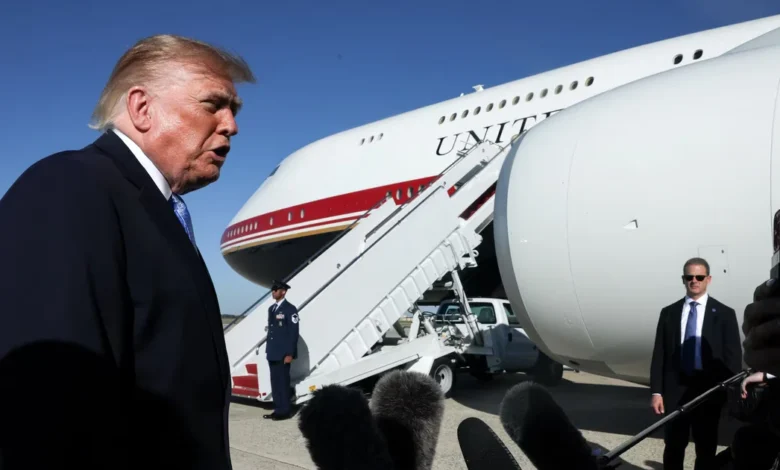
The air travel of the United States presidential press corps is typically characterized by a high degree of routine, digital connectivity, and real-time reporting to keep the domestic and international public informed. However, a departure from standard protocol unfolded high above the skies of East Asia following the conclusion of the Asia-Pacific Economic Cooperation (APEC) summit. Journalists traveling aboard Air Force One with U.S. President Donald Trump were abruptly instructed to surrender their mobile phones as the presidential aircraft departed Chinese airspace, citing unspecific yet stringent national security concerns.
This rare and restrictive security measure highlights the complex geopolitical tensions, advanced cyber threat landscapes, and heightened operational protocols that govern modern diplomatic travel. As global superpowers navigate increasingly sophisticated intelligence-gathering environments, the physical handling of electronic devices belonging to members of the media has become an extraordinary flashpoint, raising questions about digital hygiene, state-sponsored espionage risks, and the delicate balance between press freedom and state security.
Chronology of Events and the In-Flight Directive
The sequence of events began immediately after President Trump and his accompanying delegation wrapped up their diplomatic engagements at the APEC summit. The high-stakes international gathering brought together leaders from across the Asia-Pacific region to discuss trade liberalization, regional stability, and economic cooperation. Following the conclusion of formal proceedings, the presidential party boarded Air Force One in Shenzhen, China, setting the stage for the long journey back to the United States.
At approximately 6:45 p.m., shortly after the heavily secured aircraft lifted off and cleared Chinese airspace, members of the traveling press corps received clear instructions from security personnel. Journalists were told that the moment marked the official departure threshold, and consequently, all personal mobile devices were to be collected and temporarily confiscated.
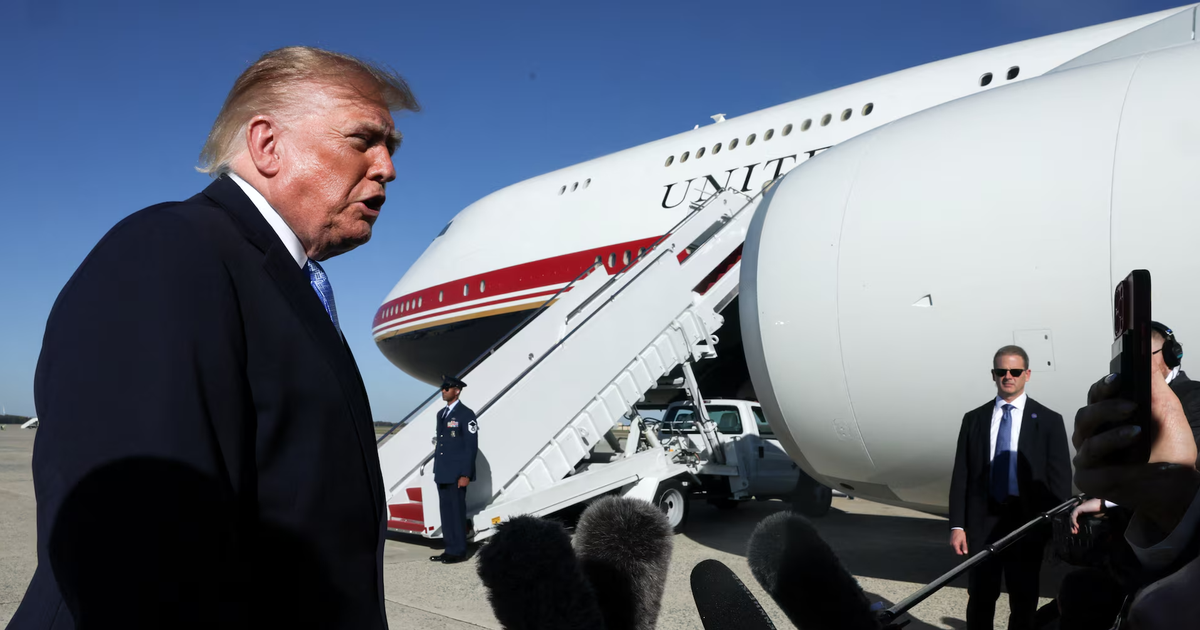
"18h45, let’s consider this the takeoff time. Our phones will be temporarily confiscated for security reasons," an AFP journalist on board reported immediately following the aircraft’s departure from Shenzhen.
This directive caught several veteran reporters by surprise. While Air Force One maintains rigorous communication security protocols—often referred to as COMSEC—the wholesale collection of personal mobile phones from accredited journalists is an exceptionally rare occurrence. Historically, reporters traveling with the president enjoy secured, albeit heavily monitored, networks to file their dispatches, connect with their home newsrooms, and maintain contact with family. The sudden severance of digital access immediately sparked curiosity and concern within the press cabin, prompting discussions among reporters regarding the specific threat vector that prompted such an unprecedented precaution.
Historical Context and Precedents in Presidential Travel
To understand the weight of this security measure, it is necessary to examine standard operational procedures during previous presidential foreign trips. Jacqui Heinrich of Fox News, serving as the president of the White House Correspondents’ Association, noted that a similar restriction was not enforced during President Trump’s earlier visit to China in May. During that previous diplomatic swing, reporters retained possession of their mobile phones throughout the itinerary, even as they traversed sensitive foreign jurisdictions.
The contrast between the May visit and the November departure underscores a shifting calculus within the United States Secret Service, military intelligence units, and the White House Communications Agency (WHCA). Modern smartphones are sophisticated computing devices equipped with advanced microphones, high-resolution cameras, GPS sensors, and continuous data transmission capabilities. In environments characterized by aggressive cyber intelligence operations, foreign intelligence services possess the technological capability to deploy sophisticated over-the-air exploits, IMSI-catchers (often called stingrays), or malicious payload injections designed to compromise target devices.
When foreign leaders visit geopolitical rivals or strategic competitors, the risk profile of electronic hardware escalates exponentially. Host nations possess proximity advantages that can facilitate localized signals intelligence collection. By demanding the surrender of all personal mobile devices the moment the aircraft departed Chinese airspace, U.S. security officials may have sought to mitigate the risk of any lingering digital telemetry, ambient listening exploits, or unauthorized data exfiltration that could have persisted while the devices were physically present on foreign soil.
The Broader Geopolitical Backdrop and Travel Adjustments
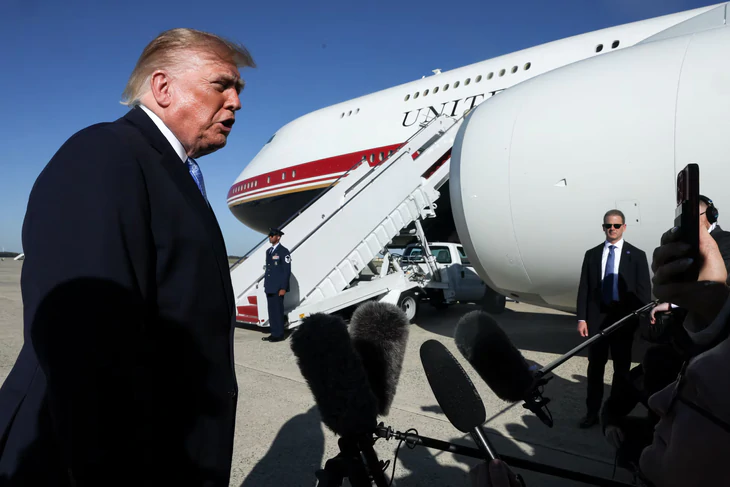
The in-flight phone confiscation did not occur in a vacuum; it unfolded against a backdrop of unique logistical adjustments and intense diplomatic speculation. Prior to the directive regarding mobile phones, observers noted notable alterations to the flight path and refueling itineraries of Air Force One, including modified constraints regarding airspace over Alaska. These cumulative security anomalies fueled a wave of speculation among the press corps and aviation analysts regarding whether the aircraft was operating on a direct, uninhibited return trajectory to the continental United States or incorporating strategic detours.
Furthermore, President Trump’s itinerary during his broader Asian tour had already generated significant international media attention. In the days leading up to his departure for the APEC summit, the U.S. president openly floated the possibility of a surprise meeting with North Korean leader Kim Jong Un. On November 16, prior to embarking on the trip, Mr. Trump remarked to reporters that "there is a possibility" he might cross paths with Mr. Kim, hinting that any such rendezvous would likely materialize within China and that the ultimate decision rested heavily on the approval of Chinese President Xi Jinping.
Although international media outlets heavily analyzed the prospect of a high-profile diplomatic reunion echoing their historic past summits, no formal announcement regarding a meeting materialized throughout the duration of the trip. The convergence of high-stakes regional diplomacy, lingering rumors regarding impromptu bilateral talks, and strict physical security protocols created an atmosphere of intense operational secrecy aboard the presidential aircraft.
Official Silence and the Rationale Behind the Protocol
As of press time, neither the White House nor the U.S. Secret Service has provided a detailed, public explanation regarding the exact nature of the security threat that triggered the phone confiscation. Government agencies typically maintain a strict "no comment" policy on matters concerning the operational security of Air Force One, counter-intelligence countermeasures, and communications defense protocols.
However, national security and cybersecurity experts suggest that such decisions are driven by worst-case scenario planning. Air Force One is frequently described as an airborne White House, equipped with some of the most advanced military-grade encryption, defensive countermeasures, and telecommunications infrastructure in the world. Despite these robust onboard defenses, the personal consumer electronics brought aboard by civilian journalists represent potential vulnerabilities.

Smartphones running commercial operating systems contain numerous software dependencies and third-party applications that could theoretically be targeted. In high-threat environments, intelligence agencies operate under the assumption that any device exposed to foreign infrastructure could be compromised. Consequently, securing the physical perimeter of the press cabin through digital disarmament aligns with broader defense-in-depth strategies.
Implications for the Traveling Press and Future State Visits
The incident serves as a stark reminder of the evolving challenges faced by journalists operating in the modern geopolitical arena. As state and non-state actors increasingly weaponize cyber capabilities, the traditional boundaries between physical travel and digital exposure continue to blur. For the White House press corps, reporting on a U.S. president abroad increasingly means navigating an environment where personal privacy, professional connectivity, and national security mandates frequently collide.
While the temporary seizure of mobile phones concluded without incident once security officials completed their in-flight assessments, the event leaves a lasting precedent. Future presidential delegations visiting nations with advanced cyber-espionage capabilities may find such precautionary measures becoming standardized rather than anomalous. As technology advances and the invisible battlegrounds of international espionage expand into every pocket-sized computer we carry, the skies above global diplomacy remain a domain where caution supersedes convenience.