BYD Issues Public Apology After Delivering Electric SUVs with Swapped Front and Rear Wheels

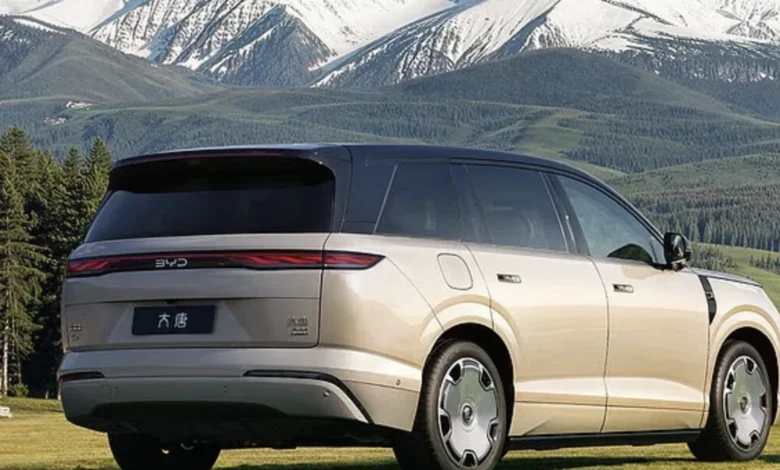
The global electric vehicle landscape has faced a peculiar quality control blunder as BYD, China’s largest electric car manufacturer and a dominant force in the new energy vehicle sector, issued a formal public apology to customers. The automotive giant confirmed that a batch of its newly launched Great Tang electric SUVs was inadvertently manufactured and delivered with front and rear wheels and tires installed in completely inverted positions. While the company has scrambled to reassure the public and correct the manufacturing error free of charge, the incident has ignited widespread discussions across social media platforms regarding the robustness of production oversight at high-volume manufacturing facilities.
The discrepancy, which came to light after initial deliveries reached consumers in China, involves a fundamental assembly error where the front and rear wheels—which feature distinct dimensions—were swapped during the final stages of production. According to technical specifications provided by the manufacturer, the Great Tang is engineered with front wheels measuring 20 by 8 inches paired with 255mm wide tires, while the rear axle requires larger 20 by 9 inch wheels wrapped in 275mm wide tires. Due to the assembly error, the wider rear wheels and tires were installed at the front of the vehicles, and the narrower front units were placed at the rear.
Root Cause Analysis and Supplier Accountability
Following the discovery of the mix-up, BYD launched an immediate internal investigation to trace the origin of the mistake. The automaker attributed the issue to a programming error originating from a third-party supplier’s automated systems. In an official statement communicated through internal channels and public updates, BYD assured consumers that the inverted wheel setup does not pose an immediate safety hazard nor does it fundamentally impair the vehicle’s drivability under normal conditions.
The manufacturer confirmed that the software glitch from the supplier has since been rectified. Furthermore, additional visual inspection checkpoints have been implemented along the production line to prevent similar errors from recurring, and vehicles currently rolling off the assembly line have been verified to have correct wheel configurations.
Comprehensive Remediation and Customer Support

To address the vehicles already delivered to customers, BYD has outlined a comprehensive remediation plan. The company has pledged to thoroughly inspect all potentially affected units free of charge and replace the wheel assemblies wherever necessary. Additionally, the automaker has committed to reimbursing any incidental travel expenses incurred by owners during the repair period, providing temporary replacement vehicles, and restoring the full validity of vehicle warranties for affected owners.
While BYD has not publicly disclosed the exact number of Great Tang SUVs impacted by the faulty assembly, the error quickly gained traction online as confused owners shared photographs and voiced concerns on various motoring forums and social media networks. Many customers expressed apprehension regarding potential premature tire wear, handling anomalies, and overall long-term safety implications stemming from mismatched rolling stock.
Market Success and Rising Demand for the Great Tang
The Great Tang is a flagship 7-seat electric SUV that occupies a strategic position in BYD’s extensive product lineup, retailing for approximately 230,000 Chinese yuan, which translates to roughly $32,000 USD or 840 million Vietnamese dong. Since its official market launch in June, the model has enjoyed remarkable commercial success, rapidly capturing significant market share in China’s fiercely competitive large electric SUV segment.
Sales figures underscore the vehicle’s immense popularity, with approximately 14,000 units delivered in October alone and cumulative sales exceeding 40,000 units within the first four months of availability. This rapid scaling of production to meet soaring market demand has inevitably placed immense pressure on manufacturing plants and supply chain partners, a factor industry analysts believe contributed to the oversight.
A Pattern of Recent Quality Control Challenges
This incident is not an isolated quality control hurdle for BYD as it aggressively expands its footprint globally and scales domestic manufacturing operations. The automaker has faced similar scrutiny in recent months across several key international and domestic markets.

Approximately two months prior to the Great Tang wheel mix-up, BYD’s Australian division initiated a massive recall affecting nearly 32,000 units of the Shark 6 pickup truck. That recall was prompted by concerns involving brake fluid cables routed underneath the vehicle chassis that faced potential chafing risks, which could theoretically lead to fluid leaks and compromised braking performance.
In a separate domestic incident, BYD recalled roughly 71,000 Yuan Pro electric vehicles across China after discovering a manufacturing defect involving the battery pack seal gaskets. The flaw created a risk of moisture ingress into the battery compartment, which could potentially reduce power output and introduce thermal management or fire risks under severe conditions.
Industry Implications and the Cost of Rapid Expansion
These back-to-back incidents underscore the critical challenges automakers face when balancing hyper-growth with stringent quality assurance standards. As legacy automakers and new energy vehicle pioneers alike race to capture market share in the global electrification transition, maintaining rigorous oversight across complex, multi-tiered supply chains remains a paramount challenge.
For BYD, the prompt acknowledgment of the Great Tang wheel assembly error and the rollout of customer-centric remediation measures reflect an effort to protect brand equity and maintain consumer trust. However, industry observers note that as production volumes scale into the millions, minimizing software-driven integration errors and component sorting mistakes will be essential to sustaining long-term consumer confidence in the reliability and safety of modern electric vehicles.