PNJ Faces Leadership Exodus with Seven Senior Executives Resigning Amid Aggressive Corporate Restructuring

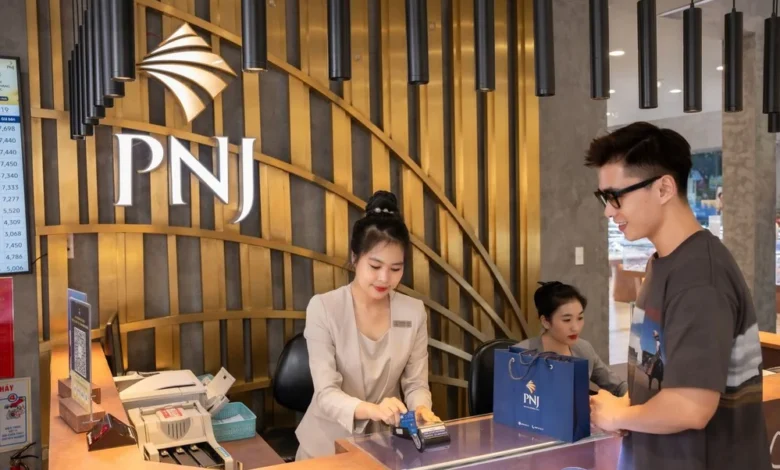
The Phu Nhuan Jewelry Joint Stock Company, widely known as PNJ, has encountered a significant governance hurdle as an additional wave of high-profile departures shakes its organizational structure. The Ho Chi Minh City-listed jewelry giant recently confirmed receiving resignation letters from four more senior personnel, bringing the total number of executive exits to seven within a remarkably brief span of just over a week. This unprecedented turnover coincides directly with a sweeping corporate restructuring initiative aimed at flattening the company’s hierarchical framework, streamlining operational decision-making, and significantly cutting administrative costs.
The recent string of departures highlights the profound internal frictions often accompanying aggressive corporate overhauls. As traditional management layers are dismantled and reporting lines are redrawn, the resulting operational uncertainty appears to have catalyzed a mass exodus among the company’s upper echelons. Market analysts and stakeholders are closely monitoring the situation to determine whether these executive departures will pose a sustained risk to PNJ’s market dominance or act as a necessary growing pain in its evolution toward a leaner enterprise.
Breakdown of the Latest Executive Exits
According to extraordinary disclosure filings released by PNJ, the latest batch of resignations encompasses three independent members of the Board of Directors (BOD) and one senior director.
The independent board members stepping down include Mr. Mai Hữu Tín, an independent director serving for the 2026–2031 tenure; Mr. Nguyễn Tuấn Hải, an independent director and chairman of the Audit Committee for the 2025–2030 term; and Ms. Tiểu Yến Trinh, an independent director also designated for the 2025–2030 period. Company disclosures indicate that the resignations of these three independent board members will formally take effect pending official approval from the upcoming General Meeting of Shareholders.
Simultaneously, Mr. Nguyễn Khoa Hoàng Thành, Senior Director of Marketing, tendered his resignation alongside the board members. Unlike the board positions, Mr. Thành’s departure was swiftly reviewed and officially approved by the PNJ Board of Directors pursuant to a resolution passed on November 23. The simultaneous departure of a key operational head and multiple independent oversight figures has drawn considerable scrutiny from the investment community regarding the governance trajectory of the firm.
Chronology of the Leadership Overhaul
The unfolding leadership crisis did not materialize in isolation but represents the culmination of a rapid sequence of organizational changes implemented over the past two weeks.
Prior to the most recent announcements, PNJ registered resignations from three other pivotal senior executives. This initial group included Mr. Đào Trung Kiên, Senior Director of Strategy and Operational Efficiency; Mr. Nguyễn Chí Kiên, Senior Director of Human Resources; and Ms. Trương Hoài Anh, Senior Director of Customer Experience and Retail Operations. These initial three departures were formally enacted with effective dates starting November 26.
When combined with the subsequent departures of the three independent board members and the marketing chief, the total tally reaches seven high-ranking personnel stepping down within a single week. This rapid succession of departures highlights an intense internal friction point as the executive management team pushes forward with aggressive structural reforms that challenge long-standing corporate routines.
The Strategic Rationale Behind PNJ’s Restructuring
To contextualize the current upheaval, it is necessary to examine the strategic motives articulated by PNJ’s executive leadership prior to the crisis. In official communications published on the company’s corporate website on November 20, Chief Executive Officer Phan Quốc Công outlined the core objectives driving the ongoing corporate transformation.

Mr. Công explained that the primary impetus behind the restructuring is the reduction of intermediary management layers, the consolidation of operational touchpoints, and the explicit clarification of individual accountability across every organizational tier. Empirical analysis of the company’s workforce distribution revealed that the head office functioned as the most heavily bloated department, housing numerous committees that required exhaustive rounds of consultation and consensus-building before any action could be taken.
Historically, administrative workflows at PNJ involved navigating a labyrinth of internal committees and bureaucratic checkpoints. By restructuring operational nodes and shrinking the upper management ranks, the company sought to radically compress decision-making timeframes and accelerate reaction speeds to market demands. Furthermore, the corporate strategy mandated that the head office forge tighter connections with the physical retail store network and manufacturing divisions, pivoting its core function toward direct operational support for revenue-generating frontlines.
Financial Projections and Short-Term Realities
Initial internal projections suggested that these aggressive streamlining measures could yield cost reductions of approximately 30% in personnel expenditures at the corporate headquarters. However, CEO Phan Quốc Công acknowledged that realizing the net financial benefits of these changes will require a protracted assessment period.
In the immediate term, the company must absorb substantial financial outlays associated with severance packages, transition support, and compensation funds disbursed to departing senior personnel. Consequently, the net financial savings expected from the headcount reduction will likely be offset during the initial quarters following implementation.
Moreover, management has conceded that the current alterations represent an emergency triage phase rather than a fully realized, long-term organizational architecture. The changes executed thus far have focused primarily on urgent project-based reassignments to solve immediate operational bottlenecks. Moving forward, PNJ faces the complex task of deep structural reform, which entails completely redesigning operational workflows, internal regulations, and inter-departmental collaboration mechanisms.
Future Outlook and Governance Implications
As PNJ navigates this turbulent transition period, the roadmap for the upcoming phases involves even more profound shifts in corporate governance. In the next stage of the restructuring process, the company anticipates modifying roughly half of the members residing on the Executive Board, alongside further consolidation of operational nodes and a strict re-demarcation of managerial responsibilities.
Mr. Công emphasized that chronic inefficiencies must be addressed at both the Executive Board level—which manages day-to-day operations—and the Board of Directors, which provides overarching strategic guidance and regulatory supervision.
Beyond structural reorganization, PNJ leadership has highlighted the necessity of cultivating a corporate culture defined by risk tolerance, personal accountability, and agile adaptability. Management noted that successful enterprise transformation requires fundamentally altering procedural frameworks and collaboration methodologies rather than merely rotating personnel or renaming administrative departments while preserving legacy bureaucratic layers.
The coming months will prove critical for PNJ as it attempts to stabilize its leadership ranks, reassure nervous investors, and prove that a leaner corporate structure can successfully drive sustainable growth in Vietnam’s competitive luxury retail and jewelry market.
Related posts: