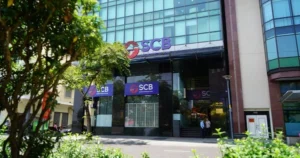
Harmonizing Interests Between Lenders and Borrowers to Sustain Monetary Policy Goals


The drive to reduce lending interest rates, championed by the State Bank of Vietnam (SBV) in its directive issued on October 18, represents a critical strategic maneuver to lower capital costs for enterprises and stimulate broader macroeconomic growth. However, achieving a sustainable low-interest-rate environment is a complex equation that transcends simple administrative decrees. It necessitates a delicate balancing act that protects the interests of depositors, ensures the liquidity and stability of credit institutions, and fosters a healthy, competitive environment for both borrowers and the banking system at large.
As of late 2026, the financial landscape in Vietnam is undergoing a significant transition. With nearly 30 commercial banks having publicly committed to reducing lending rates—typically by a margin of 1.5% to 2% per annum—the pressure on financial institutions to optimize their internal cost structures has intensified. This policy shift is not merely a reaction to current market conditions but a calculated effort to ensure that the liquidity provided to the real economy actually reaches those in need of productive capital.
The Chronology of Monetary Intervention
The current push for lower interest rates began in earnest following the October 18, 2026, directive from the State Bank of Vietnam. This instruction was a response to mounting concerns regarding the elevated cost of capital, which had begun to stifle the recovery of small and medium-sized enterprises (SMEs) during the preceding quarters.
Throughout the first three quarters of 2026, the banking sector faced a tug-of-war between inflationary pressures and the need for credit expansion. By late October, the trend began to shift as the SBV signaled that the era of aggressive tightening had concluded. Major commercial lenders responded by lowering deposit rates, which in turn provided the necessary margin to facilitate reductions in lending rates. According to data released by the SBV, as of October 26, 2026, total system-wide credit reached 20.8 trillion VND, reflecting a robust growth of 11.94% compared to the end of 2025.
Data Analysis: The Credit Landscape
The influx of capital is increasingly concentrated in priority sectors, specifically manufacturing, export-oriented businesses, and essential infrastructure. This alignment is vital, as these sectors act as the primary engine for GDP growth. However, the sheer volume of credit growth requires constant monitoring to ensure that the quality of assets remains high.
Bank executives have been instrumental in the implementation of these rate cuts. For instance, BIDV leadership noted that some institutions have even exceeded the 1.5% to 2% reduction threshold mandated by the central bank. In select cases, lending rates for priority sectors have been adjusted to a range of 6% to 7% per annum. While this is a welcome relief for the corporate sector, it places significant pressure on net interest margins (NIM), compelling banks to pursue aggressive digital transformation and operational efficiency to offset lower revenues.

The Corporate Perspective: Challenges and Expectations
For the business community, the interest rate reduction is viewed as both a lifeline and a necessity for survival in a volatile global market. Nguyen Quang Huan, Vice Chairman of the Vietnam Private Business Association and Chairman of Halcom Vietnam, emphasizes that the timing of these measures is critical.
"In an environment where capital costs have surged, many SMEs have found themselves at a crossroads," Huan stated. "When interest rates remain high, it limits the ability of domestic firms to compete with international peers who enjoy cheaper financing. By reducing rates, the central bank is effectively lowering the barrier to entry for essential capital investments."
Huan points out that the real challenge for many enterprises is not just the nominal interest rate, but the accessibility of the funds. Some firms, particularly in the manufacturing sector, have struggled with the "hidden costs" of borrowing, such as mandatory fees and stringent collateral requirements that effectively inflate the true cost of credit. He argues that for the policy to be truly effective, banks must move beyond "administrative guidance" and embrace market-based mechanisms that reflect the true supply and demand of capital.
Furthermore, there is a lingering concern regarding the "crowding out" effect. If banks perceive that certain sectors, such as real estate or speculative ventures, offer higher returns or lower risk profiles, they may naturally prioritize these over the manufacturing sector, even if the latter is more essential for long-term economic stability.
Balancing Macroeconomic Stability and Growth
Dr. Nguyen Van Luc, Director of the Commercial Business Training Program at Phenikaa University, provides a broader analytical view of the current situation. He suggests that while interest rate cuts are beneficial, they must be supported by a stable macroeconomic foundation, specifically regarding inflation control and exchange rate management.
"The central bank cannot simply force rates down in isolation," Dr. Luc explains. "The stability of the exchange rate is paramount. If we attempt to force interest rates down too aggressively while external market volatility remains high, we risk capital flight or currency devaluation, which would eventually lead to a rebound in inflation and, consequently, higher interest rates in the future."
Dr. Luc identifies several pillars necessary for a sustainable low-interest-rate environment:

- Supply-Side Reforms: The government must continue to address bottlenecks in production, stabilize the prices of essential commodities like energy and logistics, and streamline administrative procedures.
- Investment Efficiency: Public investment must be executed with higher transparency and efficiency to prevent capital wastage and ensure that infrastructure projects contribute directly to lowering the cost of doing business.
- Risk Management: Banks must rigorously monitor the quality of credit allocated to high-risk sectors to ensure that a few non-performing loans do not jeopardize the entire system’s ability to lend at lower rates.
The Role of Policy Coordination
The effectiveness of these interest rate adjustments is heavily dependent on the synchronization of monetary and fiscal policies. The SBV’s ability to lower rates is inherently limited if the fiscal side does not provide sufficient support through tax incentives, infrastructure investment, and bureaucratic simplification.
Deputy Governor of the SBV, Pham Thanh Ha, has repeatedly stressed that the reduction in interest rates must be implemented in a manner that ensures the liquidity and safety of the entire banking system. The "harmonization" of interests between depositors—who seek a fair return on their savings—and borrowers—who seek affordable capital—remains the central bank’s most difficult task. If deposit rates fall too low, the system risks a contraction in the deposit base, which would inevitably lead to a liquidity crunch and a subsequent rise in lending rates.
Implications for the Future
As Vietnam approaches the final quarter of 2026, the focus will likely shift from merely lowering the "headline" interest rate to improving the "actual" cost of credit. This includes evaluating the transparency of fees, the flexibility of loan terms, and the ease of access for businesses that are currently underserved by the formal banking sector.
For the private sector, the hope is that these policies will foster a climate of confidence. When businesses feel that their cost of capital is predictable and competitive, they are more likely to commit to long-term capital expenditure, hiring, and research and development.
Ultimately, the success of this initiative will be measured not by the immediate drop in interest rate percentages, but by the resilience of the economy in the coming years. By fostering a banking system that is both profitable and socially responsible, Vietnam can ensure that the current cycle of interest rate reductions leads to a more sustainable, high-growth economic future. The interplay between central bank oversight and commercial bank autonomy will remain the defining feature of this transition, necessitating continued dialogue between regulators, financial institutions, and the business community to navigate the uncertainties of the global economic climate.