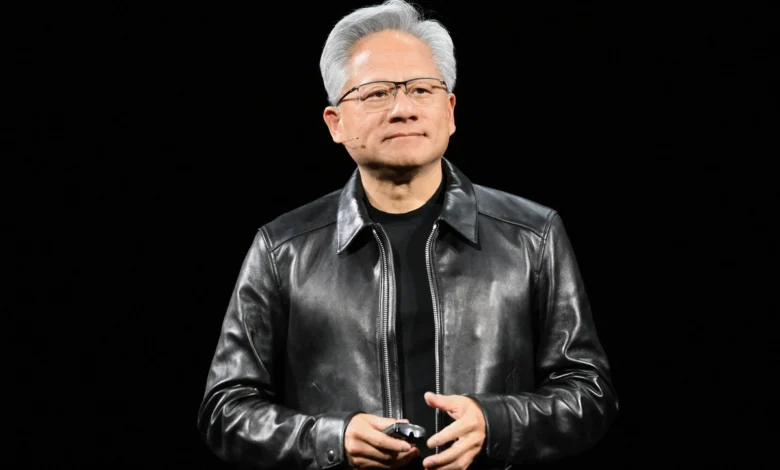
The corporate landscape at Nvidia has entered a period of unprecedented turbulence as Jensen Huang, the company’s long-standing CEO, officially resumed his leadership role on November 23. This reinstatement, coming less than two weeks after his initial resignation amid a high-profile scandal involving allegations of infidelity and claims of potential corporate espionage, has not silenced the critics. Instead, it has triggered a cascade of legal and political challenges that threaten to undermine the stability of the semiconductor giant and its leadership structure.
While the Nvidia Board of Directors has moved quickly to restore institutional continuity, the path forward for Huang is fraught with at least four federal investigations and two major class-action lawsuits. These proceedings, combined with mounting pressure from both sides of the U.S. political aisle, represent a significant stress test for one of the most valuable technology companies in the world.
A Timeline of Crisis and Reinstatement
The sequence of events leading to this current state of instability began in early November, when allegations surfaced regarding an extramarital affair involving Jensen Huang. The situation escalated rapidly when external reports suggested that one of the individuals involved in the matter was allegedly linked to espionage activities. Faced with immense public and shareholder scrutiny, Huang stepped down from his position as CEO.
The power vacuum was short-lived. On November 23, the Nvidia Board of Directors announced the reinstatement of Huang, citing the necessity of his vision to maintain the company’s competitive edge in the global artificial intelligence (AI) market. The Board explicitly stated that, following a thorough internal review and consultations with government officials, they concluded that "the reinstatement of Mr. Huang does not pose a risk to national security."
This decision, however, was immediately met with bipartisan backlash in Washington. House Democratic leaders, including Hakeem Jeffries, publicly questioned the legitimacy of the process. "We will not allow the national security of the United States to be sold off for personal financial gain," Jeffries declared, setting the stage for what is expected to be a prolonged legislative and oversight battle in the next congressional term.
Federal Investigations and Legal Scrutiny
The legal jeopardy facing Nvidia is multifaceted. At the federal level, the Federal Bureau of Investigation (FBI) is actively probing the nature of the relationship between Jensen Huang and Alice Huang, the individual at the center of the alleged espionage claims. While U.S. Attorney Todd Blanche stated on November 12 that there was currently no concrete evidence of illicit conduct by Nvidia or its founder, the investigation remains open.
Legal experts suggest that the recent support from President Donald Trump—who publicly defended Huang during an interview with CNBC, claiming that "Huang didn’t do anything wrong" and that his own intervention helped stabilize the firm—could complicate the Department of Justice’s (DOJ) path forward. However, the influence of the executive branch is not absolute. The statute of limitations for potential violations of export control regulations extends well past January 2029, meaning that even if the current administration opts for leniency, a future administration could theoretically reopen the case. Furthermore, the possibility of a presidential pardon being granted before the current administration leaves office remains a significant variable that analysts are closely watching.
Simultaneously, the Securities and Exchange Commission (SEC) has launched an investigation into Nvidia regarding potential accounting irregularities. While the agency has not provided a formal comment on the scope of the inquiry, the intersection of executive conduct and financial reporting is a high-priority area for federal regulators.
State-Level Interventions
Beyond federal oversight, the company is facing scrutiny from state authorities. On November 19, California Attorney General Rob Bonta confirmed that his office has issued demands for information from Nvidia. The investigation aims to determine whether sensitive, advanced chip technology or proprietary information was compromised, specifically in relation to unauthorized access by foreign entities, including China.
Furthermore, Missouri Attorney General Catherine Hanaway is spearheading an inquiry into whether the actions of the company’s leadership have caused financial harm to the state’s pension funds. This inquiry is focused on consumer protection standards and the potential dissemination of misleading information to shareholders. These state-level probes are critical, as they may lead to civil litigation that could result in substantial financial penalties or mandatory structural changes within the firm.
Shareholder Litigation and Corporate Governance
The internal strife has manifested in the courtroom through at least two major legal actions. On November 11, a group of shareholders filed a lawsuit in federal court, alleging that the Board of Directors failed to fulfill its oversight responsibilities regarding the CEO’s conduct. This suit argues that the company’s failure to maintain robust internal controls and ethical oversight directly led to the current crisis.
In response, Nvidia has established a special committee composed of independent board members and has retained the prestigious law firm Wachtell, Lipton, Rosen & Katz to assist in the internal investigation. While the Board argues that this committee demonstrates a commitment to transparency, plaintiffs’ attorneys remain skeptical.
Lee Squitieri, a lead attorney for the plaintiffs, argued in a statement to Reuters that the reinstatement of Huang does not mitigate the underlying legal and governance issues. "The core issue is that Mr. Huang is the architect of a culture that lacks adequate checks and balances," Squitieri noted. He emphasized that the company’s problems extend far beyond the immediate allegations of export control violations to the fundamental weakness of its corporate governance framework.
The Financial and Operational Stakes
The market reaction to the ongoing uncertainty has been significant. A class-action lawsuit filed in San Jose, California, on November 9, alleges that Nvidia and Huang misled investors by obscuring the relationship with Alice Huang and the entity Megaspeed. While the lawsuit does not specify the exact amount of damages, the company has seen its market capitalization fluctuate significantly, losing roughly 20% of its value—equating to nearly $1 trillion—during the period identified in the complaint.
Under U.S. securities law, the damages recoverable in such class actions are often capped if the stock price recovers within 90 days of a major decline. With Huang’s return to the helm, investors are watching closely to see if the market stabilizes. However, the company’s liability insurance for directors and officers, which features a coverage limit of up to $950 million, may be insufficient should the courts find evidence of gross negligence or intentional misconduct.
Implications for the AI Industry
The challenges confronting Nvidia carry implications that extend well beyond the company itself. As a primary supplier of the hardware powering the global artificial intelligence infrastructure, any disruption at Nvidia could have a cooling effect on AI development worldwide.
The current investigations highlight the tension between rapid technological innovation and the stringent requirements of national security and corporate ethics. If the findings of these various inquiries confirm that proprietary technology was leaked or that leadership prioritized short-term financial gains over compliance, it could lead to tighter regulatory oversight of the entire semiconductor industry.
For now, Jensen Huang’s return is being framed by the Board as a necessary step for stability. Yet, as the legal, state, and federal probes progress, the "stability" that the board seeks remains elusive. The months ahead will determine whether Nvidia can navigate this crisis without a permanent change in its strategic direction or a fundamental restructuring of its leadership, proving whether a company can truly separate its technological success from the conduct of its executive leadership.