When a trailing vehicle signals to pass, is the driver in front legally obligated to yield the right of way?

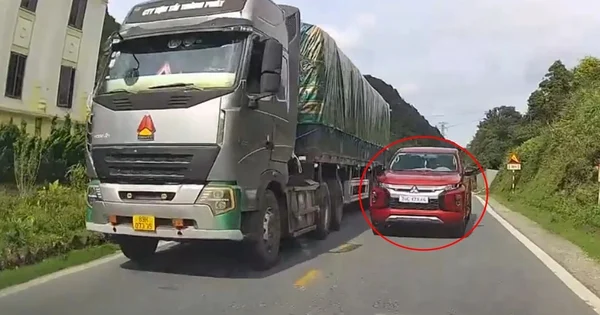
Navigating the complexities of modern road traffic requires more than just mechanical skill; it demands a nuanced understanding of legal statutes and the etiquette of shared infrastructure. On two-lane highways and multi-lane arterial roads, a common point of contention arises when a trailing driver flashes their headlights or sounds their horn to initiate a pass, while the driver in the lead remains indifferent. This scenario often sparks frustration, leading to aggressive tailgating or, conversely, a stubborn refusal to facilitate a safe overtaking maneuver. While some motorists believe that maintaining the speed limit exempts them from yielding, others argue that a signal to pass is an immediate command that must be obeyed. Resolving this conflict is essential for road safety, as the interaction between these two drivers is governed by strict, legally defined parameters.
The Legal Framework of Overtaking
According to Article 14 of the Law on Road Traffic, the process of overtaking is a highly regulated maneuver. A vehicle intending to pass must signal its intent, typically through the alternating use of high-beam headlights or, in specific contexts, an audible horn signal. However, the law imposes strict limitations on how these signals are used. In urban areas and densely populated residential zones, the use of audible signals is restricted between 10:00 PM and 5:00 AM, during which time only visual light signals are permitted to request a pass.
Crucially, the legal responsibility does not rest solely on the vehicle attempting to pass. Once a driver in the lead receives a signal, they are legally required to assess the traffic conditions ahead. If the path is clear and the maneuver can be completed safely, the lead driver is obligated to reduce their speed, activate their right-turn signal to indicate that the way is clear, and move toward the right side of the lane to provide sufficient space for the trailing vehicle. During this entire sequence, the lead driver must refrain from any action that might obstruct or endanger the vehicle attempting the overtake.
Defining Safety: The Crux of the Matter
The perception that a signal to pass creates an immediate obligation to yield is a common misconception that has led to numerous accidents. Legal experts emphasize that "yielding" is not an act of blind compliance; it is a calculated safety decision. A lead driver should only facilitate a pass when they are certain that no oncoming traffic, road debris, or hazardous conditions exist that would render the maneuver dangerous.
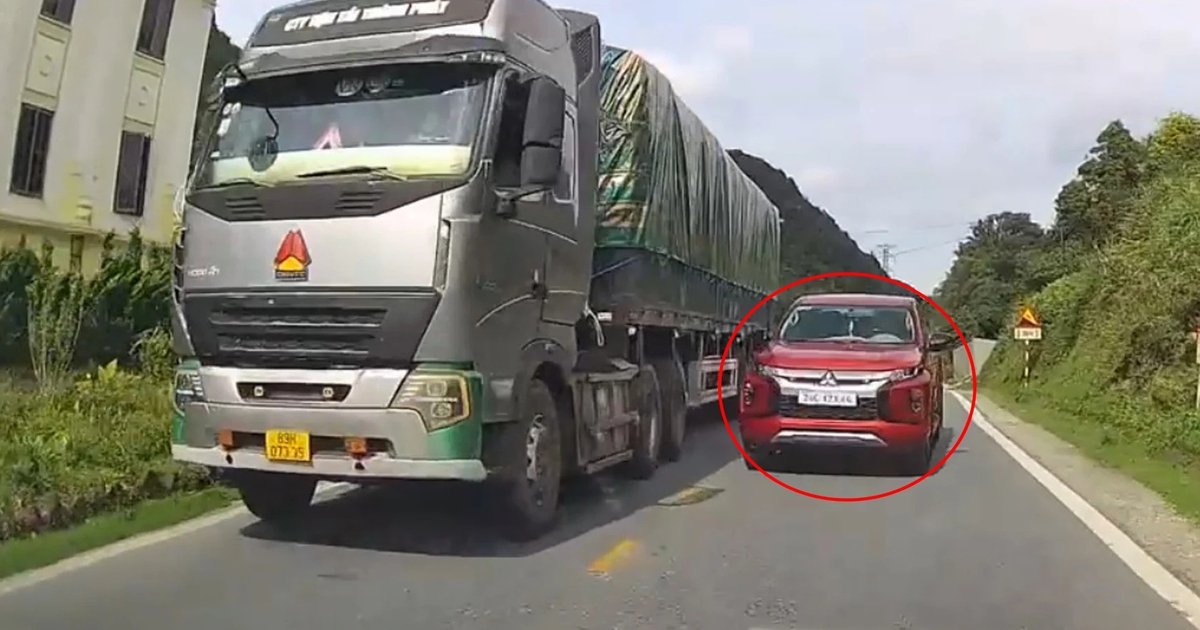
If a driver is currently in the middle of their own overtaking maneuver or if the road ahead is obstructed by traffic, they are not only permitted but required to decline the request. In such cases, the lead driver should activate their left-turn signal. This is a critical piece of defensive driving—it serves as a warning to the trailing driver that the path is not yet safe for overtaking. It is not an act of obstruction, but rather a professional communication to prevent a potential head-on collision.
Chronology and Escalation of Road Incidents
The history of traffic regulation regarding overtaking has evolved from simple "keep right" rules to complex systems designed to manage high-speed, high-density traffic. Over the past decade, as vehicle ownership has increased significantly, the frequency of "passive-aggressive" traffic incidents has spiked.
In the early 2010s, regulatory bodies focused primarily on speeding and driving under the influence. By 2018, however, data from transportation departments began showing a rise in incidents involving "road rage" stemming from disagreements over lane discipline. The current iteration of the law, specifically Decree 168/2024/ND-CP, represents a shift toward stricter accountability for both the "blocker" and the "aggressor."
Statistical Implications and Administrative Penalties
The financial and legal repercussions for failing to adhere to these rules are significant. Under the current regulatory framework, a driver who refuses to yield to a vehicle signaling to pass—despite having the safe capacity to do so—can face administrative fines ranging from 2,000,000 to 3,000,000 VND, accompanied by a deduction of two points from their driving license.
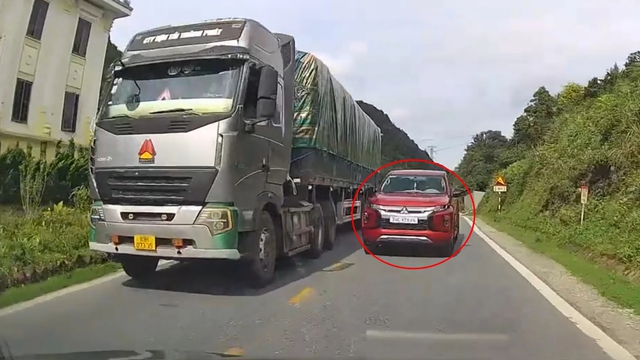
The severity of the penalty escalates drastically if the failure to yield results in a traffic accident. In such instances, the fines increase to between 20,000,000 and 22,000,000 VND, with a 10-point deduction from the license. However, authorities note that the application of these penalties requires a clear causal link between the driver’s refusal to yield and the resulting collision. The law does not automatically assign fault to the lead driver simply because a contact occurred; investigators must determine if the lead driver’s actions were the proximate cause of the incident.
The Nuance of Multi-Lane Highways
The rules for yielding differ significantly depending on the road structure. The "one-lane" rule, where a driver must pull to the right, applies primarily to single-lane roads in each direction. On multi-lane highways or expressways where there are two or more lanes moving in the same direction, the dynamics change. In these environments, drivers are expected to adhere to lane discipline rules—using the right lane for standard travel and the left lane for passing.
Consequently, applying the "move to the right" rule blindly on a multi-lane highway is both impractical and potentially dangerous. In such cases, the primary obligation is to maintain proper lane discipline rather than attempting to "clear the way" by shifting into a potentially occupied lane.
Broader Impact on Road Culture
The persistent tension between drivers regarding overtaking is a symptom of a broader issue in modern traffic culture: a lack of patience and a misunderstanding of shared responsibility. Traffic engineers argue that the most efficient and safest flow is achieved when drivers treat the road as a collaborative environment rather than a competitive one.
For the trailing driver, the mandate is clear: they must observe, wait for a clear path, and ensure that their maneuver does not force the lead driver into a dangerous situation. The law dictates that a pass should never be initiated if the road ahead is blocked, if there is oncoming traffic in a restricted segment, or if the view is obscured by curves, bridges, or tunnels.
For the lead driver, the duty is to remain observant. Defensive driving techniques—such as checking mirrors, signaling intent early, and avoiding sudden braking or erratic steering—are vital. When a driver is being followed by an aggressive vehicle, the safest course of action is to maintain a steady speed and allow the vehicle to pass only when it is objectively safe to do so.

Conclusion: A Shared Responsibility
Ultimately, the law seeks to balance the mobility of faster vehicles with the safety of those already on the road. The responsibility for a safe overtake is shared equally. A driver who refuses to yield when safe to do so is an obstacle to efficiency and a contributor to road congestion, but a driver who forces a pass without regard for the lead vehicle’s safety is a hazard to public order.
As traffic density continues to rise, the importance of these regulations will only grow. Adhering to the established protocols of signaling, observation, and communication is not merely about avoiding fines; it is about fostering a culture of safety that protects all road users. Whether on a rural two-lane road or a modern expressway, the rules are designed to ensure that the journey is completed without incident, prioritizing human life over the urgency of the moment. By understanding the legal distinctions and the physical realities of road travel, drivers can navigate these interactions with the professionalism and caution required for a safer commute.