Germany Criticizes Ukraine Over Foreign Aid Usage Amid Escalating Global Tensions in the Middle East and Renewed US-Russia Diplomatic Outreach

Tensions across multiple geopolitical theaters reached a fever pitch as Berlin voiced sharp public frustration regarding how Kiev allocates Western financial assistance, running concurrently with a sharp military escalation between the United States and Iran in the Persian Gulf, and high-level diplomatic contacts between Washington and Moscow aimed at untangling the protracted conflict in Eastern Europe.
The convergence of these events underscores a deeply interconnected global security landscape where fiscal disputes among Western allies, naval confrontations in Middle Eastern chokepoints, and shifting diplomatic alignments continue to redefine international relations.
Berlin Criticizes Kiev’s Procurement Strategies and Weapon Purchases
On September 8, German Foreign Minister Johann Wadephul publicly criticized Ukraine for failing to direct a significant portion of Western aid toward purchasing military hardware manufactured by German defense contractors. While firmly reaffirming Berlin’s position as one of the staunchest financial and military benefactors of Kiev, Mr. Wadephul emphasized that Germany’s domestic defense industrial base must receive a rebounding boost from these large-scale procurement packages to justify the expenditures to domestic taxpayers.
Germany formally requested that the Ukrainian government reconsider its defense procurement processes to improve mutual alignment and accelerate the redirection of aid funds back into domestic German enterprises. Analysts note this policy mirrors broader Western political shifts, echoing sentiments popularized by U.S. President Donald Trump regarding the accountability and domestic economic return of foreign military assistance.
Meanwhile, Moscow has continued to condemn the increasing militarization of the European Union and Germany, arguing that Western nations are actively preparing for a direct, large-scale confrontation. Russian officials reiterated that expanding European defense manufacturing and funneling advanced weaponry into contested zones serve only to prolong hostilities rather than foster a stable framework for negotiation.
U.S. Strikes Iranian Oil Tankers in the Persian Gulf as Tehran Vows Retaliation
The friction in Europe runs parallel to an explosive military escalation in the Middle East. On September 8, the U.S. Central Command (CENTCOM) announced that American forces had successfully targeted and struck five oil tankers belonging to Iran in the vicinity of Kharg Island within the strategic Strait of Hormuz.
According to Washington, the military action served as a direct reprisal for earlier missile attacks launched by Iran’s Islamic Revolutionary Guard Corps (IRGC) targeting American warships in the region. U.S. military officials confirmed that the targeted vessels formed part of the IRGC’s covert financial and logistical network. They also noted that U.S. warships successfully evaded the prior incoming barrage, resulting in zero American casualties.
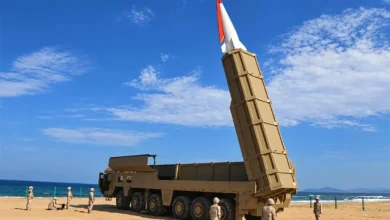
The response from Tehran was swift and bellicose. Immediately following the airstrikes, the IRGC issued stern warnings to all oil tankers operating near the ports of Bahrain and Kuwait, declaring them potential targets and demanding that foreign crews evacuate the area immediately. In a dramatic escalation later that same day, Iranian forces launched a volley of ballistic missiles targeting the U.S. Al-Azraq Air Base in Jordan, causing localized damage to military infrastructure before Jordanian air defense batteries successfully intercepted and destroyed eight incoming projectiles.
High-Level Diplomatic Engagement Between Washington and Moscow
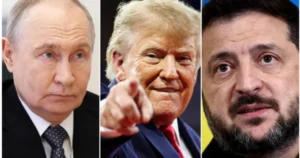
Amid simultaneous crises in Europe and the Middle East, diplomatic channels between the United States and Russia experienced a notable, albeit cautious, thaw. On September 8, U.S. President Donald Trump and Russian President Vladimir Putin engaged in a comprehensive phone call lasting over an hour. The dialogue followed intensive diplomatic missions undertaken by U.S. special envoys Steve Witkoff and Jared Kushner to both Moscow and Kiev.
Yury Ushakov, Foreign Policy Advisor to the Kremlin, described the exchange as frank and constructive. During the call, the U.S. leader articulated a strong desire to achieve a diplomatic breakthrough and resolve the Ukraine conflict within his current presidential term. President Trump expressed his belief that bringing an immediate halt to hostilities would pave the way for a total restoration of U.S.-Russia bilateral relations, unlocking mutual strategic and economic benefits.
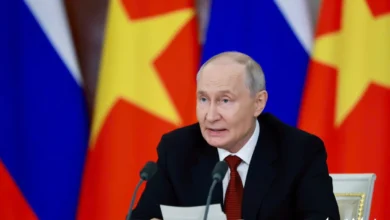
On the Russian side, President Putin expressed appreciation for Washington’s mediation efforts while explicitly affirming that Moscow harbors no aggressive intent or hostile plans toward the nations of Western Europe. Both leaders mutually agreed to maintain open communication channels and execute further back-channel exchanges to explore potential pathways for de-escalation.
Iran Intercepts Advanced U.S. Uncrewed Underwater Vehicle
Complicating the maritime theater in the Persian Gulf, the IRGC announced on September 8 the seizure of an advanced, uncrewed underwater vehicle (UUV) known as the Dive-LD, manufactured by the American defense technology firm Anduril Industries. The vessel was reportedly intercepted while operating in the shallow waters of the Strait of Hormuz.
Tehran highlighted the captured system as a sophisticated piece of military hardware capable of operating continuously for ten days at depths of up to 6,000 meters, primarily configured for advanced intelligence, surveillance, reconnaissance (ISR), and submarine infrastructure monitoring.
In response to the capture, CENTCOM downplayed the strategic significance of the loss, emphasizing that the uncrewed platform did not carry critical cryptographic data, sensitive sensor matrices, or advanced radar arrays. Washington characterized the incident as a minor technical mishap occurring amidst an already volatile security environment. Analysts suggest that the timing of the seizure—occurring simultaneously with Iranian missile retaliations against regional U.S. bases—demonstrates Tehran’s growing capability and willingness to challenge Western technological assets operating in its immediate maritime periphery.
Broader Geopolitical Implications and Analytical Outlook
The simultaneous eruption of diplomatic disputes within the Western alliance, kinetic naval exchanges in the Middle East, and high-stakes back-channel diplomacy between Washington and Moscow paint a complex portrait of contemporary global security.
- Fiscal Fatigue and Industrial Realignment: Germany’s public criticism of Ukraine’s procurement strategy highlights a growing tension between altruistic military support and domestic economic accountability. As European nations face internal economic pressures, taxpayers increasingly demand that military aid budgets stimulate local industrial bases rather than flow outward without tangible domestic returns.
- The Fragility of Maritime Chokepoints: The kinetic exchanges involving oil tankers and uncrewed vessels in the Strait of Hormuz reiterate the extreme vulnerability of global energy supply lines. With Iran demonstrating a capacity to threaten regional infrastructure—ranging from commercial tankers to coalition airbases in Jordan—the risk of a broader, multi-front regional war remains critically high.
- The Pivot Toward Bilateral Deal-Making: The prolonged telephone summit between Presidents Trump and Putin illustrates an ongoing shift toward transactional, leader-level diplomacy. By bypassing traditional multilateral frameworks, Washington and Moscow are actively exploring direct accommodations, though such maneuvers risk alienating frontline European allies and complicating long-term security architectures.
As these developments unfold across multiple continents, international observers will closely monitor whether Western cohesion can withstand internal procurement friction, how the United States and Iran manage the ongoing tit-for-tat escalation in the Persian Gulf, and whether back-channel diplomacy can genuinely deliver a durable settlement to the war in Ukraine.