Apple Unveils iPhone Duo as the Company Enters the Foldable Smartphone Market After Nearly a Decade of Anticipation

After nearly a decade of industry speculation, patents, and fervent consumer anticipation, Apple has officially pulled back the curtain on its first foldable smartphone in history, introducing the iPhone Duo. Representing the most significant structural shift for the iPhone lineup in roughly ten years, this launch marks Cupertino’s formal entry into a market segment that has matured significantly over the past half-decade. Priced starting at 64,999,000 VND in Vietnam—with pre-orders opening on October 16, 2026, and official retail availability set for October 23, 2026—the iPhone Duo arrives positioned squarely at the intersection of ultra-premium hardware and forward-looking artificial intelligence integration.

Design Philosophy and Form Factor
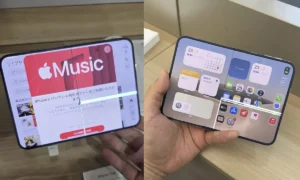
Adopting the book-style horizontal folding architecture that has come to define modern ultra-premium foldable devices, the iPhone Duo is designed to prioritize a tablet-like expansive viewing area while maintaining pocketability when closed. According to Apple’s engineering leadership, the horizontal folding mechanism yields a significantly superior multimedia and productivity experience compared to vertical flip devices.

When closed, the device resembles a pocket-sized hardcover book, featuring an outer cover screen measuring 5.4 inches. Upon unfolding, the internal flexible panel expands to a massive 7.6 inches, making it the largest display ever featured on an iPhone. Both panels share a cohesive aspect ratio, ensuring seamless continuity when transitioning content between the outer display and the internal canvas. According to internal metrics, the internal display’s viewing surface area is more than 50 percent larger than that of the iPhone 18 Pro Max and over 80 percent larger than standard iPhone Pro models.
The Mechanics of the Fold: Engineering the Crease

Rather than relying on unproven breakthrough technologies to eliminate the display crease entirely, Apple has adopted a multi-layered material science approach. The surface of the inner display utilizes a custom-engineered nano-woven polymer layer, which boasts a surface hardness up to 40 percent higher than comparable materials currently found on the market. Surface hardness is a critical factor in determining whether a foldable display develops permanent indentations or "sagging" over prolonged use.
Beneath this protective outer layer lie precision-engineered glass panels positioned above and below the folding substrate. These panels are affixed using a custom adhesive system that allows the layers to glide over one another like the pages of a book when the device is folded, rather than being subjected to rigid tension and deformation at the hinge point. While the underlying principle is reminiscent of solutions explored by competitors like Oppo with the Find N series, Apple’s decision to prioritize material durability over software-based optical masking underscores a long-term commitment to structural integrity over short-term cosmetic impressions.

Hinges, Titanium Framework, and Durability
If the display represents the continuation of existing foldable paradigms, the hinge mechanism is where Apple’s proprietary engineering philosophy becomes fully apparent. More than 100 precision-engineered components are housed within a complex dual-cam structure that must simultaneously support and distribute the mechanical stress across the internal display when unfolded, while incorporating a precision linear magnet array to ensure the device snaps shut with absolute firmness. This represents a mechanical engineering challenge significantly more complex than standard rotating gear systems.

The device is built around a Grade 5 titanium chassis, reinforced internally with specialized stress-bearing ribs and antenna slots embedded with ceramic fibers. This precise balance of structural rigidity and overall weight management was mandatory to house the doubled internal componentry of a foldable architecture while maintaining everyday usability.
As a result of these structural enhancements, the iPhone Duo achieves a level of physical protection rarely seen in the foldable phone segment. It features Ceramic Shield 2 on the front cover, providing up to three times the scratch resistance of standard glass, alongside official IP68 water and dust resistance—a benchmark that many foldable competitors have historically hesitated to fully guarantee due to the vulnerabilities inherent in mechanical folding gaps.

Camera System and Computational Photography
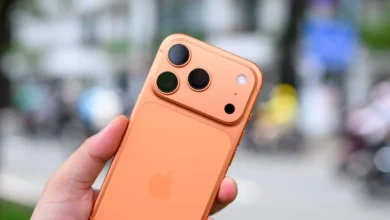
The camera array on the iPhone Duo reflects a pragmatic design compromise necessitated by the internal real estate demands of the folding mechanism, dual displays, and dual battery cells. While the 48MP Ultra Wide sensor is carried over directly from the iPhone 18 Pro, the primary camera integrates 2x optical Telephoto capabilities directly within a single sensor, forgoing a separate physical telephoto lens like those found on traditional Pro models. Consequently, buyers investing in a device priced on par with a mid-range laptop must accept a more modest camera hardware footprint.

To offset physical optical limitations, Apple leans heavily into structural software experiences enabled by the dual-screen architecture:
- Duo Preview: Allows subjects to preview their framing on the outer display while the photographer utilizes the high-quality rear cameras, outperforming traditional selfie configurations.
- Smart Take: Employs on-device artificial intelligence powered by the A20 Pro chip to automatically capture the optimal moment when subjects in the frame are detected posing.
- Duo FaceTime: Enables multiple participants to engage in video calls without crowding in front of a single lens.
By transforming a structural limitation—two screens—into a creative advantage, Apple sidesteps direct competition on raw camera specifications during the inaugural generation of this new product line.

Performance, Thermal Management, and Battery Architecture
Under the hood, the iPhone Duo is powered by the A20 Pro chip. While the silicon shares foundational DNA with the processors found in the iPhone 18 Pro lineup, its packaging represents a distinct departure. Placing the processing units directly adjacent to the memory module—an architectural layout borrowed from Apple’s M-series Mac processors—reflects the severe spatial constraints faced by the design team. The challenge involved housing a high-performance processor, a custom vapor chamber cooling system, and efficient thermal dissipation channels within a tightly sealed foldable chassis.

Powering the device required a division of energy storage. Apple opted for a dual-battery configuration, placing two symmetrical cells on either side of the chassis rather than a single large battery. An advanced energy-balancing algorithm allows these two cells to operate as a unified system, delivering up to 44 hours of video playback using solely the outer display, or approximately 24 hours of mixed everyday usage. This performance effectively neutralizes primary consumer anxieties regarding battery longevity on foldable form factors.
Software and Ecosystem Integration

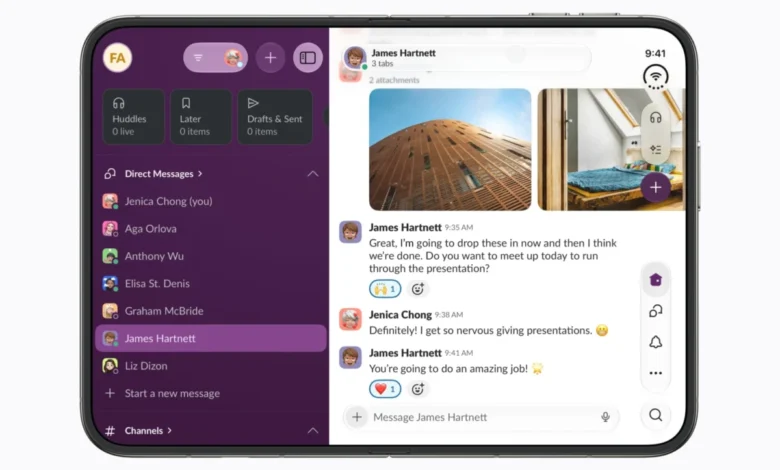
While the hardware represents an impressive feat of mechanical engineering, the software suite is where Apple has established its most profound long-term strategic advantage. Split View enables the simultaneous execution of two applications side-by-side for the first time on an iPhone, requiring a total restructuring of how iOS manages display space, from relocated app dock positions to a vertically redesigned Dynamic Island tailored to accommodate both screens.
Third-party applications such as Netflix, Zoom, and Slack were optimized and ready out of the box on launch day, signaling early collaboration between Apple and third-party developers. This proactive ecosystem alignment prevents the software fragmentation issues that plagued early Android foldables, ensuring that users do not encounter large screens without clear functional applications.

Simultaneously, the appearance of a rebuilt, beta-phase Siri AI running alongside iOS 27 highlights the broader strategic vision behind the hardware. By providing an expansive canvas for multitasking alongside conversational artificial intelligence, the iPhone Duo serves as Apple’s ideal platform for showcasing its next-generation AI initiatives, transcending its identity as a mere folding smartphone.
Market Implications and Industry Outlook

The launch of the iPhone Duo represents a watershed moment for the mobile industry. By establishing a definitive baseline for premium foldables, Apple validates a product category that has spent years searching for mainstream consumer validation. As pre-orders commence across global markets, industry analysts will closely monitor adoption rates to determine whether the device can successfully shift consumer demand away from traditional slab-style flagships toward multi-screen productivity devices.