VCCI must transform itself before calling on businesses to join the digital revolution


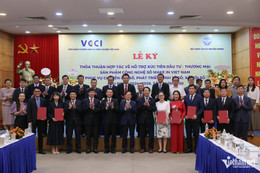
On the afternoon of July 30, a pivotal moment in Vietnam’s digital economy unfolded as Minister of Information and Communications Nguyen Manh Hung and Chairman of the Vietnam Chamber of Commerce and Industry (VCCI) Pham Tan Cong signed a comprehensive cooperation agreement. This partnership, set for the 2024–2026 period with a long-term vision toward 2030, aims to catalyze the adoption of "Make in Viet Nam" digital technologies, accelerating the nation’s transition toward a digital economy and a digital society.
The ceremony was characterized by an unconventional, pragmatic atmosphere. Deviating from standard protocol, Minister Nguyen Manh Hung opted to forego a prepared speech, choosing instead to engage in a direct, candid dialogue with the leadership of VCCI. This interaction served to underscore a fundamental tenet of the digital age: true leadership requires authenticity, adaptability, and a willingness to lead by example.
The Imperative of Internal Transformation
Minister Nguyen Manh Hung emphasized that the digital transformation of the national economy has now entered its fifth year. Reflecting on the lessons learned during this period, the Ministry of Information and Communications (MIC) has identified a primary obstacle: digital transformation cannot be successfully mandated from the top down without internal adoption.

According to the Minister, the first step for any organization or business is the systematic migration of operational data into a digital environment. "Once the information is digitized, leaders and management only need to define the parameters and requirements," the Minister noted. "The processing of that data, facilitated by advanced technologies such as Artificial Intelligence (AI), becomes the primary role of Vietnam’s digital technology firms."
He stressed that digital transformation is not merely a technical upgrade but a process of organizational "transformation" in its purest sense. Only leaders with the requisite authority and credibility can effectively drive the shift in workflows, cultural habits, and resource allocation. By demonstrating this commitment internally, VCCI aims to set a benchmark for the wider business community.
Chronology of the Digital Strategic Partnership
The collaboration between the MIC and VCCI is the culmination of years of policy development aimed at fostering a robust digital ecosystem.
- 2019-2020: The inception of the "Make in Viet Nam" strategy, focusing on self-reliance in telecommunications and digital infrastructure.
- 2021-2023: A period of rapid adoption among major enterprises, though small and medium-sized enterprises (SMEs) remained hesitant due to cost concerns and technical literacy gaps.
- July 30, 2024: The formal signing of the cooperation agreement between MIC and VCCI, marking a structural shift toward private sector integration in digital policymaking.
- August 2024 – October 2024: The "Internal Transformation Phase," during which VCCI will undergo a comprehensive digital overhaul of its internal processes over a three-month period.
- 2025 and beyond: The national rollout, targeting the engagement of one million Vietnamese businesses in digital transformation programs.
Strategic Objectives and Implementation Framework
The agreement establishes a clear roadmap for the next two years. The MIC will provide technical consultation and strategic guidance for VCCI’s internal digital architecture, while VCCI will act as the bridge between technology providers and the broader business community.

Specifically, the agreement mandates:
- Market Matching: VCCI will survey its member associations to identify specific pain points and technological needs, which will then be communicated to domestic tech firms to develop tailored solutions.
- Product Selection: VCCI will identify and promote 10 flagship "Make in Viet Nam" digital products across 10 key industries to serve as models for nationwide adoption.
- Global Expansion Support: The MIC and VCCI will collaborate to map out international markets for Vietnamese digital services. VCCI will assist domestic firms in navigating legal frameworks, intellectual property protection, and trade promotion in foreign markets.
- Awareness Campaigns: Both parties will co-host annual forums and trade matching events to demystify digital tools for traditional businesses.
Industry Reactions and Market Implications
The agreement has been welcomed by leaders in the technology sector, including representatives from major players such as Viettel, VNPT, MobiFone, FPT, CMC, and MISA, all of whom participated in the signing event.
Chairman Pham Tan Cong expressed his strong support, acknowledging that for many SMEs, digital transformation is often viewed as a daunting and expensive endeavor. "I have long desired and truly believed in the necessity of this transformation," Cong stated. "We have been somewhat stalled in the past due to institutional bottlenecks and a lack of clear guidance. With the support of the Ministry, we are ready to move from hesitation to action."
For the Vietnamese business landscape, the implications are significant. As of 2023, Vietnam’s digital economy was estimated to be valued at approximately $27 billion, with projections suggesting it could reach $50 billion by 2025. However, this growth has been unevenly distributed. By leveraging VCCI’s vast network of over 200,000 member companies, the government aims to democratize access to digital tools, thereby closing the gap between large corporations and smaller enterprises.

Analysis: Beyond the Digital Facade
The success of this partnership hinges on three critical factors: the ability to standardize data, the accessibility of cost-effective AI solutions, and the willingness of leadership to sustain cultural change.
The Minister’s insistence that VCCI undergo its own transformation first is a strategic masterstroke. It avoids the "do as I say, not as I do" trap that has hampered many government-led digitalization initiatives globally. If VCCI can successfully demonstrate a paperless, AI-integrated workflow by the end of 2024, it will provide a tangible, reproducible model for the millions of businesses currently struggling to define their own digital journey.
Furthermore, the focus on "Make in Viet Nam" products aligns with national security interests and the desire to reduce reliance on foreign platforms. By creating a domestic market for locally developed software, the government is not only aiding the digital transformation of the economy but is also fostering a more resilient, self-sufficient tech sector.
A Call for Persistent Leadership
The dialogue concluded on a note of urgency. Both Minister Hung and Chairman Cong emphasized that digital transformation is a continuous process, not a destination. As the global economy becomes increasingly digitized, the competitive advantage of Vietnamese businesses will be determined by their speed of adaptation.
"We must learn to use these tools, to master them, and to feel them," Minister Hung asserted. "Only then can we expect the business community to follow."
With this agreement, the Ministry of Information and Communications and VCCI have set the stage for a coordinated, nation-wide push. The focus will now shift from the signing table to the implementation phase, where the real measure of success will be found in the improved productivity, expanded market reach, and enhanced competitive edge of Vietnam’s diverse business community. As the nation approaches its 2030 vision, this partnership stands as a cornerstone in building a digital-first, future-ready economy.