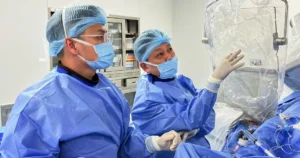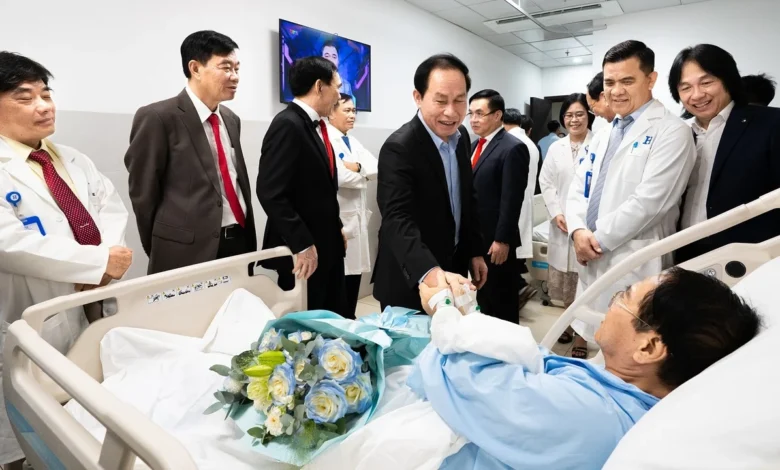
Ho Chi Minh City, the economic powerhouse of Vietnam, marked a significant milestone in its healthcare development on September 20 with the official inauguration of the Hong Bang International University Hospital. As the first private medical facility in the city to operate under the integrated "Hospital-University" model, this institution represents a strategic shift in how clinical practice, medical education, and advanced research are coalescing to improve patient outcomes and professional training standards in the region.
A New Paradigm in Private Healthcare
The establishment of the Hong Bang International University Hospital is not merely an addition to the city’s hospital bed capacity; it is a structural evolution. By bridging the gap between academic theory and clinical application, the facility aims to foster an environment where medical students, professors, and practitioners work in tandem. This model, long practiced in public settings like the University Medical Center HCMC, has now been pioneered in the private sector, signaling a maturing landscape for private investment in Vietnam’s healthcare infrastructure.
The hospital, located in the Van Phuc City urban area, features a modern design and currently operates with 170 active beds, though its overall design capacity is set at 350 beds across 28 specialized departments. The Ministry of Health granted its operational license on June 15, and by September 14, it received official approval to join the satellite hospital network of the University Medical Center HCMC, further integrating it into the city’s established medical ecosystem.
Official Recognition and Strategic Vision
During the inauguration ceremony, Deputy Prime Minister Le Thanh Long emphasized the importance of high-quality human resources in the healthcare sector. He underscored that a hospital’s physical infrastructure is built over a few years, but its reputation—the true measure of its success—is forged over decades through the efficacy of its treatments and the trust of its patients.
"The development of specialized technical capabilities within this hospital will contribute significantly to elevating the quality of medical services in Ho Chi Minh City," Deputy Prime Minister Long stated. He encouraged the hospital management to focus on specific, high-strength medical specialties, attract top-tier domestic and international experts, and establish robust partnerships with global medical centers to facilitate the transfer of cutting-edge technologies.
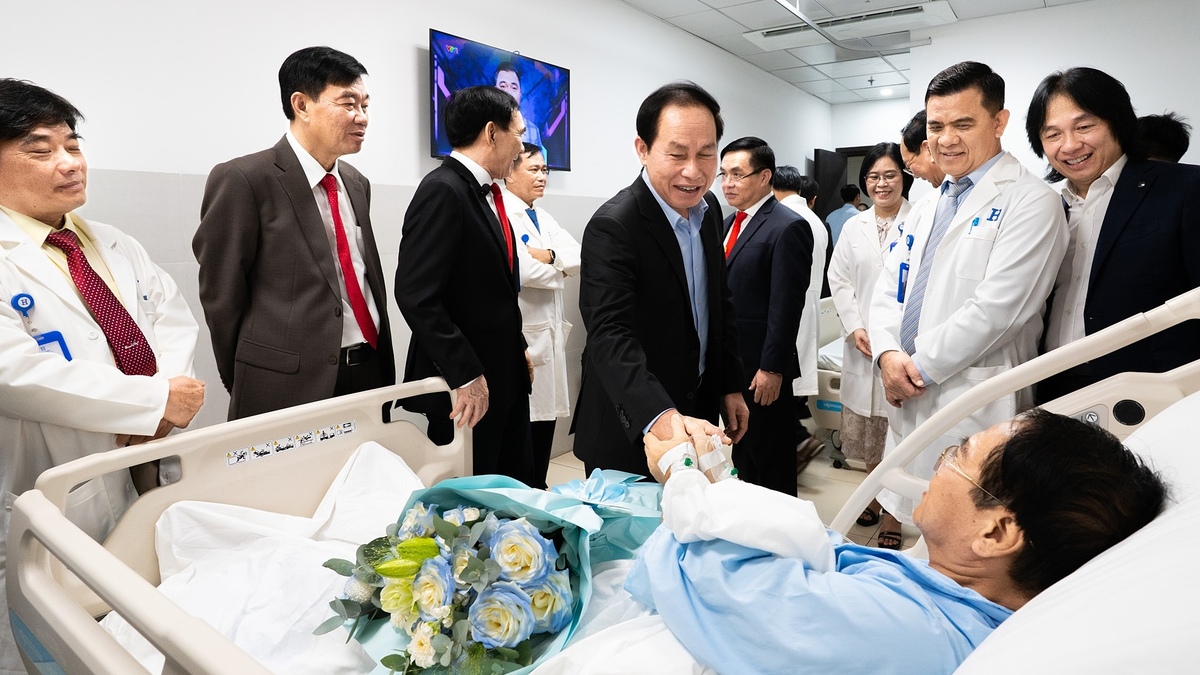
The Deputy Prime Minister also outlined a clear mandate for the hospital: to prioritize patient safety, maintain transparency in pricing and treatment outcomes, and lead the charge in adopting digital health transformation. The shift, he noted, should be away from a purely reactive, treatment-focused model toward a proactive, comprehensive health management approach that includes early screening, diagnostics, and preventive care.
The "AI-First" Ambition
At the core of the hospital’s operational philosophy is a commitment to technological integration. Professor Pham Van Linh, President of Hong Bang International University and concurrently the Director of the hospital, described the institution as an "AI-First Hospital."
The application of Artificial Intelligence (AI) and digital transformation is intended to streamline the patient journey from admission to discharge. By automating administrative tasks and diagnostic support, the hospital seeks to provide its doctors with more time to focus on the human aspects of patient care—specifically, the empathy and personalized attention required for effective healing.
The hospital has set an ambitious timeline for its quality assurance journey, aiming to achieve the prestigious Joint Commission International (JCI) accreditation by the first quarter of 2028. JCI accreditation is widely recognized as the gold standard in global healthcare, reflecting a commitment to rigorous safety and quality standards that are essential for medical institutions aspiring to international competitiveness.
Addressing Demographic and Social Challenges
Hoang Quoc Viet, Chairman of the Board and General Director of Nguyen Hoang Group, the primary investor behind the project, highlighted that the hospital is designed to serve a diverse population. Beyond standard primary care, the institution plans to invest heavily in geriatrics, rehabilitation, and long-term care for the elderly.
This focus is particularly relevant as Vietnam faces a rapidly aging population. By integrating physical therapy and specialized care for the elderly into its core offerings, the hospital is positioning itself to address one of the most pressing demographic shifts in the country. Furthermore, the hospital has pledged to participate in social health insurance schemes and develop pricing policies that ensure accessibility for vulnerable populations, including the elderly and those with disabilities.
A Catalyst for Medical Tourism and Regional Integration
Nguyen Manh Cuong, Vice Chairman of the Ho Chi Minh City People’s Committee, noted that the hospital’s launch aligns perfectly with the city’s goal of becoming a regional healthcare hub within the ASEAN block.
"We expect this hospital to participate deeply in the network of high-tech, specialized medical facilities," Mr. Cuong said. "By leveraging artificial intelligence and fostering a research-intensive environment, it will not only serve the local population but also enhance the city’s capacity to participate in the growing medical tourism market."
The implications of this are significant. As Vietnam continues to see an increase in the number of citizens seeking high-end medical care abroad, institutions like the Hong Bang International University Hospital aim to capture this demand by providing world-class care locally. This, in turn, helps retain medical capital and knowledge within the country, fostering a self-sustaining cycle of innovation and excellence.
Chronology of Development
- 2000: The University Medical Center HCMC (the pioneer of the Hospital-University model) was established, setting the precedent for academic-clinical integration in Vietnam.
- June 15, 2026: The Ministry of Health officially grants an operating license to the Hong Bang International University Hospital.
- September 14, 2026: The hospital is officially approved to join the satellite hospital network of the University Medical Center HCMC.
- September 20, 2026: The official inauguration ceremony is held in Ho Chi Minh City, with government officials and representatives from the Nguyen Hoang Group in attendance.
- Q1 2028 (Target): The institution aims to achieve JCI international quality accreditation.
Broader Impact and Future Outlook
The "Hospital-University" model serves as a dual-purpose engine. On one hand, it provides a practical training ground for medical students, ensuring that the next generation of doctors graduates with hands-on experience in a modern clinical setting. On the other, it provides the hospital with a constant influx of research-driven talent, allowing for the rapid adoption of new clinical techniques and evidence-based medicine.
Furthermore, by committing to emergency response and disaster prevention, the hospital is integrating itself into the municipal health safety net. Its willingness to engage in off-site emergency services and disease control efforts demonstrates a commitment to public service that extends beyond the profit motive typical of private enterprises.
As Ho Chi Minh City continues to expand its footprint in the healthcare sector, the success of the Hong Bang International University Hospital will likely serve as a case study for future private-sector investments. The transition toward a "smart" hospital model, characterized by data-driven diagnostics and a focus on holistic wellness, is set to redefine the expectations of patients in Vietnam’s rapidly modernizing society. By balancing academic rigor with market-driven efficiency, the institution is well-positioned to become a cornerstone of the city’s medical infrastructure for years to come.