Four years of facial disfigurement following an unregulated mesotherapy procedure


In a cautionary tale that highlights the growing dangers within the unregulated medical aesthetic industry, 37-year-old Thanh Hoa from Hanoi has spent the last four years navigating a harrowing journey of medical complications. What began as a simple attempt to rejuvenate her skin following the birth of her first child in 2020 has culminated in a chronic, treatment-resistant condition known as granuloma—a systemic immune response triggered by the injection of unverified substances into the deep layers of the dermis. Her experience serves as a stark reminder of the hidden risks associated with "underground" beauty procedures that prioritize profit over patient safety.
The Origin of a Cosmetic Crisis
In 2020, following the birth of her son, Hoa began to notice common signs of post-partum skin changes, including hyperpigmentation and a loss of elasticity. Like many in her demographic, she turned to social media for solutions. After encountering a familiar acquaintance whose skin appeared radiant, Hoa was referred to a private spa that promised rapid, transformative results. Without conducting due diligence regarding the clinic’s licensing or the credentials of its practitioners, she committed to a four-month treatment plan at a cost of 20 million VND.
Hoa initially believed she was undergoing a standard chemical peel. It was only when she arrived for the first session and witnessed the use of microneedles that she realized she was receiving mesotherapy—a procedure involving the direct injection of compounds into the mesoderm. The staff informed her that they were using a "custom cocktail" of ingredients, including salmon DNA, stem cells, hyaluronic acid, and glutathione.

Chronology of Complications
The trajectory of Hoa’s health deteriorated in phases, illustrating the delayed nature of immune-mediated reactions to foreign substances.
- 2020 (The Initial Phase): Immediately following the first session, Hoa’s face swelled significantly, only to subside, leaving her skin looking temporarily plump and glowing. She completed the four-session course and continued with maintenance at home. For approximately one year, her skin appeared to be in good condition.
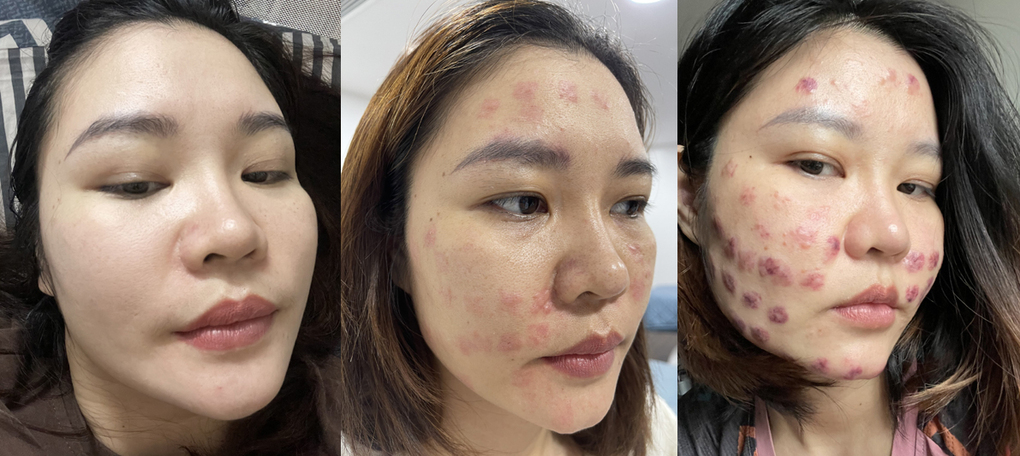
- 2021-2022 (The Onset of Pathology): The first signs of trouble emerged as small, persistent nodules began to form around her jawline. By 2022, these had evolved into widespread, visible granulomatous clusters. Initial attempts at treatment in aesthetic clinics proved ineffective, leading her to seek help from a board-certified dermatologist, who provided the formal diagnosis of post-mesotherapy granuloma.
- 2023 (The Search for Relief): Hoa underwent a series of aggressive treatments, including immunosuppressive medication, biopsy procedures, and corticosteroid injections, all of which failed to resolve the condition.
- 2024 (The Long Road to Recovery): Even after seeking care at various institutions in Ho Chi Minh City and attempting laser therapies that unfortunately compromised her skin barrier further, the situation remained stagnant. It was not until late 2024 that she began a specialized protocol under the care of Dr. Hoang Van Tam.
Understanding Granuloma: A Medical Perspective
Dr. Hoang Van Tam, a specialist in dermatology, explains that granuloma is a chronic inflammatory response that occurs when the body attempts to "wall off" foreign materials that it cannot metabolize. Unlike the small, localized papules seen in minor adverse reactions, Hoa’s case involved lesions larger than 1 centimeter that extended deep into the subcutaneous tissue.
"This is a severe case of post-mesotherapy granuloma," Dr. Tam stated. "The primary issue is the introduction of non-sterile or low-quality substances deep into the skin. When these substances are not medical-grade or have been improperly stored—such as products left in refrigerators and reused over several days—they become hotbeds for bacterial contamination and chronic inflammation."
The complexity of the case was exacerbated by Hoa’s pregnancy, which limited the range of pharmacological interventions available. Current treatments, including oral medications and low-fluence laser therapy, are aimed at suppressing the immune response and reducing vascular proliferation. Dr. Tam notes that while they have achieved a 60% improvement, the risk of permanent scarring remains a significant concern.

The Broader Implications of "Back-Alley" Aesthetics
The case of Thanh Hoa is not an isolated incident but a representative example of a systemic issue in the global beauty industry. The rise of "do-it-yourself" or "social-media-influenced" medical procedures has outpaced regulatory oversight. Many unlicensed spas operate under the guise of "skincare clinics," performing invasive procedures that should strictly be handled by medical doctors in sterile, hospital-grade environments.
The economic and psychological toll on victims is profound. For Hoa, the disfigurement led to severe social anxiety, causing her to avoid public appearances and withdraw from her community. "I stopped caring about my appearance or further treatment for a long time," she shared. "I had to overcome the shame of what had happened to me just to be able to share my story so that others do not fall into the same trap."
Lessons in Regulatory Compliance and Consumer Awareness
Experts emphasize that the primary defense against such tragedies is rigorous consumer awareness. Patients are urged to adhere to several key safety protocols:
- Verification of Credentials: Always ensure that the facility is licensed by the Ministry of Health or local equivalent authorities and that the practitioner is a board-certified physician.
- Product Provenance: Demand to see the product packaging and verify its origin. High-end aesthetic products should have traceable serial numbers and official certification.
- Sterility Standards: Avoid any procedure where the product is pre-mixed or has been stored in a domestic refrigerator. Once a vial is opened, it must be used immediately or discarded.
- Managing Expectations: Be wary of marketing campaigns that promise "miracle" results through quick, invasive procedures. If an offer sounds too good to be true, it almost certainly is.
Looking Toward the Future
As of late 2024, Hoa continues her treatment under the guidance of Dr. Tam. Her journey from the initial, impulsive decision to her current state of recovery has been a test of physical and mental resilience. Her husband’s support, specifically his advice to "stop focusing on the past and focus on the small improvements," has been instrumental in her rehabilitation.
The medical community continues to use cases like this to lobby for stricter enforcement of cosmetic regulations. The hope is that by exposing the dangers of unregulated mesotherapy, the public will shift away from the allure of "quick fixes" and toward safe, evidence-based dermatological care. For Thanh Hoa, the lesson is clear: true beauty is not worth the price of one’s health, and the most important asset one can possess is the peace of mind that comes from making informed, safe decisions. As she continues her treatment, her story serves as a vital reminder to prioritize long-term safety over the fleeting promises of the beauty industry.