Tổng Bí thư, Chủ tịch nước Tô Lâm: Thái Nguyên cần phấn đấu là địa phương có hạ tầng đồng bộ, quản trị hiện đại

Thai Nguyen province stands at a pivotal juncture in its socio-economic trajectory as it marks the dual celebration of its 195th founding anniversary and the opening of the prestigious International Tea Festival 2026. The landmark events drew senior state leaders, international dignitaries, and agricultural experts from around the globe to the nation’s premier tea-producing heartland. Amidst vibrant cultural showcases and strategic economic evaluations, top leadership laid out a comprehensive roadmap for Thai Nguyen, emphasizing infrastructure modernization, advanced administrative governance, and sustainable development paradigms designed to propel the locality toward becoming a centrally managed city by 2045.
A Historic Milestone and the Grand Opening of the 2026 International Tea Festival
The commemorative ceremonies kicked off with an elaborate artistic prologue titled "Thai Nguyen – Source of Historical Flow," tracing the province’s arduous yet heroic journey across centuries. The performance vividly portrayed the revolutionary traditions, unyielding fighting spirit, resilience, and soaring aspirations of the Communist Party organization, government, and multi-ethnic populace of Thai Nguyen.
The festivities officially coincided with the inauguration of the International Tea Festival 2026, themed "Wind-Singing Highland Tea Melody – Quintessence of Vietnamese Tea." The festival serves as a global platform to honor the heritage of the tea plant, elevate Vietnam’s tea culture, and reinforce the regional brand identity famously dubbed "The Foremost Tea Region."
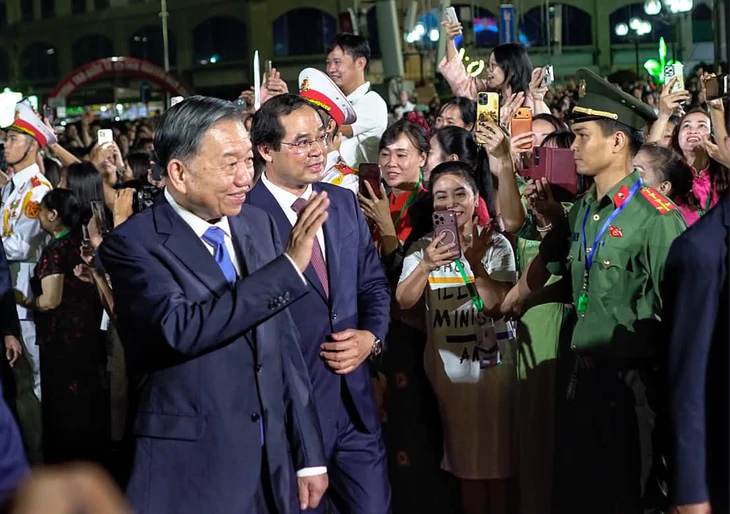
The high-profile event was graced by General Secretary and President To Lam, alongside former General Secretary Nong Duc Manh. Other notable attendees included incumbent and former leaders of the Party, State, and the Vietnam Fatherland Front, leaders of central and local departments, Hero Mothers of Vietnam, Heroes of the People’s Armed Forces, Labor Heroes, former leadership of Thai Nguyen province, as well as foreign ambassadors, international organization delegates, business leaders, and thousands of local citizens.
Tracing the Roots: Thai Nguyen’s Historical Significance and Strategic Evolution
Delivering the commemorative keynote address, Mr. Trinh Xuan Truong, Member of the Party Central Committee and Secretary of the Thai Nguyen Provincial Party Committee, reflected on the region’s deep historical, cultural, and strategic importance to the nation’s defense and construction.
Historical records trace the provenance of Thai Nguyen back centuries, with roots deep in feudal eras. The official administrative establishment of Thai Nguyen province took place under the reign of King Minh Mang, with November 4, 1831, formally recognized as its founding date. Throughout the turbulent epochs of Vietnamese history, the province served as a vital stronghold, notably housing the revolutionary base where President Ho Chi Minh and the Party leadership charted the course for national liberation during the resistance against French colonialism.
Over the past four decades of Doi Moi (economic renovation), Thai Nguyen has recorded remarkable socio-economic achievements, solidifying its status as a premier industrial, educational, medical, and scientific-technological hub within the northern midland and mountainous region and across the country as a whole.
Following administrative boundary expansions and territorial reorganizations, Thai Nguyen now boasts a broadened developmental space. This structural evolution has unleashed new growth dynamics, transforming geographical potential into tangible economic power. Grounded in the enduring unity, trust, and resilience of its people, the province is steadily realizing its vision of becoming a "Modern, Safe, Civilized, Harmonious, and Developing" locality, setting its sights firmly on the ultimate goal of achieving centrally governed city status.
National Recognition: Award of the First-Class Labor Order
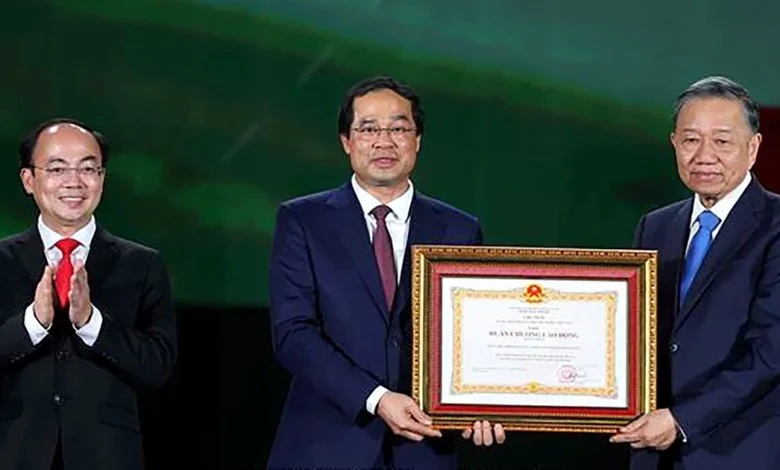
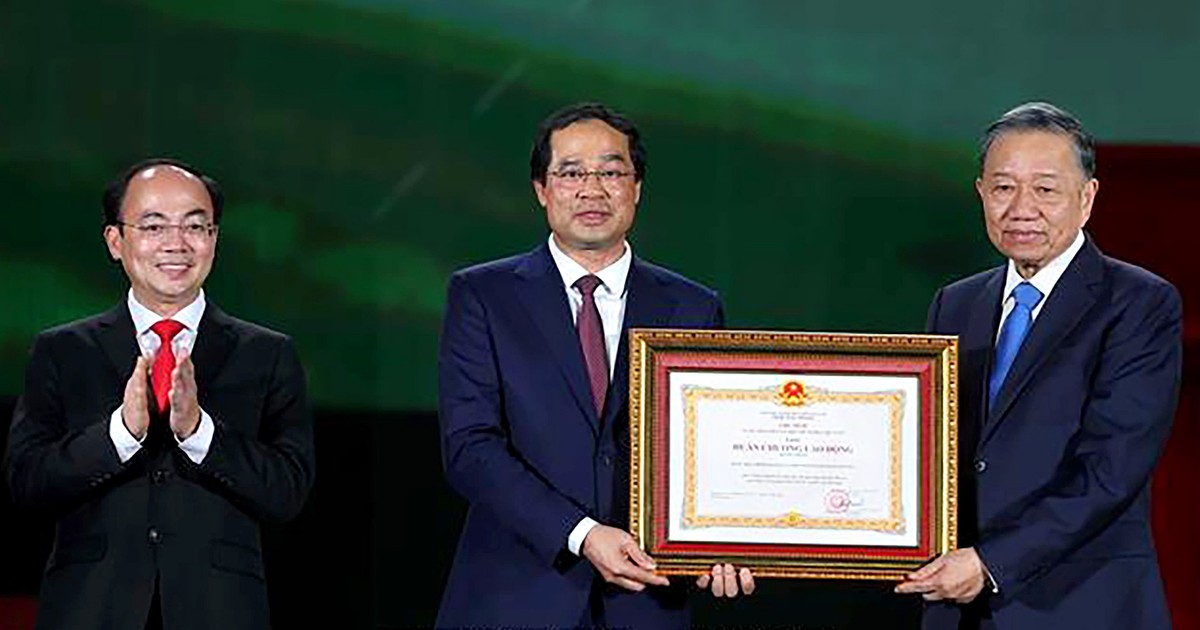
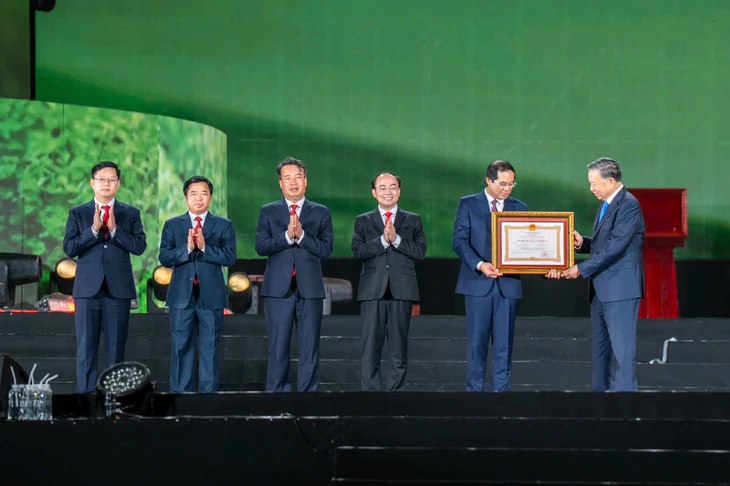
In recognition of its outstanding socio-economic achievements, exemplary investment attraction, and contributions to national development, the Party, State, and people of Thai Nguyen were bestowed with the prestigious First-Class Labor Order.
General Secretary and President To Lam personally presented the high distinction to the Party organization, government, and multi-ethnic people of Thai Nguyen during the ceremony. Congratulating the locality on its accomplishments, the top leader emphasized that looking toward the 200th founding anniversary in 2031 and the broader national development vision for 2045, Thai Nguyen must proactively construct a resilient foundation for future growth.
As traditional advantages such as low-cost labor gradually diminish, global technologies shift, and environmental standards tighten, the aspiration to achieve high-income status before 2045 must be rooted in labor productivity, scientific and technological proficiency, innovation capabilities, and overall quality of life.
Strategic Directives from General Secretary and President To Lam
Addressing the local administration and citizens, General Secretary and President To Lam outlined key strategic directives aimed at guiding Thai Nguyen’s comprehensive development over the coming decades.
1. Building a Clean, Capable Party and Streamlined Governance
The General Secretary called for the continuous purification of the provincial Party organization, ensuring it possesses the leadership capacity necessary for long-term development. He stressed the importance of eliminating regional parochialism and allocating resources based on systemic needs and efficiency rather than fragmented local interests. Furthermore, the two-tier local government system must operate seamlessly, empowering commune-level administrations—particularly in remote and mountainous areas—to resolve citizen grievances swiftly and transparently. Long-term goals must be translated into annual, measurable tasks with clear lines of accountability subject to public scrutiny.
2. Enhancing Industrial Autonomy and Fostering Domestic Enterprise
Thai Nguyen must elevate its industrial self-reliance by placing science, technology, and human capital at the core of its development model. Alongside attracting high-quality foreign direct investment (FDI), the province must actively support domestic and local enterprises in upgrading their technological capabilities, meeting international standards, and integrating deeper into global supply chains. Collaborations with multinational corporations should be leveraged to foster local technical training, supplier development, and research initiatives. The province was also urged to nurture the private economic sector, creating opportunities for small and medium-sized enterprises to thrive and reducing economic dependency on a single enterprise or core product.
3. Harmonizing Industrialization, Urbanization, and Eco-Environmental Preservation
A unified, harmonious development space must balance industrial zones, urban centers, and ecological preservation. Infrastructure investments must prioritize functional efficiency and long-term economic impact, avoiding fragmented capital deployment. Urban and industrial planning must comprehensively address energy demands, residential needs, waste management, and drainage capacities. Protecting natural water resources, including the Cau River basin, Ba Be Lake, and Nui Coc Lake, remains an absolute responsibility for both local authorities and downstream regions. The province must maintain ecological buffers to mitigate flooding and landslides, strictly control mineral exploitation, and rehabilitate disturbed environments.
4. Elevating Tea Heritage and Cultural Branding
Highlighting the significance of the International Tea Festival, the State leader underscored the necessity of preserving and elevating the cultural value of Thai Nguyen tea. The intangible cultural heritage designation for the "Knowledge, practices, and social experiences of growing and processing tea in Thai Nguyen" must be safeguarded through systematic transmission of skills, landscape conservation, and sustainable livelihoods for local farmers. The provincial administration was instructed to support cooperatives, businesses, and farming households in applying scientific methods across the entire value chain—from raw material cultivation to processing—while protecting geographical indications, preventing counterfeit labeling, and developing diversified products tailored to modern consumer preferences.
5. Ensuring Social Equity and Comprehensive Welfare
Growth must be inclusive, ensuring that industrial expansion advances alongside the development of housing, schools, healthcare facilities, and living environments for workers. Mountainous communities must be granted equitable access to essential public services, vocational training, and employment opportunities. Special priority must be directed toward educational access for children in disadvantaged regions, ensuring that no citizen is left behind. National defense, security, public order, and social safety must be strictly maintained across all areas.
Official Recognition of Thai Nguyen’s Tea Heritage
A major highlight of the festival was the official announcement and presentation of the certificate recognizing the "Knowledge, practices, and social experiences of growing and processing tea in Thai Nguyen" as a National Intangible Cultural Heritage.
Minister of Culture, Sports and Tourism Nguyen Van Phuong presented the recognition certificate to the leadership of Thai Nguyen province. The distinction honors the generations of farmers, artisans, and entrepreneurs who have cultivated, refined, and passed down the intricate craft of tea-making, cementing Thai Nguyen’s historic reputation as the unrivaled capital of Vietnamese tea culture.
The International Tea Festival 2026 concluded with a renewed sense of shared purpose, uniting growers, artisans, enterprises, and international guests in celebrating a profound cultural legacy while charting a confident course toward sustainable economic prosperity and regional modernization.