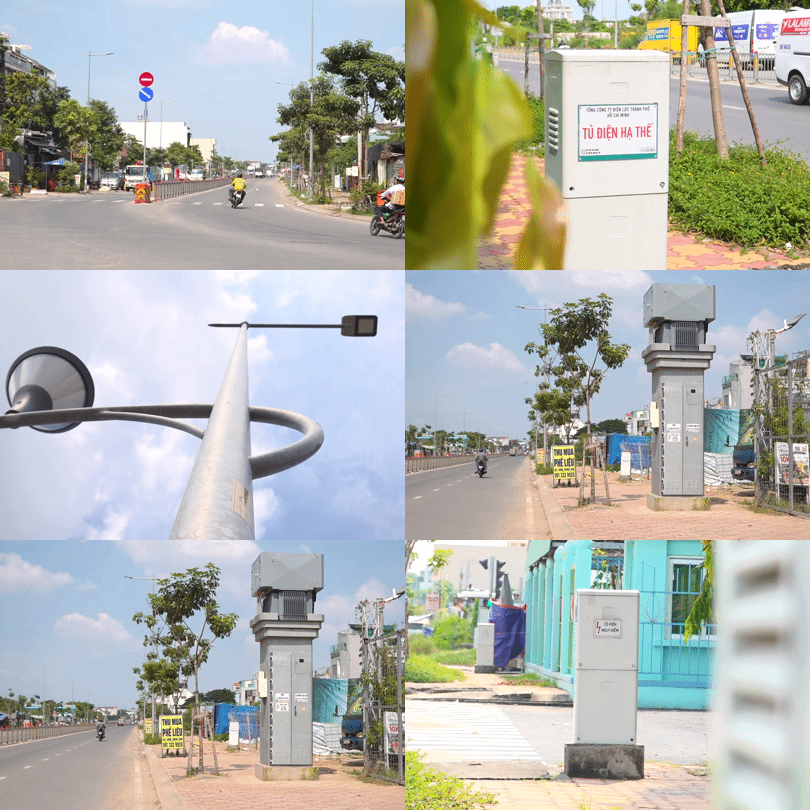
Ho Chi Minh City is undergoing a profound infrastructural transformation, shifting away from the chaotic urban aesthetics that have historically defined many of its secondary and primary thoroughfares. Along Nguyen Anh Thu Street—a critical artery connecting the outlying suburban expanses with the bustling urban core—residents are waking up to a radically altered landscape. The unsightly overhead cobwebs of electrical cables and telecommunications wires that once cluttered the skyline have completely vanished, replaced by a clean, modern horizon. This sweeping modernization is the direct result of a concerted subterranean cabling initiative, transforming a historically congested corridor into a streamlined, safe, and visually appealing urban route located in Ba Diem Commune.
For decades, the visual trademark of rapid urbanization in Vietnam’s southern metropolis was the dense, tangled matrix of overhead wires. These precarious bundles of power lines, telephone cables, and internet connections posed persistent safety risks, hampered routine maintenance, and detracted significantly from the architectural and environmental quality of local neighborhoods. Today, however, the transformation along Nguyen Anh Thu Street represents a triumph of modern municipal engineering. The roadway has not only been widened and structurally upgraded to accommodate soaring traffic volumes, but its entire utility infrastructure has been successfully relocated beneath the earth. This comprehensive overhaul has brought immense relief to local commerce and daily residential life, establishing a benchmark for future municipal development projects across the sprawling metropolis.
The Genesis and Execution of Ho Chi Minh City’s Underground Cabling Initiative
The structural metamorphosis of Nguyen Anh Thu Street does not happen in a vacuum; it is part of a broader, highly ambitious master plan spearheaded by the Ho Chi Minh City People’s Committee and executed by the Ho Chi Minh City Power Corporation (EVN HCMC). For over a decade, municipal authorities have recognized that achieving true global-city status requires dismantling the fragile and hazardous overhead utility networks that crisscross the urban landscape.
The initiative to subterraneanize electrical and telecommunications infrastructure in Ho Chi Minh City formally accelerated following the city’s strategic directives issued in the early 2010s. Initially concentrated within the strict boundaries of the historic central business district—such as District 1 and District 3—the program prioritized high-profile commercial zones, financial centers, and major tourist corridors. Streets like Dong Khoi, Le Loi, and Nguyen Hue served as the initial proving grounds for complex trenching, high-voltage redirection, and coordinated multi-agency utility synchronization.
As technical proficiencies improved and financial frameworks matured, city planners shifted their focus toward outlying districts and crucial regional connectors. Nguyen Anh Thu Street, serving as a vital transportation linkage within Ba Diem Commune and neighboring administrative zones, was prioritized due to its rapidly increasing population density and escalating commercial activity. The project required meticulous pre-construction surveys, extensive traffic management planning, and seamless coordination between power distributors, telecommunications operators, and local civil engineering firms to minimize disruption to the daily routines of hundreds of thousands of commuters.
Chronology of Infrastructure Modernization Along Nguyen Anh Thu
The journey toward a modernized Nguyen Anh Thu Street involved several distinct operational phases, reflecting the complex nature of urban retrofitting in densely populated environments.
The preliminary phase, spanning the early stages of planning and feasibility assessments, involved comprehensive topographical mapping and structural audits of existing utility poles, transformers, and subsurface drainage networks. Engineers had to account for legacy water pipes, sewer lines, and varying soil compositions characteristic of the suburban fringe of Ho Chi Minh City.
By the intermediate phase, heavy construction equipment occupied the corridor. This period was characterized by nightly road closures, localized traffic diversions, and extensive excavation works. Civil contractors laid heavy-duty concrete utility ducts beneath the sidewalks and roadbeds, carefully routing high-voltage alternating current circuits, medium-voltage distribution lines, and low-voltage residential feeds into secure subterranean vaults. Simultaneously, major telecommunications stakeholders—including Viettel, VNPT, and FPT—collaborated to pull fiber-optic networks through parallel conduit systems, ensuring that digital infrastructure was upgraded concurrently with power grids.
The final phase focused on surface restoration, systematic cutovers, and the systematic dismantling of thousands of redundant utility poles. As individual commercial blocks and residential clusters were successfully transitioned to the underground grid, electrical technicians performed meticulous testing protocols to guarantee system stability and load-bearing capacity. The physical removal of the old poles and overhead wiring marked the symbolic conclusion of the project, permanently altering the streetscape and fulfilling long-held community aspirations for a cleaner, safer environment.
Supporting Data and Technical Scope of Subterranean Infrastructure
The scale of Ho Chi Minh City’s undergrounding program is massive, involving billions of Vietnamese dong and hundreds of kilometers of retrofitted roadways. While specific precinct-level figures for the Nguyen Anh Thu project highlight localized achievements, citywide statistics underscore the monumental nature of the undertaking.
According to reports from EVN HCMC, the city has successfully subterraneanized medium- and low-voltage grids across hundreds of kilometers of urban and suburban streets over the past ten years. In targeted commercial and residential corridors, undergrounding rates have exceeded initial five-year targets, significantly reducing the frequency of weather-related power outages.
Overhead power lines in tropical regions like southern Vietnam are notoriously vulnerable to seasonal tropical storms, high-velocity winds, lightning strikes, and falling tree branches during the heavy monsoon season. By relocating these assets underground, the vulnerability of the distribution network to external environmental shocks drops dramatically. Data from municipal utility monitors indicates that subterraneanized corridors experience up to an 80% reduction in weather-induced fault interruptions compared to overhead counterparts. Furthermore, technical losses—energy lost as heat across poorly insulated or overloaded legacy lines—are substantially mitigated, translating into greater operational efficiency for the power sector.
Official Responses and Community Reactions
The human element of infrastructure development is often measured by the sentiment of those who live and work along the affected corridors. Along Nguyen Anh Thu Street, the consensus among residents and local business owners has been overwhelmingly positive.
Local community representatives and long-term residents point out that the removal of tangled overhead cables has eliminated lingering anxieties regarding electrical fires, sparking lines during heavy downpours, and sagging wires that previously posed hazards to high-sided delivery vehicles. Business owners have also reported a tangible boost in commercial vitality. The newly widened roadway, coupled with unobstructed storefront visibility and an aesthetically pleasing streetscape, has created a more welcoming environment for shoppers and diners.
Municipal officials and local government representatives in Ba Diem Commune have praised the collaborative effort between public utilities, municipal agencies, and private citizens. In official statements regarding the project’s completion, local administrators emphasized that infrastructural upgrades of this caliber are vital for supporting sustainable urbanization. They noted that the cooperation of residents during months of disruptive construction was essential to keeping the project on schedule and ensuring that the final engineering outcomes met rigorous safety and quality standards.
Broader Socioeconomic Impact and Future Implications
The transformation of Nguyen Anh Thu Street serves as a microcosm of Ho Chi Minh City’s broader developmental ambitions. As Vietnam’s economic powerhouse continues to attract domestic migration and foreign direct investment, the demand for world-class urban infrastructure becomes increasingly pressing.
The successful execution of subterranean utility projects yields profound implications across multiple socioeconomic dimensions:
- Enhanced Public Safety: Eliminating exposed electrical conductors drastically reduces the incidence of electrocution risks for pedestrians, maintenance personnel, and emergency responders, particularly during severe urban flooding events common during the rainy season.
- Aesthetic and Tourism Value: Clean, unobstructed streetscapes elevate the visual appeal of urban neighborhoods, aligning Ho Chi Minh City’s visual standards with regional economic hubs like Singapore, Bangkok, and Kuala Lumpur. This aesthetic upgrade contributes directly to neighborhood property valuations and enhances the city’s overall liveability index.
- Technological Readiness: The parallel deployment of robust, high-capacity underground telecommunications conduits lays the physical foundation for future smart city integrations, including Internet of Things (IoT) sensors, automated traffic management systems, high-speed 5G/6G fiber backhauls, and intelligent public lighting grids.
- Environmental Resilience: By hardening critical utility assets against extreme weather phenomena driven by climate change, the municipality ensures greater economic continuity and minimizes the costly downtime associated with disaster recovery operations.
As Ho Chi Minh City looks toward the future, the lessons learned and technical methodologies refined along corridors like Nguyen Anh Thu Street will undoubtedly inform subsequent phases of urban renewal. The transition from a chaotic, wire-strung skyline to a modern, efficient, and subterranean-backed infrastructure network demonstrates the city’s capacity to balance rapid demographic expansion with sustainable, high-quality urban engineering.