Vietnam Climbs toward Top 15 Global Trade Powers as 10-Month Turnover Surpasses 1,000 Billion USD

Vietnam’s international trade landscape has reached an unprecedented milestone, cementing the nation’s status as an emerging heavyweight in the global economic arena. According to official data released by the Ministry of Industry and Trade, Vietnam’s total merchandise import and export turnover for the first ten months of the year officially surpassed the historic 1,000 billion USD threshold, soaring to an estimated 1,010 billion USD. This impressive figure represents a robust 32.3 percent increase compared to the same period in the previous year, highlighting the extraordinary resilience, adaptability, and expansion of the domestic economy amidst shifting global supply chains.
The most striking development during this reporting period was a dramatic reversal in the country’s trade balance. After sustaining a persistent trade deficit that accumulated to over 20 billion USD during the first eight months of the year, Vietnam’s trade dynamics shifted aggressively. Following a modest surplus reversal in September, October witnessed a record-shattering monthly trade surplus of 6.8 billion USD. This single-month achievement not only broke all historical records—surpassing the previous monthly surplus high of 4.9 billion USD set in August 2020—but also played a pivotal role in compressing the cumulative ten-month trade deficit down to 12.7 billion USD. Economists and trade experts view this sudden surge as a testament to the surging manufacturing output and agile market diversification executed by domestic and foreign-invested enterprises alike.
A Chronological Shift: From Import Deficit to Record Surplus
To fully appreciate the magnitude of Vietnam’s 2026 trade performance, one must examine the chronological trajectory of the year. The early months were characterized by heavy import activity. Between January and August, trade statistics consistently showed the nation in a deficit position. Far from signaling economic weakness, macroeconomic analysts initially identified this as a calculated strategy by local manufacturers to stockpile essential raw materials, industrial machinery, and electronic components to fuel upcoming production cycles.
By September, however, the heavy influx of inputs began yielding finished goods ready for global markets. The trade balance turned positive with a moderate surplus of 1.27 billion USD. This momentum exploded into October, where total import and export turnover for the single month reached 122 billion USD—a staggering 47.6 percent jump year-on-year. The resulting 6.8 billion USD monthly surplus caught even seasoned market watchers by surprise, fundamentally reshaping the annual trade narrative and drastically narrowing the cumulative deficit.
Cumulatively over the ten-month span, exports reached 499 billion USD, marking a strong 27.4 percent increase and effortlessly outstripping the Ministry’s initial full-year growth target of 15 to 16 percent. Manufactured goods, led by electronics, telecommunications equipment, and machinery, continued to serve as the bedrock of this export engine, accounting for a commanding 87.4 percent of total outbound shipments.
Driving Forces: Manufacturing Prowess and Agricultural Breakthroughs
The remarkable trade figures are underpinned by stellar performances across multiple key economic sectors, most notably processing industries and the agricultural sector. Heavyweights such as mobile phones, electronic components, and computers maintained their dominant positions in global value chains. Major trading partners, including the United States, China, the European Union, South Korea, and ASEAN nations, all registered high growth rates in their demand for Vietnamese goods.
Simultaneously, the agricultural, forestry, and fishery sectors achieved extraordinary milestones. Data from the General Department of Customs indicates that agricultural exports during the first nine months alone hit 56.3 billion USD, representing a 7.8 percent increase year-on-year, with an agricultural trade surplus reaching 16.9 billion USD.
The horticulture industry, in particular, delivered historic achievements. Driven by soaring demand for fresh fruit—most notably durian—vegetable and fruit exports surpassed 1 billion USD in October alone. This marked the fourth consecutive month since July that monthly horticultural exports crossed the 1-billion-USD threshold. Cumulative fruit and vegetable exports for the ten-month period reached nearly 8.3 billion USD, a 17.2 percent increase over the previous year. Industry associations project that total horticultural exports could touch 10 billion USD for the full year, powered heavily by durian shipments closing in on the 5-billion-USD mark alone.
Furthermore, processed agricultural goods have displayed exceptional growth, outpacing the sector’s overall average. Processed items such as macadamia nuts, pineapple, passion fruit, and mango have all recorded individual export values exceeding 100 million USD, with double-digit growth rates. Macadamia nuts alone witnessed a phenomenal surge of 155 percent. This qualitative upgrade in agricultural processing has allowed Vietnamese products to penetrate high-end, highly regulated markets such as the United States, Japan, the European Union, Australia, and South Korea, thereby cementing the global reputation and brand value of Vietnamese agricultural goods.
Expert Perspectives on Long-Term Economic Implications
The crossing of the 1,000-billion-USD trade threshold has elicited widespread acclaim from the nation’s leading economic and trade scholars, who view it as a structural turning point for Vietnam’s integration into the global economy.
Assoc. Prof. Dr. Nguyen Thuong Lang from the International Trade and Economics Institute at the National Economics University expressed immense optimism regarding the final stretch of the year. "We still have two months remaining to continue accelerating and making a dash toward even higher milestones," Dr. Lang remarked. "If calculated rationally, the total trade turnover for the entire year of 2026 will reach between 1,250 and 1,300 billion USD. The trade balance has every possibility of balancing out or even turning into a surplus after many consecutive months of deficit. With the 1,000 billion USD milestone, it can be said that Vietnam has officially become a major global trading power."
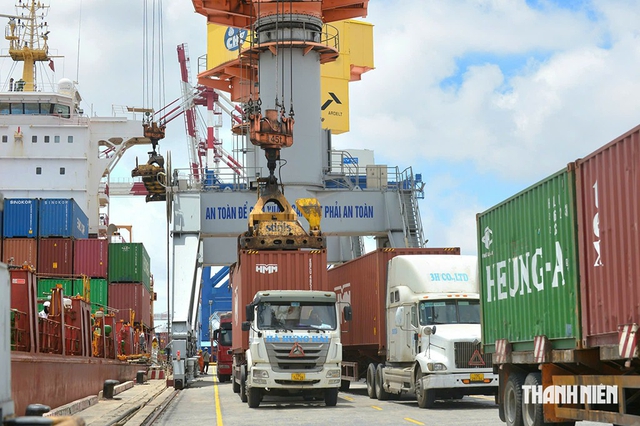
Dr. Lang further projected that Vietnam, currently ranked among the top 20 trading nations, will rapidly climb into the global top 15 within the next few years. He emphasized that the late-year surge was largely driven by the effective utilization of Free Trade Agreements (FTAs), proactive engagement in global supply chains, and successful cost management—particularly in logistics and energy.
Echoing this sentiment, Prof. Dr. Vo Xuan Vinh, Director of the Business Research Institute at the University of Economics Ho Chi Minh City, noted that crossing the 1,000-billion-USD mark highlights the expanding scale and capacity of Vietnam’s economy. However, Prof. Vinh offered a note of caution regarding the lingering 12.7 billion USD cumulative import deficit recorded over the ten-month period, pointing out that true trade sustainability requires shifting definitively from net importing to net exporting.
"To achieve sustainable net-export status, domestic enterprises must elevate their management capabilities and master advanced production technologies for high-value goods," Prof. Vinh stated. He stressed the urgent need for domestic firms to invest in research and development, transition away from pure processing, and venture into strategic, high-impact sectors such as semiconductors, clean energy, precision equipment, and artificial intelligence.
Strategic Roadmap and Future Targets toward 2030 and 2045
Recognizing both the achievements and the structural vulnerabilities within the export framework, the Ministry of Industry and Trade is actively formulating the "Strategy for Import and Export of Goods through 2030, with a Vision to 2045." This comprehensive roadmap sets ambitious targets to secure Vietnam’s position as a premier global logistics and trade hub.
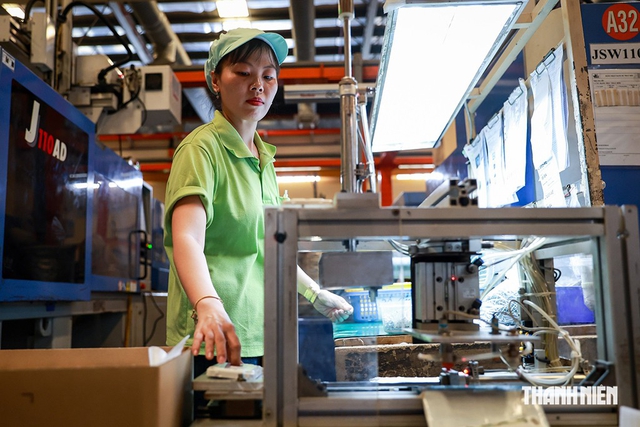
Under the draft strategy, the average annual growth rate of merchandise export turnover for the 2026–2030 period is targeted at 15 to 16 percent, while imports are projected to grow by 12 to 13 percent annually. The trade balance is expected to trend toward a sustainable surplus, with the ratio of trade surpluses to total export turnover averaging 3 to 6 percent during this phase.
Looking further ahead to 2045, Vietnam aspires to rank among the top 10 countries globally in terms of total import and export turnover, with a projected trade surplus ratio reaching 7 to 10 percent. By 2030, the domestic enterprise sector’s share of total national exports is planned to increase to 28–30 percent, eventually rising to 38–40 percent by 2045. Additionally, processed and manufactured goods are projected to comprise 89–90 percent of total exports by 2030, with high-tech industrial products accounting for roughly half of that value.
To realize these long-term objectives, trade authorities are intensifying efforts to diversify export markets, maximize the utilization of existing and newly negotiated FTAs—particularly those incorporating stringent environmental and social standards—and enhance early-warning systems against trade defenses, tariff barriers, and origin fraud. Furthermore, investments in high-standard logistics infrastructure, green packaging, and supply chain transparency are being fast-tracked to ensure that Vietnamese goods meet the rigorous compliance demands of discerning international consumers.
Ultimately, Vietnam’s breakthrough performance in the first ten months of 2026 marks more than a statistical triumph; it signals the maturation of a dynamic, globally integrated economy poised to ascend even higher in the hierarchy of international commerce.