The Economic Paradox: Why Strong US Data Fails to Sway Public Opinion Under President Donald Trump

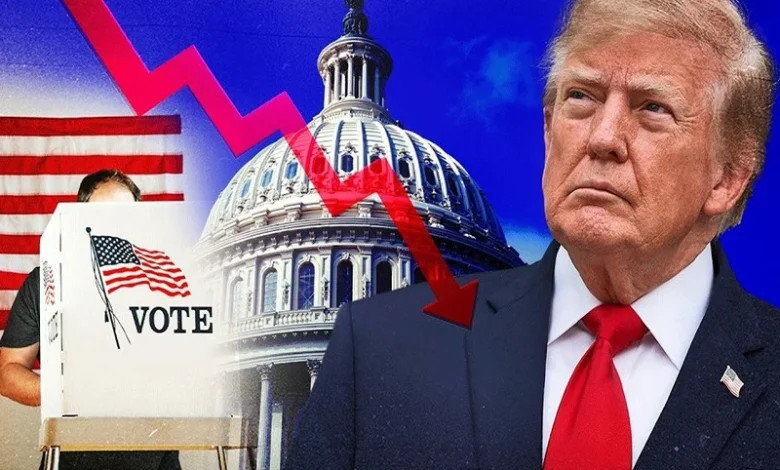
President Donald Trump and his administration are currently grappling with a familiar political paradox that has historically plagued leaders on both sides of the aisle: the macroeconomic indicators are robust, yet public sentiment remains deeply pessimistic. This dilemma echoes the exact challenge that confronted former President Joe Biden toward the end of his term leading into the 2024 election cycle, when positive economic data failed to convince a weary electorate that the economy was working to their benefit. Now, President Trump finds himself confronting a remarkably similar obstacle as the United States approaches the critical midterm elections.
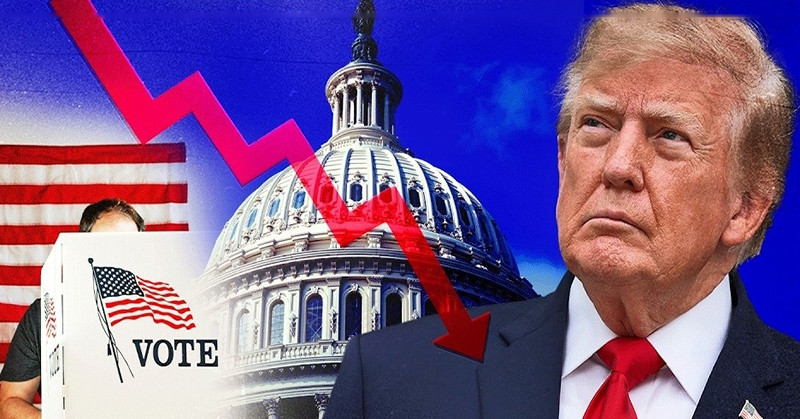
During his 2024 presidential campaign, Mr. Trump made sweeping promises to swiftly alleviate soaring living costs for everyday Americans. According to the BBC, the Republican candidate famously declared during the campaign trail, "When I win, I will immediately pull prices down." However, translating that bold campaign pledge into reality has proven significantly more complicated than anticipated. While U.S. economic growth remains steady, unemployment hovers near historic lows, and the stock market regularly flirts with record highs, the reality of persistent inflation continues to dominate the everyday lives of voters.
The Divergence Between Macro Indicators and Main Street Reality
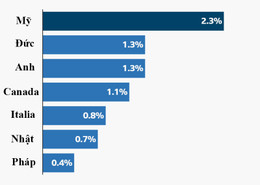
A deeper examination of the current U.S. economic landscape reveals a stark disconnect between top-line national statistics and the financial realities experienced by individual households. On paper, the U.S. economy boasts a growth rate of 2.2%, a figure widely regarded as impressive relative to the standards of many other developed nations. Furthermore, the national unemployment rate remains remarkably stable at 4.2%, signaling that the labor market is far from entering a recession.
Despite these positive metrics, the latest inflation reports leading into this year’s midterm elections have confirmed what American voters already know intimately: the absolute cost of living remains stubbornly high. Unlike his predecessor, who battled the economic fallout of the global COVID-19 pandemic, President Trump has faced a different set of inflationary pressures. These include elevated energy costs driven largely by the ongoing conflict in Ukraine, escalating confrontations involving the United States, Israel, and Iran, and the ripple effects of his own aggressive trade and immigration policies.
From a practical political standpoint, however, the fundamental reality for average citizens has barely changed. U.S. voters do not evaluate the health of the economy based on gross domestic product (GDP) reports or milestone achievements on Wall Street. Instead, they measure economic vitality through the amount of money they must spend at grocery store checkouts, the cost of filling up their gas tanks at the pump, and their mounting pile of monthly utility and credit card bills.
Breaking Down the Numbers: A Tale of Two Realities
The debate over the U.S. economy often hinges on how different segments of society interpret standard financial metrics. The Trump administration frequently points to the 2.2% growth rate and strong corporate earnings as undeniable proof that its pro-growth agenda is working. Following a recent inflation report, White House Press Secretary Matthew Middleton defended the administration’s aggressive economic strategy, asserting that it has successfully cushioned the blow of lingering post-pandemic inflation.
Similarly, economic commentator Larry Kudlow described the current growth phase as "the greatest economic story never told," pointing out that mass layoffs have been largely avoided. Yet voters continue to view these matters through a different lens. A primary driver of this disconnect is the stagnant growth of wages relative to price increases. Over the past year, average hourly earnings for American workers rose by approximately 3%, while consumer prices surged by 3.7%. This widening gap explains why public opinion polls consistently reflect low marks for the administration’s economic management, as everyday living standards are effectively compressed.

Democratic pollster Celinda Lake notes that this frustration stems partly from how economists and voters define common terminology. When economists state that inflation is slowing down, they are referring to a decelerating rate of price increases rather than a reversal of past price hikes. Conversely, when voters hear that inflation is going down, they often expect prices to return to their pre-pandemic baseline. Because consumer prices rarely retreat to historical norms, the psychological burden of higher baseline costs remains heavy.
The "Trump Effect" and Policy-Driven Inflationary Pressures
While critics previously blamed the Biden administration for igniting the inflation cycle—citing massive stimulus packages and pandemic-era supply chain disruptions—President Trump is now encountering parallel scrutiny regarding his own policy decisions. Prominent economists, such as Peter Morici of the University of Maryland, argue that current high price levels are partly fueled by the administration’s protectionist trade measures and foreign policy stances.

In April 2025, the implementation of sweeping tariffs under the Trump administration’s "Liberation Day" initiative significantly increased import costs for American businesses and consumers. A study published by the Federal Reserve Bank of New York estimated that these tariffs pushed consumer goods prices up by roughly 2.9%. While the administration has sought temporary exemptions and pursued localized trade deals, the cumulative inflationary impact of these duties remains visible across retail shelves.
Compounding these domestic trade pressures are geopolitical tensions in the Middle East. Ongoing conflicts involving Iran have periodically spiked global crude oil prices, filtering down into higher retail gasoline costs and escalating energy burdens for manufacturing sectors and households alike. In response to these pressures, the White House has doubled down on a combination of targeted tax cuts, deregulation, and populist economic proposals. President Trump has recently advocated for capping credit card interest rates and floated proposals for direct financial relief to middle-class citizens, should the Republican party maintain its legislative majority following the midterms.
The Political Stakes of the Midterm Elections
As the United States approaches the crucial November 3 midterm elections, both major political parties are acutely aware that traditional arguments regarding macroeconomic stability hold little persuasive power when voters feel financially squeezed. The inability of political leaders to bridge the gap between statistical triumphs and kitchen-table anxieties remains the central vulnerability for whichever party holds power in Washington.
Historically, midterm elections serve as a referendum on the sitting president’s economic performance. With control of Congress hanging in the balance, the outcome will likely hinge less on complex GDP trajectories or stock market indexes and more on whether voters believe their financial prospects are improving in real-time. As history has repeatedly demonstrated in American politics, the public perception of economic reality is often far more powerful than the data itself.