As the year 2026 enters its final two-month stretch, industrial hubs, agricultural belts, and export processing zones across Vietnam are experiencing a profound surge in operational tempo. Factories, farms, and logistics providers are working at maximum capacity to fulfill a robust pipeline of international orders designed to capture the lucrative year-end holiday shopping season and upcoming Lunar New Year celebrations in key global markets. This final sprint reflects both the resilience of Vietnam’s export-driven economy and the complex operational adaptations manufacturers must make to navigate shifting global demand patterns, tightening environmental regulations, and fluctuating trade routes.
Manufacturing Sector Gathers Momentum Entering Fourth Quarter
The industrial landscape in southern Vietnam has transformed dramatically in recent weeks, shifting from cautious optimism to a full-scale operational push. At manufacturing facilities across provinces like Dong Nai, production lines are running extended shifts to meet strict delivery deadlines demanded by overseas buyers.
For instance, Jason Furniture Vietnam—a major player in the country’s wood processing and furniture export sector—reports that its workforce of nearly 6,000 employees is currently engaged in intensive production cycles. Company representatives emphasize that meticulous scheduling and rigorous quality control measures are paramount to ensuring that high-volume shipments arrive at international ports on schedule, satisfying the demands of global furniture retailers ahead of peak holiday consumption periods.
Similarly, the apparel and textile sector has posted impressive operational results. Dong Phu Cuong Joint Stock Company, a prominent garment manufacturer, recorded extraordinary financial performance, with September 2026 revenue soaring past $1.75 million, reaching 122% of its projected monthly target. Company leadership attributes this success to enhanced production efficiencies, process optimization, and targeted cost-reduction strategies implemented throughout the third quarter. As the sector moves through the final months of 2026, these operational efficiencies remain critical for protecting profit margins in an increasingly competitive global trade environment.
Agricultural Exports Capitalize on Seasonal Demand and Regional Supply Chains
Beyond heavy manufacturing, Vietnam’s agricultural sector is witnessing intense activity, particularly in the cultivation, processing, and packaging of key fruit and aquatic commodities. Orchard operations managed by Hoang Anh Gia Lai (HAGL) Joint Stock Company in Vietnam, Laos, and Cambodia are currently operating at peak capacity.
In the fertile growing regions of Gia Lai and southern Laos, agricultural engineers and seasonal laborers are engaged in rigorous quality assessments, meticulously inspecting durian crops to ensure they meet stringent export-grade maturity standards. Harvested fruit is rapidly transported to centralized packaging facilities for sorting, grading, and quality validation, often under the direct supervision of resident agricultural experts from key importing nations.
Notably, HAGL has strategically expanded its durian footprint, managing approximately 2,500 hectares across the Indochina region, with core operations anchored in Gia Lai and Laos. A critical strategic advantage this year involves the 1,200 hectares of durian cultivated on the Bolaven Plateau in southern Laos, where harvest cycles peak during October and November. This harvest timing perfectly coincides with the tapering off of domestic durian supplies within major consumer markets, creating a vital commercial bridge that allows Vietnamese enterprises to maintain a continuous, uninterrupted product flow and maximize revenues during high-demand windows.
Macroeconomic Indicators Signal Sustained Manufacturing Health
The broader health of Vietnam’s industrial economy was further underscored by the release of the S&P Global Vietnam Manufacturing Purchasing Manager’s Index (PMI) for October 2026. The data revealed several encouraging structural trends, reinforcing the narrative of an expanding industrial sector despite external headwinds.
The headline PMI rose to 52.3 points in October, up from 51.9 in September. This expansion extends the continuous period of improving business conditions in Vietnam’s manufacturing sector to 16 consecutive months. Concurrently, total new orders expanded for the sixth successive month, driven by resilient underlying customer demand despite persistent softness in traditional export channels. While the rate of output growth moderated slightly to a six-month low due to occasional supply chain friction and raw material procurement challenges, the overarching trajectory remains firmly positive.
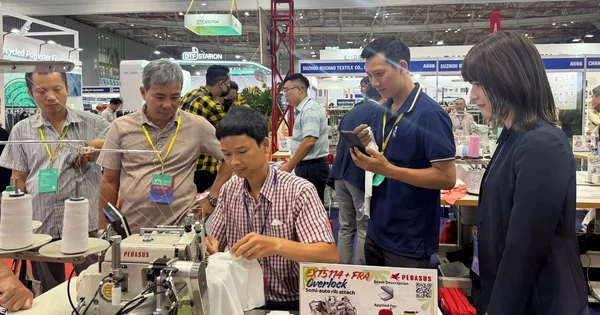
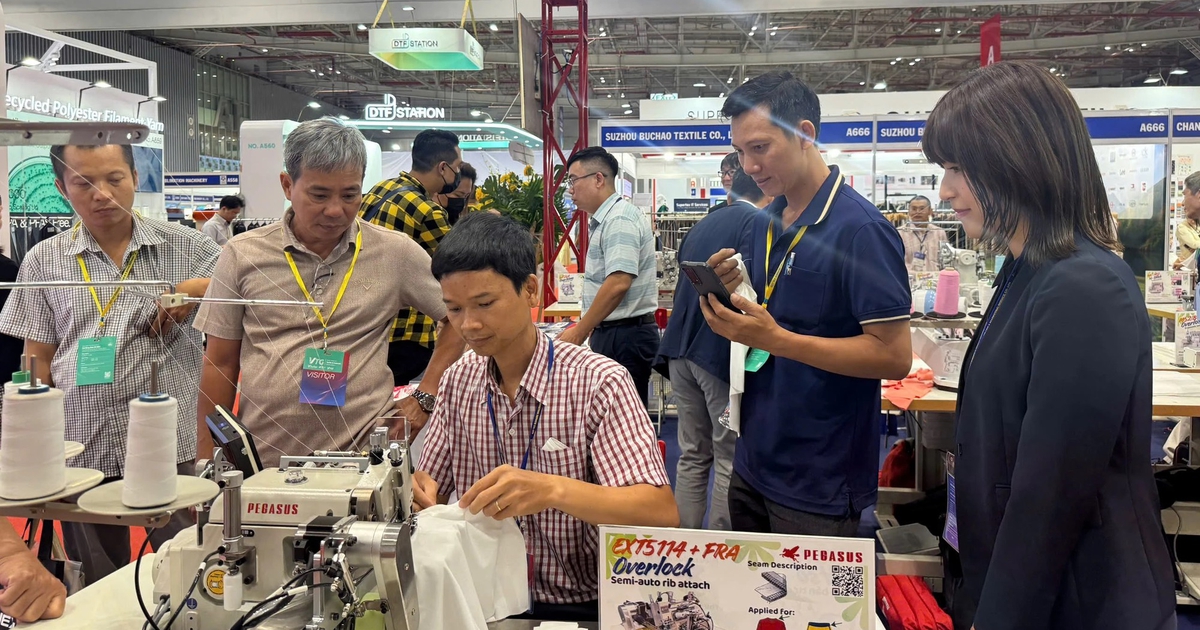
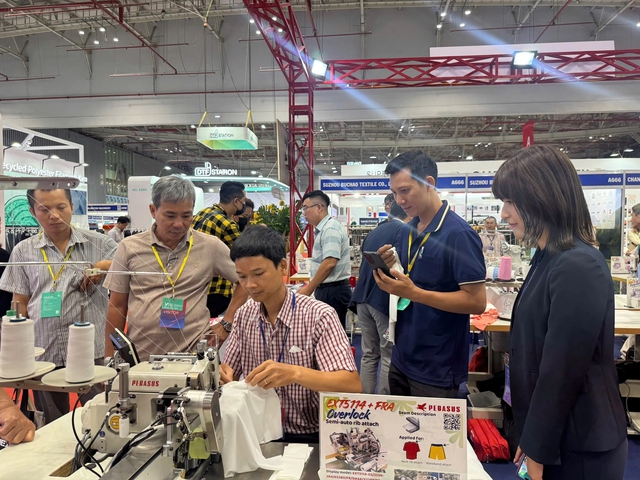
However, industry leaders emphasize that volume growth does not automatically translate into trouble-free operations. Mr. Pham Xuan Hong, Chairman of the Ho Chi Minh City Textile and Garment – Embroidery Association, notes that while the 10-month export turnover for the textile sector maintained positive year-on-year growth, enterprises face unprecedented structural challenges. Order sizes are becoming smaller, technical specifications more complex, and aesthetic requirements increasingly rigorous.
To adapt, many domestic garment enterprises have willingly accepted smaller batch sizes and tighter margins, venturing into niche market segments to cushion against volatility in core export destinations such as the United States, Japan, and the Middle East. Rather than prioritizing short-term profit maximization, corporate leadership is actively choosing to preserve order pipelines, maintain operational continuity, and secure stable incomes for skilled factory workers. Preserving this core labor force is viewed as an indispensable strategy to retain manufacturing capacity and seize immediate market share once global economic conditions fully stabilize. Concurrently, forward-thinking enterprises are investing incrementally in automation, digital transformation, and green technologies to comply with tightening international sustainability standards.
Fruit and Vegetable Exports Eye Historic Milestone
The horticulture sector is another primary beneficiary of the year-end trade surge. Mr. Nguyen Van Thuong, Chairman of the Tropical Agriculture Business Club, highlights that the final quarter consistently triggers an acceleration in export volumes for fresh produce, spearheaded by fruits and vegetables. This seasonal spike corresponds directly with inventory accumulation by international distributors preparing for winter festivities and Lunar New Year celebrations.
While transport bottlenecks and logistical disruptions continue to exert localized friction on trade routes flowing toward the Middle East and parts of Europe, these challenges have not derailed the broader growth trajectory of Vietnam’s horticultural exports. The Chinese market continues to serve as the primary anchor for Vietnam’s fruit and vegetable trade, absorbing approximately 65% of total export turnover over the first ten months of the year and maintaining relative stability compared to previous cycles. Complementary demand from the United States, Japan, and various European nations has further fortified this growth pillar.
Cumulatively, Vietnam’s fruit and vegetable export turnover for the first ten months of 2026 reached an estimated $8.3 billion, representing a significant 17.8% increase over the same period in 2025. This stellar performance places the industry within striking distance of its historic ambition: crossing the coveted $10 billion export milestone for the full calendar year.
Seafood and Forestry Sectors Drive Comprehensive Trade Expansion
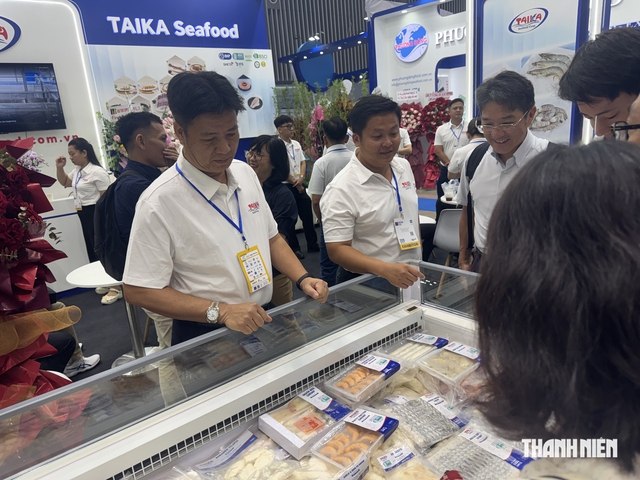
Parallel to horticulture, Vietnam’s seafood export industry has maintained robust momentum throughout the first ten months of 2026, logging an estimated $10.46 billion in turnover—a 12% year-on-year increase. This performance provides a solid foundation for the sector as it targets an ambitious full-year total of $12 billion.
According to the Vietnam Association of Seafood Exporters and Producers (VASEP), traditional high-volume markets such as the United States and the European Union continue to present complex compliance hurdles, including stringent traceability requirements, technical barriers to trade, and intense competitive pressures. However, these challenges are being successfully counterbalanced by explosive growth in Asian markets. Exports to China and Hong Kong surged by over 32% during the ten-month period, while member states within the Association of Southeast Asian Nations (ASEAN) recorded strong, steady consumption growth. Industry analysts suggest that assuming average monthly exports maintain a steady pace of $1.2 billion, total seafood export revenue for 2026 could ultimately surpass projections to reach approximately $12.86 billion.
The forestry and wood-processing sector is similarly poised for a triumphant year-end finish. Mr. Ngo Sy Hoai, Vice Chairman and General Secretary of the Vietnam Timber and Forest Product Association, expressed strong confidence in the sector’s trajectory during a recent industry briefing.
"We project that timber and wood product export turnover will closely approach or exceed $18 billion, supplemented by more than $1 billion generated from non-timber forest products," Mr. Hoai stated. "Consequently, the total export turnover of forest-based products from Vietnam, encompassing both processed timber and non-timber derivatives, is anticipated to comfortably reach approximately $19 billion for the year."
Strategic Outlook and Economic Implications
As businesses across diverse economic sectors navigate the final weeks of 2026, the overarching consensus points toward a resilient, adaptable, and highly motivated industrial community. The ability of Vietnamese manufacturers and agricultural exporters to pivot toward alternative regional markets, optimize internal cost structures, and accelerate technological upgrades has cushioned the domestic economy against lingering macroeconomic uncertainties abroad.
By successfully fulfilling complex year-end order books, maintaining critical employment levels, and upholding stringent international quality standards, Vietnam’s export-oriented enterprises are not only securing their annual financial targets but are also laying a durable foundation for sustainable, high-value global trade integration in the years ahead.