Googlebook: Evaluating the First Wave of Android-Powered Laptops and the Future of Mobile-Desktop Convergence

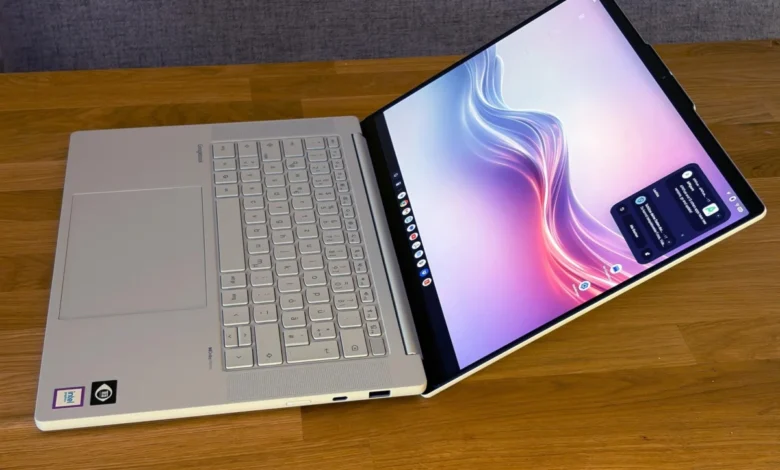
Almost two years after Google first outlined its strategic shift to transition the operational control of laptops from ChromeOS to Android, the inaugural generation of Googlebook devices finally debuted on the consumer market in October. As early review cycles conclude, the tech industry is witnessing a significant divergence in critical reception. While hardware reviewers praise the physical engineering and the seamless integration with Android smartphones, software analysts remain sharply divided, raising questions about market positioning, pricing, and the maturity of the platform.

Understanding the Googlebook Ecosystem
At its core, a Googlebook is a laptop class powered by Googlebook OS, an operating system built upon the foundational architecture of Android. According to reports from early industry analysts, this new ecosystem is slated to phase out ChromeOS entirely over the long term. The initial hardware rollout features five distinct models manufactured by prominent original equipment manufacturers (OEMs), including Acer, ASUS, Dell, HP, and Lenovo. To maintain quality standards, Google established strict baseline hardware requirements: devices must feature a minimum of 16GB of RAM, modern Intel or Qualcomm processors, and touch-enabled displays.
Pricing represents the most substantial departure from the traditional Chromebook model. While Chromebooks have historically occupied the sub-$500 budget sector, Googlebooks target the mid-to-high tier. The entry-level Acer Googlebook 14 starts at $899, making it the only model priced below the $1,000 threshold. The remaining devices in the initial lineup range from $999 to $1,299, directly challenging traditional Windows laptops and Apple’s MacBook Air.

Deep Integration with Android Smartphones
The defining differentiator for Googlebook OS lies in its deep, native integration with Android mobile devices. Upon initial setup, the laptop displays a QR code that users scan with their smartphone, enabling immediate synchronization of applications, credentials, and local data.
Once paired, the operational bridge between phone and laptop closely mirrors Microsoft’s Phone Link functionality for Windows, albeit with deeper system-level integration. Users can launch smartphone applications inside individual windowed environments on the laptop desktop, monitor mobile notifications, and browse phone file directories as if they were local network drives. Furthermore, text-based tasks initiated on a mobile device—such as drafting an email—can be seamlessly transferred to the physical keyboard of the Googlebook with a single keystroke.

Critical Reception: Mixed Reviews Across Tech Publications
The fragmented critical response highlights the growing pains of a first-generation platform. Engadget awarded the Lenovo Googlebook 15 a score of 7.9 out of 10, commending its physical design. Reviewers highlighted the 15.3-inch 120Hz OLED display, high-quality audio drivers, and a spacious haptic touchpad that makes the device feel lighter than a 14-inch MacBook Pro despite its larger footprint. Engadget also praised the smartphone tethering capabilities as a standout feature.
However, the publication was equally candid about the software’s current limitations. Many applications downloaded from the Google Play Store remain optimized strictly for mobile touch interfaces rather than desktop peripherals. For instance, applications like Adobe Photoshop run mobile-tier feature sets rather than full desktop suites. Additionally, file transfer speeds between connected devices are capped at 200MB, and casting mobile games to the laptop display occasionally results in noticeable frame drops and latency.

Other publications adopted a far more rigorous stance. Notebookcheck, while awarding the hardware an 85% score, criticized the physical tactile feel of the chassis, noting that the plastics felt hollow and the keyboard travel felt shallow. Furthermore, despite supporting a wide color gamut, Googlebook OS currently forces the display color space to render strictly within sRGB limits during standard operations. Notebookcheck concluded by questioning the value proposition of purchasing a Googlebook over an established Windows or macOS device at a comparable price point.
PCWorld offered an even more critical assessment, targeting the platform’s biometric facial recognition reliability, inconsistent battery performance, and compatibility issues with older Samsung and legacy Android hardware. PCWorld’s analysis argued that Googlebooks offer only marginal functional improvements over high-end Chromebook Plus models while demanding nearly double the investment.

Chronology and Future Roadmap: Detachable Form Factors on the Horizon
Google’s hardware strategy is set to expand rapidly following announcements made at the Android Dev Summit. Industry trackers confirmed that the next form factor introduced to the Googlebook lineup will be a detachable tablet, featuring a removable keyboard and kickstand design. While the initial October hardware launch consisted primarily of traditional clamshell laptops alongside Acer’s 360-degree hinge model, leaked supply chain data points toward Lenovo introducing the first detachable Googlebook configuration.
Despite these hardware expansions, software engineers face ongoing optimization challenges. Industry observers note that the core interface of Googlebook OS remains optimized primarily for horizontal, landscape layouts. Adapting the operating system to function fluidly in portrait and detached tablet orientations will require substantial software updates from Google’s engineering teams. Additionally, minor omissions—such as the initial lack of synchronized browser tab groups in Chrome, which Google has promised to address in a forthcoming software patch—underscore the unfinished nature of the platform at launch.

Market Implications and Target Audience
The initial wave of Googlebooks serves as an exploratory proof-of-concept aimed squarely at power users deeply embedded within the Android ecosystem. For individuals who manage their daily digital lives primarily through a smartphone and only require a physical keyboard, a larger display, or multi-window research capabilities occasionally, the cross-device integration represents a genuine productivity enhancement.
Conversely, for consumers requiring traditional desktop software suites, heavy creative workloads, or high-performance gaming capabilities, the current pricing structure places Googlebooks in direct competition with mature operating systems. At price points exceeding $1,000, mainstream consumers remain inclined toward established alternatives like MacBook Air or Windows ultraportables.

As Google continues to refine Googlebook OS, address application compatibility gaps, and potentially introduce broader pricing tiers, future hardware generations will determine whether the mobile-desktop convergence can successfully carve out a permanent niche in the personal computing market.
Related posts: