Tottenham Hotspur end six-year Stamford Bridge drought with clinical 2-0 victory over Chelsea in Premier League clash


In a momentous turning point for Tottenham Hotspur’s 2026/2027 campaign, the North London club secured a landmark 2-0 victory over Chelsea at Stamford Bridge on October 24, 2026, marking their first win at the historic venue since 2018. The result not only provided a massive morale boost for Roberto De Zerbi’s squad but also highlighted the growing tactical maturity of a Tottenham side that has struggled for consistency in recent seasons. The victory was defined by a combination of resilient defensive organization, clinical counter-attacking, and a touch of misfortune for the hosts, who saw a rare goalkeeping blunder derail their momentum.
A Tactical Masterclass Under Challenging Conditions
The match took place under inclement weather, with persistent rain making the Stamford Bridge pitch slick and unpredictable. From the opening whistle, Tottenham displayed a level of intent rarely seen in their recent travels to West London. Under the guidance of Roberto De Zerbi, the visitors prioritized ball retention, ending the match with 67% possession—a staggering statistic for an away fixture against a traditional "Big Six" rival.
Tottenham’s dominance was reflected in their offensive output; they managed 15 attempts on goal compared to Chelsea’s seven. While Chelsea initially looked to impose themselves, the visitors quickly wrested control, utilizing their wing-backs to stretch the Chelsea defensive line. The first half, in particular, was a demonstration of controlled pressure, with Tottenham consistently pinning Chelsea back into their own defensive third, leaving the home side struggling to find an exit strategy against a disciplined press.
The Turning Point: A Goalkeeping Calamity
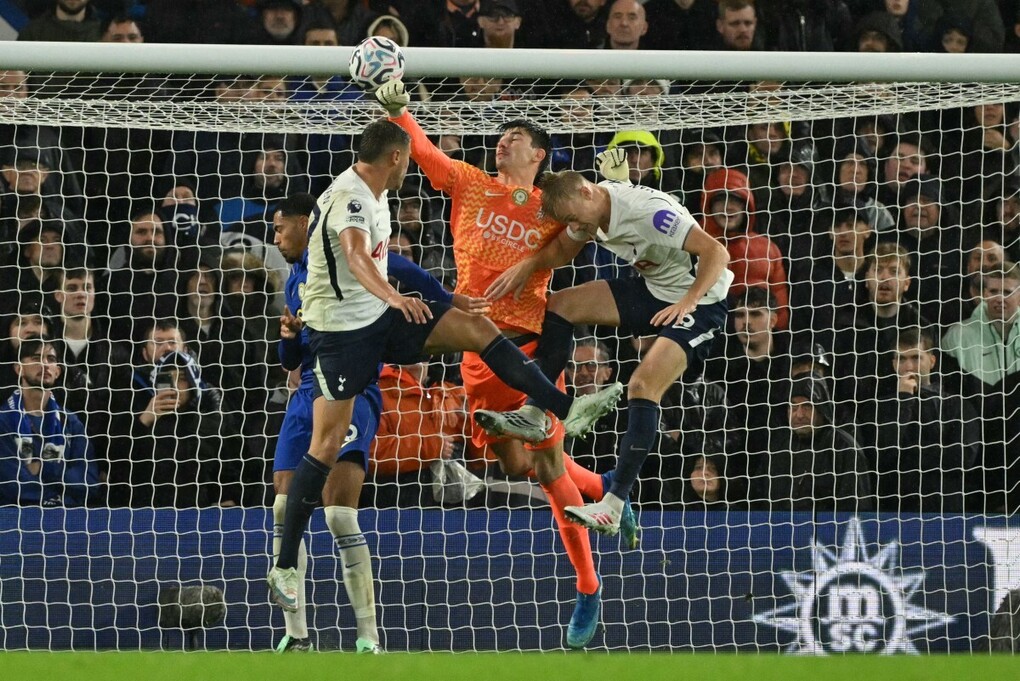
The deadlock was finally broken in the 77th minute through a sequence of events that will likely be scrutinized for weeks to come. Tottenham’s Mateus Fernandes delivered a probing corner kick into the box, targeting the congestion near the six-yard line. As Chelsea’s stand-in goalkeeper Mike Penders—stepping in for the injured Emiliano Martinez—attempted to punch the ball clear under pressure from Jan Paul van Hecke, he suffered a catastrophic miscalculation. Instead of clearing the danger, Penders redirected the ball into his own net, gifting Tottenham the opening goal.
The psychological impact on the 21-year-old goalkeeper was visible as he expressed his frustration on the pitch, gesturing toward the referee in a desperate claim for a foul. However, the goal stood, and the tide of the match shifted decisively. The frustration permeated the Chelsea side, leading to a breakdown in discipline that would ultimately cost them any chance of a late equalizer.

Escalating Tensions and Disciplinary Woes
The match reached a boiling point in the 70th minute, well before the breakthrough, as tempers flared between the two sides. Cole Palmer, usually the calmest figure in the Chelsea lineup, was cautioned by referee Chris Kavanagh after a physical altercation with Mateus Fernandes. The situation spiraled further in the 80th minute when Palmer, struggling to contain his frustration, committed a reckless tackle on Conor Gallagher. The resulting second yellow card saw Palmer dismissed, leaving Chelsea to finish the match with ten men.
The disciplinary issues extended beyond the players; even manager Roberto De Zerbi found himself in the referee’s book for protesting a decision, illustrating the high stakes and palpable tension of the London Derby. For Chelsea, the late-game collapse was a stark reminder of their inability to maintain composure when the tactical plan is disrupted.
The Finishing Touch: Mathys Tel’s Brilliance
Any hopes of a Chelsea comeback were extinguished in the 87th minute when Mathys Tel delivered a moment of individual brilliance. Picking up the ball deep on the left flank, the French forward showcased his pace and agility, driving past defender Josh Acheampong before cutting inside. With Maxence Lacroix closing in, Tel unleashed a low, powerful strike from 25 meters out. The ball arrowed into the bottom left corner, out of the reach of Penders, effectively sealing the 2-0 victory for the visitors.
The atmosphere inside Stamford Bridge underwent a dramatic transformation in the final minutes. As Tottenham maintained possession with methodical precision, their traveling supporters serenaded the stadium with chants of "ole," while the home crowd began to exit the stadium in droves, leaving vast empty patches of blue in the stands—a visual representation of the fans’ dissatisfaction with the home performance.
Statistical Context and Historical Significance
This victory holds significant weight in the context of the rivalry. Before this fixture, Tottenham had managed only three wins in their last 37 visits to Stamford Bridge in the Premier League. The statistics from this particular encounter further underscore the shift in power dynamics for this match:
- Possession: Tottenham 67% – 33% Chelsea
- Total Shots: Tottenham 15 – 7 Chelsea
- Corners: Tottenham maintained a higher frequency of set-piece opportunities, directly leading to the opening goal.
The win moves Tottenham to 12th in the Premier League table, following two consecutive victories. Conversely, the defeat serves as a sobering reality check for Xabi Alonso’s Chelsea. Despite remaining in fourth place, the loss indicates that the team is still vulnerable to tactical suppression and emotional volatility.
Analytical Implications for the Remainder of the Season
For Tottenham, the implications of this win extend far beyond the three points. It marks the first time in the 2026/2027 season that the team has demonstrated the ability to dictate play away from home against a direct competitor. De Zerbi’s ability to adjust his side to the wet conditions and maintain a 67% possession rate suggests that the squad is beginning to internalize his complex tactical philosophy.
For Chelsea, the primary concern will be the instability in the goalkeeping department and the team’s disciplinary record. With Emiliano Martinez sidelined, the reliance on youth and the lack of experienced cover proved detrimental. Furthermore, the loss of Cole Palmer for the next fixture against Manchester United poses a significant challenge for Alonso. He will need to re-evaluate his side’s mental resilience, as the frustration displayed during this match suggests that the team is prone to over-reacting when they fall behind.
Looking Ahead: A Busy Calendar
The Premier League schedule offers little respite for either club. Tottenham will return to their home ground on October 31 to face Crystal Palace, hoping to build on their current win streak and climb further up the table. Chelsea, meanwhile, faces a daunting test as they host Manchester United at Stamford Bridge. That match is expected to be a critical junction for both clubs, as Chelsea looks to bounce back from their disappointment and stabilize their position in the top four, while Manchester United—currently sitting in 15th—desperately seeks points to salvage their early-season form.
The events of October 24 will be remembered as a night where Tottenham finally exorcised their Stamford Bridge demons, while Chelsea was forced to confront the growing pains of a side struggling to maintain its identity under pressure. As the season progresses, this London Derby will likely be cited as a pivotal moment for both the tactical evolution of the visitors and the mid-season crisis management required of the hosts.