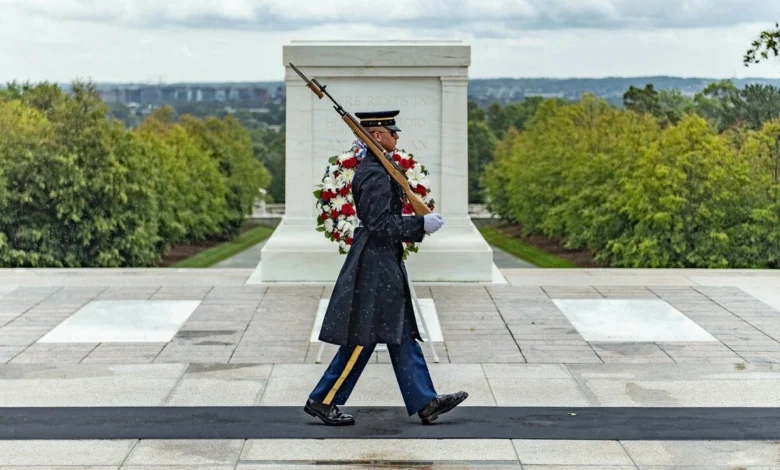
The sanctity of the Tomb of the Unknown Soldier at Arlington National Cemetery was underscored on November 11 as Secretary of Defense Pete Hegseth and his senior staff were formally reprimanded by a sentinel for failing to maintain the strict order and decorum required at the hallowed site. The incident, which occurred following a Veterans Day ceremony, serves as a stark reminder of the rigid protocols governing one of the most solemn locations in the United States. While such corrections are a routine occurrence for the sentinels tasked with guarding the site, the high-profile nature of the individuals involved has brought renewed attention to the historical significance and operational rigor of the Arlington guard.
The November 11 Incident
On the afternoon of Veterans Day, Secretary Hegseth, accompanied by his wife and a cohort of senior advisors—including Chief of Staff Ricky Buria, Deputy Chief of Staff Patrick Weaver, and Deputy Aide Tami Radabaugh—was observed walking through the plaza surrounding the Tomb of the Unknown Soldier. Video footage captured by news outlets shows the group engaged in conversation while moving, with one individual in the party appearing to speak at a volume that breached the site’s atmosphere of reverence.
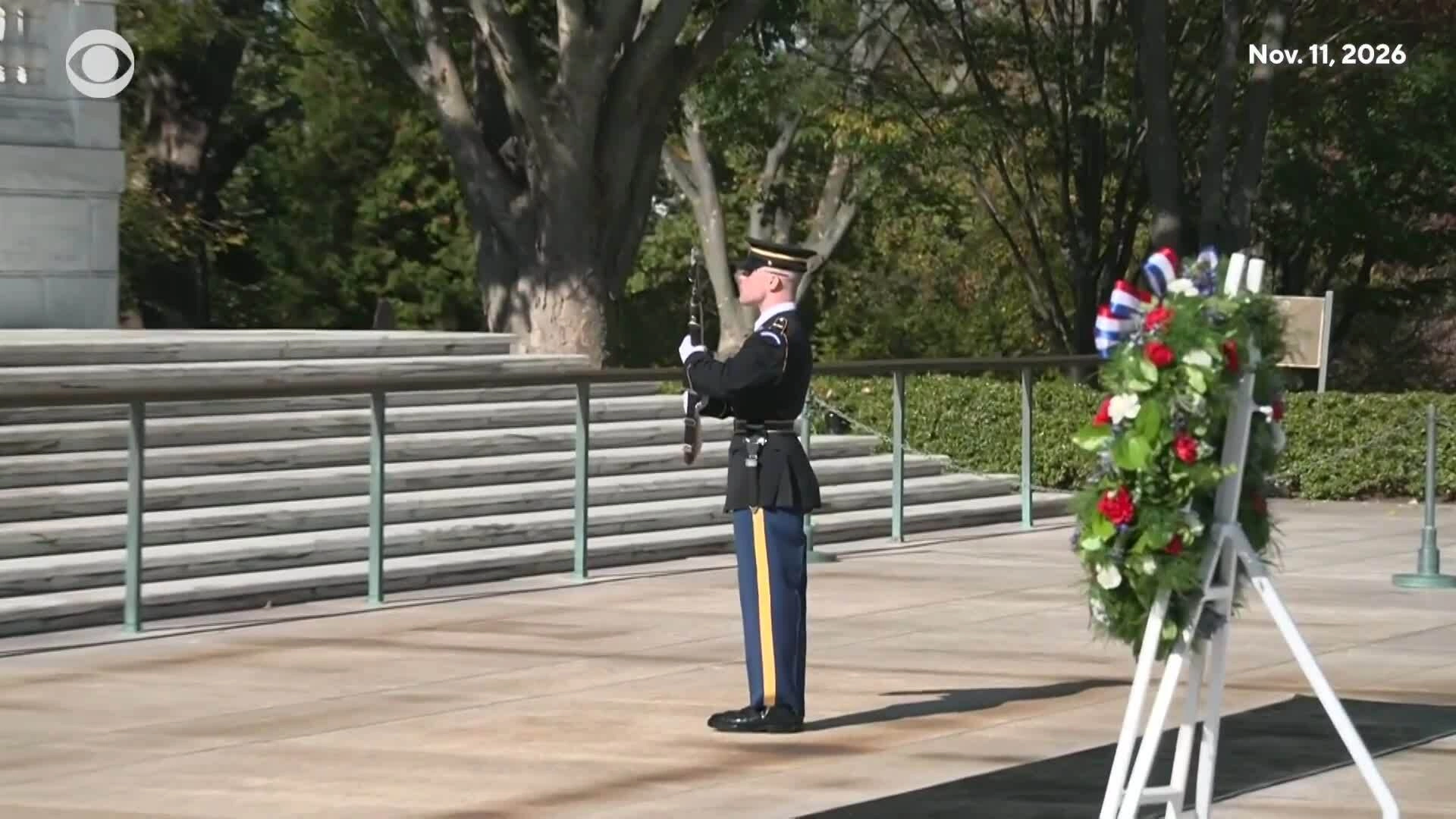
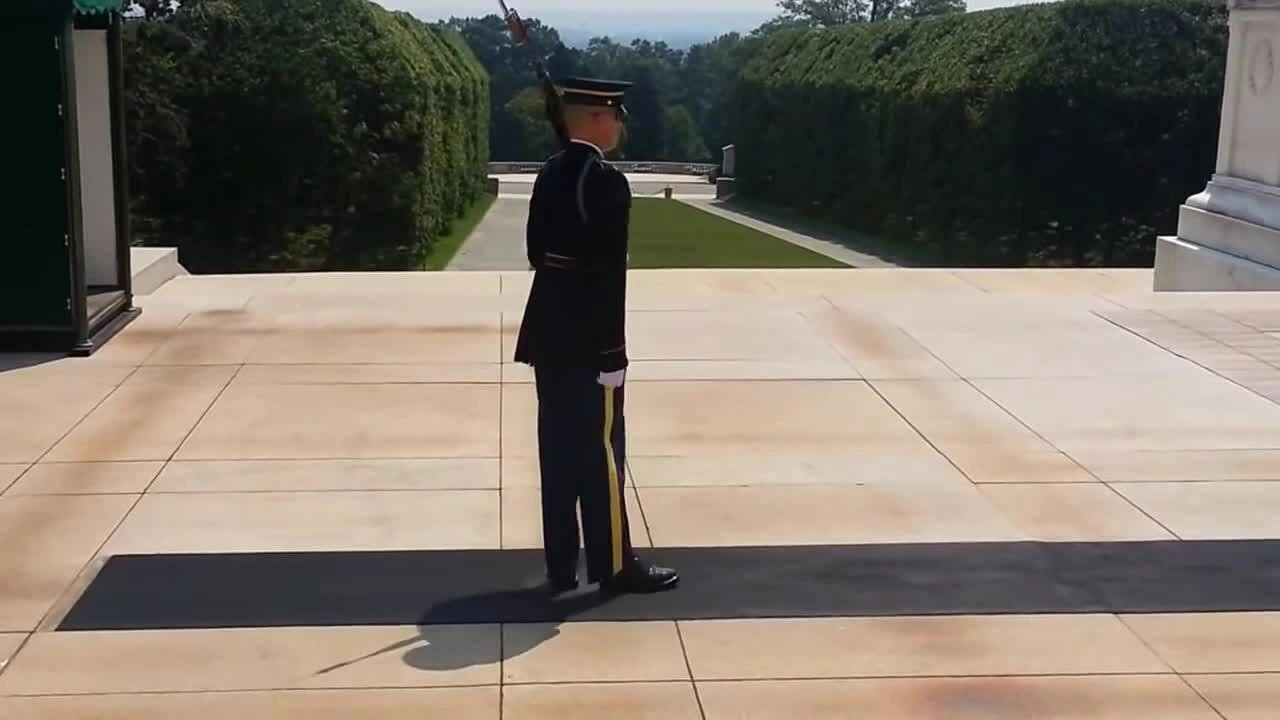
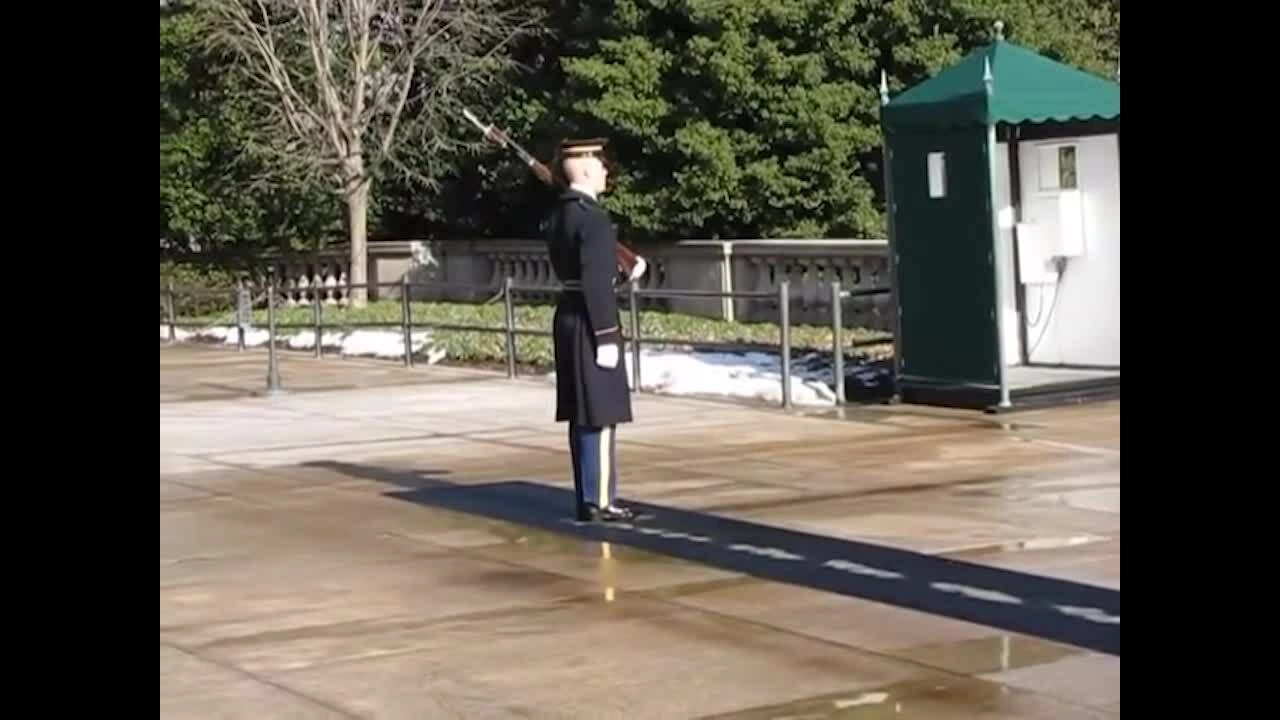
A sentinel, performing the precise, rhythmic patrol that has defined the site for nearly a century, issued a loud, authoritative verbal correction: "Visitors must maintain silence and respect at all times!" The command was clear and immediate. Secretary Hegseth, appearing to acknowledge the sentinel’s directive, glanced toward the guard before the group adjusted their behavior and continued their transit. The incident, while brief, highlights the absolute authority wielded by the Tomb Guard to ensure that no visitor, regardless of rank or position, disrupts the memorial’s tranquility.
The Role and Training of the Sentinel
To understand the gravity of the sentinel’s intervention, one must examine the extreme discipline required to serve at the Tomb of the Unknown Soldier. The sentinels are members of the 3rd U.S. Infantry Regiment, known as "The Old Guard." Selection for this duty is notoriously competitive; candidates must undergo a grueling training period that lasts between six and twelve months. The attrition rate for this training program is approximately 90%, with only the most disciplined soldiers earning the right to wear the Tomb Guard Identification Badge.
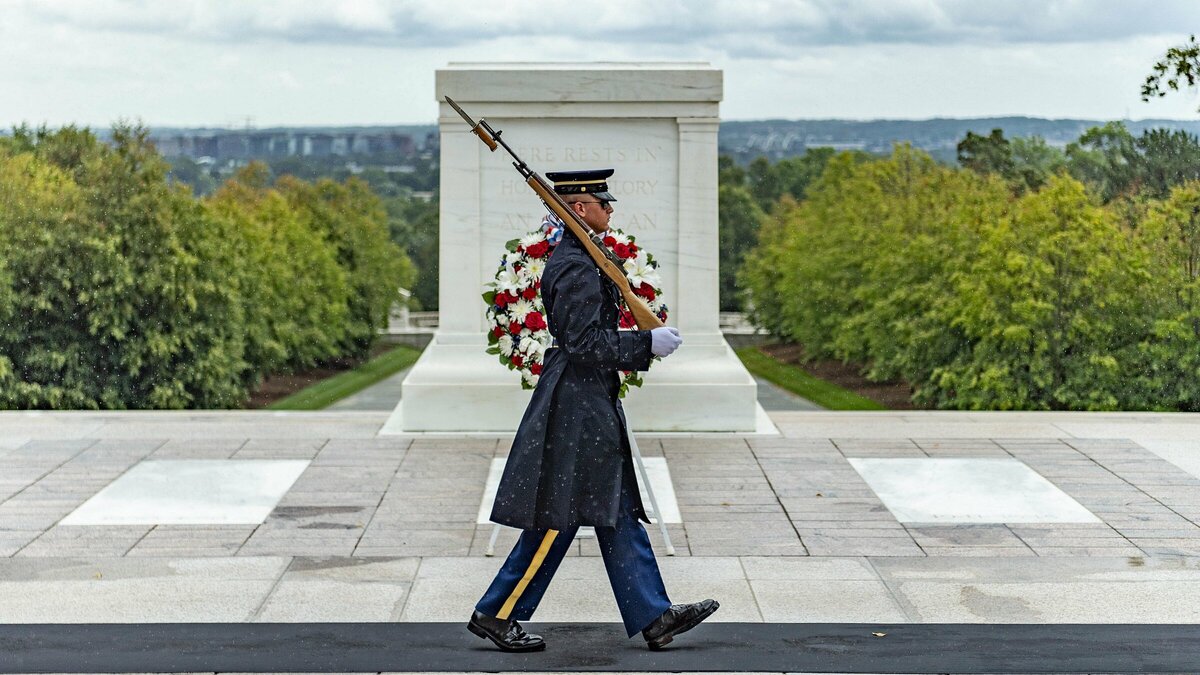
The sentinel’s patrol is a masterpiece of precision. They walk 21 steps down the black mat, turn, face the tomb for 21 seconds, turn, and switch the rifle to their opposite shoulder before repeating the process. The number 21 is symbolic, representing the 21-gun salute, the highest honor that can be rendered to military or political dignitaries. The guard is maintained 24 hours a day, 365 days a year, regardless of weather conditions—a commitment established in 1937 following pressure from the American Legion to ensure the site was never left unattended.
Chronology of Protocol and Enforcement
The regulation of behavior at Arlington is not merely a suggestion; it is a federal mandate. Under federal regulations governing the management of national cemeteries, visitors are required to adhere to standards of conduct that prohibit "disrespectful or disorderly behavior." While the regulations do not define specific decibel levels, the Tomb Guards are empowered to interpret what constitutes a disturbance.
According to data released by the U.S. Army in 2022, sentinels are required to issue verbal corrections to visitors on an average of two to three times daily. Master Sergeant Chadwick Winget, a veteran of the guard, has previously noted that most infractions are unintentional. "Usually it’s because they don’t realize," Winget stated, emphasizing that even inadvertent noise can break the concentration of those who are there to pay respects. However, the incident involving Secretary Hegseth represents a notable deviation from typical tourist infractions due to the high-ranking status of the visitors, which has prompted a broader discussion about political conduct at military memorials.
Official Responses and Public Reaction
The Pentagon, through spokesperson Sean Parnell, sought to diffuse the situation by reiterating the Secretary’s deep respect for military personnel. "The sentinel acted appropriately and displayed the utmost respect for the mission when reminding everyone to maintain the decorum of the site," Parnell stated in a formal briefing. He affirmed that Secretary Hegseth and the Department of Defense remain committed to honoring the sacrifices of the fallen.
Despite this, the incident has drawn sharp criticism from political opponents. Representative Gwen Moore, a Democrat from Wisconsin, took to social media to question the Secretary’s judgment. "Just one day after his confirmation, he displays a lack of awareness and disrespect for the sacred nature of the Tomb of the Unknown Soldier," she wrote. The political backlash underscores the heightened scrutiny surrounding the new administration’s officials and the symbolic importance of military tradition in the American political landscape.
Broader Implications and Historical Context
This is not the first time that political figures or their entourages have been embroiled in controversies at Arlington. During the 2024 presidential campaign, members of Donald Trump’s staff were accused of engaging in a physical altercation with cemetery staff who were attempting to prevent the campaign from filming in a restricted area of the cemetery. Federal law prohibits the use of national military cemeteries for campaign activities or partisan political events.
The incident involving Secretary Hegseth, while distinct in nature, feeds into a growing concern regarding the professionalization of political visits to military sites. Analysts suggest that such events serve as litmus tests for the current administration’s relationship with the armed forces. For many, the Tomb of the Unknown Soldier is more than a monument; it is the physical embodiment of the nation’s promise to never forget those whose names have been lost to the fog of war. When that space is treated with anything less than absolute solemnity, it is perceived as a failure of leadership.
Fact-Based Analysis of the Protocol
The "Old Guard" operates under a code of conduct that transcends political affiliation. By enforcing the rules against a high-ranking cabinet member, the sentinel reinforced the principle that the Unknown Soldiers hold a status higher than any living government official. This institutional independence is vital to the prestige of the Tomb. The fact that the sentinel did not hesitate to correct the Secretary of Defense is seen by many military observers as a positive indicator of the guard’s adherence to their duty, ensuring that the sanctity of the memorial remains untarnished by the proximity of political power.
In conclusion, the incident at the Tomb of the Unknown Soldier serves as a reminder of the boundaries between political life and the hallowed grounds of national mourning. While the Secretary of Defense and his staff have moved on from the event, the incident remains a point of public discussion, highlighting the necessity of maintaining decorum in places where the nation’s highest sacrifices are commemorated. As the Pentagon continues its operations under the new leadership, the event serves as a symbolic check, ensuring that the respect for the fallen remains paramount, regardless of who is walking the plaza. The professionalism of the sentinel, who stood their ground and issued the correction without hesitation, remains the gold standard for conduct at the site, upholding a tradition that has survived nearly a century of changing political tides.