The dream of homeownership for low-income earners and social policy beneficiaries in Vietnam is facing a significant hurdle as proposed legislative changes regarding the transfer of social housing units spark widespread anxiety. As the Ministry of Construction fine-tunes the draft Law on Housing, the prospect of restricting property transfers to a five-year window after initial payment has caused a ripple effect, leading some prospective buyers to withdraw their applications and re-evaluate their financial futures.
The Changing Landscape of Social Housing
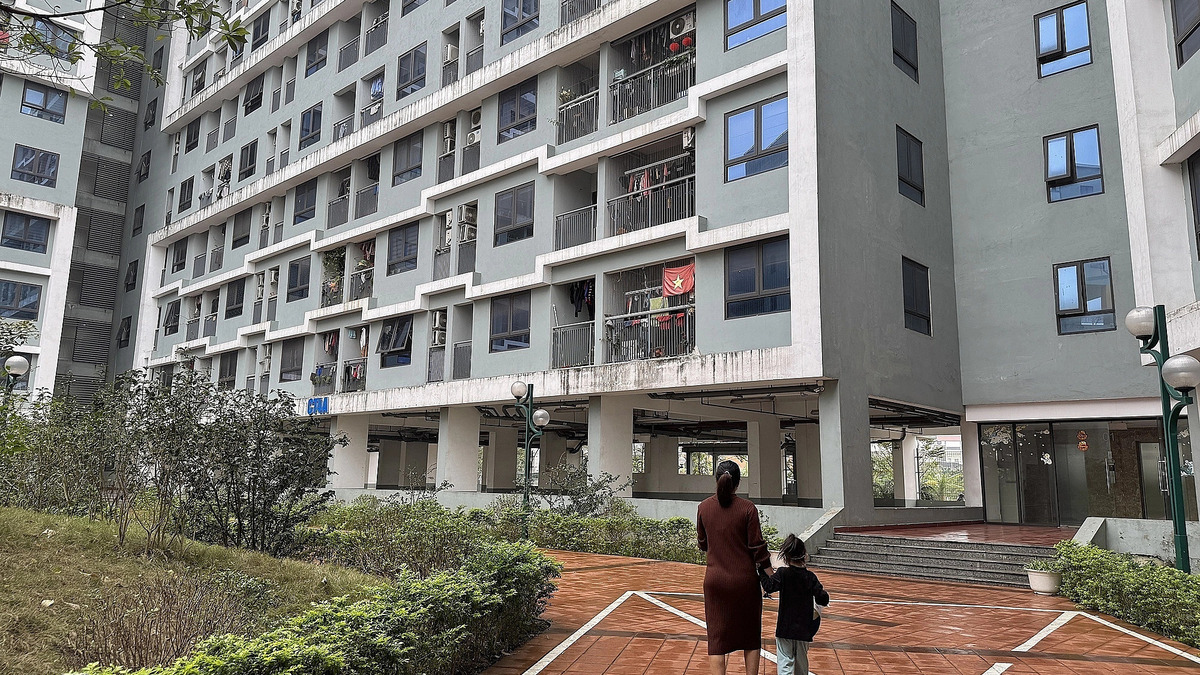
Social housing has long been positioned as the cornerstone of Vietnam’s national housing strategy, aimed at providing affordable living spaces for industrial workers, civil servants, and those qualifying for social welfare. However, the intersection of rising real estate prices and evolving regulatory frameworks has created a complex environment for these vulnerable groups.
In recent months, the market has witnessed a sharp increase in the price per square meter for social housing projects in major hubs like Hanoi and Bac Ninh. For instance, in Phu Thanh, unit prices have reached approximately 29.7 million VND per square meter. A modest 38-square-meter apartment now requires an investment of 1.1 billion VND, necessitating a bank loan of roughly 600 million VND—a daunting sum for a household earning 30 million VND per month. In other projects, such as those in Me Linh or Bac Ninh, families are looking at loans exceeding 1.2 billion VND, further straining the financial stability of the target demographic.
Chronology of the Legislative Shift
The debate centers on a provision within the draft Law on Housing that seeks to regulate the resale of social housing. Historically, regulations surrounding social housing transfers have been fluid, often aimed at preventing speculative investment in units meant for long-term residency.
- Initial Policy Framework: Previous iterations of housing law focused on broad accessibility, with varying restrictions on resale to ensure the properties remained with the intended beneficiaries.
- The October Proposal: A draft introduced in late October suggested strict controls on resales, which were met with immediate pushback from both market analysts and the public.
- The Current Draft: The Ministry of Construction’s latest proposal stipulates that after the five-year waiting period, social housing units can only be transferred to other individuals who meet the specific criteria for social housing support. Unlike previous, more liberal interpretations, this move aims to keep the housing stock within the social welfare loop.
Financial Implications and Market Reaction
The primary concern for potential buyers is the lack of liquidity. A young family, such as that of Mr. Minh Quyet, 31, must weigh the long-term commitment against the possibility of future life changes. "If our jobs change, or if we need to relocate, or if we simply need to liquidate the asset for family emergencies, the current proposal makes it nearly impossible to sell quickly," Quyet notes.
Market data supports this concern. In many urban centers, the gap between the initial price of social housing and the current market value has widened significantly. Some units that were originally purchased at 10–15 million VND per square meter are now being listed at three to five times that price. When the government restricts the pool of eligible buyers to only those who qualify for social housing, it effectively decouples the asset from market reality. If the pool of eligible buyers is small or lacks the financial capital to meet the appreciated price, sellers are effectively locked into their properties.
Expert Analysis: The Balancing Act
The Vietnam Association of Realtors (VARS) has expressed a nuanced view on the situation. Mr. Nguyen Chi Thanh, Vice Chairman of VARS, acknowledges that there is a legitimate policy basis for the five-year restriction. Social housing units benefit from significant state incentives—including land use rights, tax exemptions, and credit support—that regular commercial housing does not.
"If these units were allowed to be sold freely after a short period, they would quickly become standard investment vehicles, eroding the core mission of social security," Thanh explains. However, he warns that the process for verifying new buyers must be efficient. "If the administrative process for verifying eligibility takes months, the policy becomes a liability rather than a protection, as it prevents owners from accessing their capital during crises."
Phạm Duc Toan, General Director of EZ Property, echoes these concerns, noting that the reality of a household’s life often changes within a five-to-ten-year span. "Families grow, work locations shift, and elderly care needs arise. The ability to move to a more suitable home is a fundamental need," Toan says. He argues that the policy must be flexible enough to account for these life events, otherwise, the risk of "dead assets" increases, which ultimately harms the very people the policy intends to protect.
Official Responses and Industry Feedback
The Ho Chi Minh City Real Estate Association (HoREA) has been one of the most vocal critics regarding the potential negative impact on supply. They have reported that several developers have seen a spike in applicants withdrawing their files since the news of the proposed restrictions broke.
The core of the argument from industry stakeholders is that the restriction creates a "double bind":
- For the Seller: The inability to access the full market value of their property in a timely manner.
- For the Buyer: The requirement to meet strict eligibility criteria while also needing to secure financing for an increasingly expensive asset.
The consensus among experts is that if the government only controls the "exit" of the property without simplifying the "entry" (the transaction mechanism), the liquidity of the entire social housing sector could plummet. This would place immense pressure on developers, who may find it increasingly difficult to attract buyers to future projects if the asset is perceived as difficult to sell.
Broader Economic and Social Impacts
The proposed regulation touches upon a fundamental tension in urban planning: the conflict between treating housing as a social right and treating it as a financial asset. While the government aims to prevent the "flipping" of units by speculators—a practice that historically diverted thousands of social housing units into the luxury or rental market—the current proposal risks over-correcting.
If the market for social housing becomes too restrictive, it may inadvertently discourage the middle-low-income class from investing in their first home. Many young families rely on the potential appreciation of their first property to upgrade their living conditions as their income increases. By capping the potential for this growth or limiting the secondary market, the government might unintentionally trap residents in suboptimal living conditions.
Furthermore, the variation in local market conditions suggests that a "one-size-fits-all" policy may not be effective. The demand for social housing in a major metropolis like Hanoi, where space is at a premium and prices are surging, is fundamentally different from smaller provincial centers. Experts suggest that a more localized approach—one that evaluates the specific demographic needs and price points of each region—could provide a more equitable solution.
Conclusion: A Need for Refined Policy
As the debate continues, the Ministry of Construction faces the daunting task of drafting a policy that protects the integrity of the social housing program while maintaining the financial viability for the residents. The current trajectory suggests that without accompanying mechanisms to streamline the verification of eligible buyers and simplify the secondary market transaction process, the policy could lead to a cooling of the market.
For individuals like Ms. Thu Hue, 34, a factory worker in Bac Ninh, the decision is not just about a roof over her head, but about her family’s long-term financial survival. "We are already stretching our budget to buy a 32-square-meter unit for 758 million VND," she says. "If we cannot sell it when our family grows or our circumstances change, we are essentially gambling our entire savings."
Moving forward, stakeholders are calling for a policy that focuses on monitoring illegal transactions and "shadow" ownership rather than placing blanket restrictions on legitimate owners. By strengthening the administrative capacity to verify buyers and ensuring that those who truly need social housing have access to it, the government can achieve its goal of social equity without sacrificing the liquidity that makes homeownership a viable pathway for the working class.