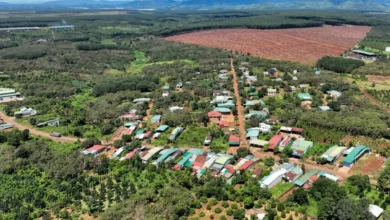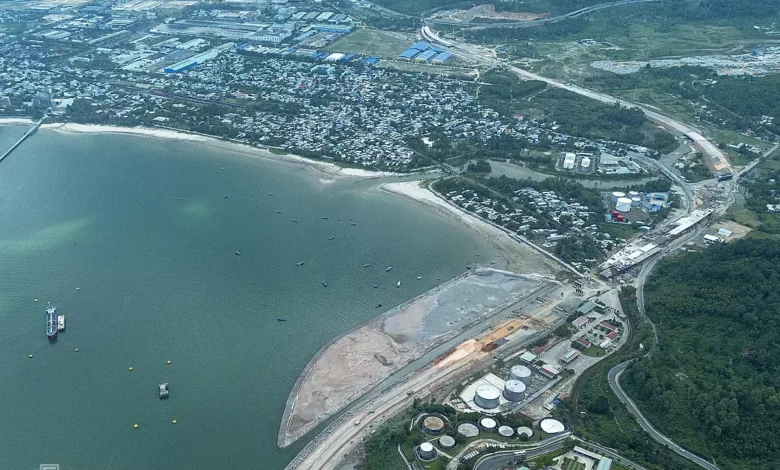
The city of Da Nang has officially greenlit a significant industrial expansion project, with the Vietnam-Singapore Industrial Park (VSIP) Joint Venture Company selected to spearhead the development of the "Functional Zone No. 7" within the city’s Free Trade Zone (FTZ). This ambitious undertaking, covering 276 hectares in Hoa Vang District, represents a total investment of 3.525 trillion VND (approximately 140 million USD) and marks a pivotal step in the central Vietnamese hub’s strategy to become a global logistics and high-tech manufacturing center.
Strategic Objectives and Project Scope
Under the recent decree issued by the Da Nang People’s Committee, VSIP is tasked with the comprehensive development, construction, and infrastructure management of Functional Zone No. 7. The project is structured with a 70-year operational lease term, commencing from the date of land allocation. VSIP, a joint venture between Vietnam’s Becamex IDC and Singapore’s Sembcorp Development, will provide 705 billion VND in equity—representing 20% of the total capital—while the remaining 80% is slated to be sourced through domestic credit institutions and other legally permissible funding channels.
The designated area is earmarked for a diverse range of economic activities, including advanced manufacturing, logistics, high-tech industrial operations, and information technology. These sectors align perfectly with the overarching mission of the Da Nang FTZ, which aims to attract foreign direct investment (FDI) by offering streamlined administrative procedures, customs incentives, and a specialized business environment. The investor is eligible for various land rental preferential policies as stipulated by national and municipal regulations, designed to lower the initial barrier to entry for high-value manufacturing firms.
Development Timeline and Implementation
The project is scheduled to unfold in several critical phases over the next decade. According to the approved roadmap, the investor will initiate formal investment procedures in the fourth quarter of this year. The complex process of site clearance and land compensation is projected to span through the third quarter of 2029, reflecting the scale and complexity of managing land acquisition in a rapidly urbanizing district like Hoa Vang.
The infrastructure construction phase is slated to reach completion by the first quarter of 2032. However, the commercial timeline remains aggressive; VSIP intends to launch marketing campaigns and begin attracting industrial tenants as early as the fourth quarter of 2028. This staggered approach allows for "early bird" leasing opportunities even while the broader infrastructure grid is being finalized, a strategy commonly employed by industrial park developers to secure anchor tenants early in the project life cycle.
Contextualizing the Da Nang Free Trade Zone
The establishment of the Da Nang Free Trade Zone in June 2025 was a landmark move for the city, encompassing roughly 1,756 hectares across seven distinct, non-contiguous sites. The creation of this zone is the centerpiece of the city’s ambition to transition from a tourism-led economy to a multifaceted industrial powerhouse. By providing a regulatory "sandbox" where international companies can operate with reduced tariffs and simplified trade procedures, Da Nang aims to compete with regional manufacturing hubs in Southeast Asia.
The selection of VSIP for Functional Zone No. 7 follows the city’s approval of five other infrastructure projects in zones 2, 3, 4, 5, and 6. These projects, covering a combined 1,154 hectares and representing an investment of nearly 19.2 trillion VND, involve prominent stakeholders including the Saigon-Da Nang Investment JSC, Phuong Trang Investment JSC, Thanh Binh Phu My, and the Ba Na Cable Car Service JSC. The inclusion of these major players indicates a robust, multi-pronged approach by the local government to accelerate the development of the FTZ.
The VSIP Legacy and Regional Impact
VSIP has been a cornerstone of Vietnam’s industrial transformation since its inception in 1996. Born from a partnership between Becamex IDC and a consortium of Singaporean companies led by Sembcorp, the joint venture has evolved into a symbol of the successful economic cooperation between Vietnam and Singapore. Over the past three decades, the group has scaled its operations to 30 major projects across 19 provinces and cities, providing a operational home to more than 1,000 international tenants from over 30 countries.
For the central region of Vietnam, the expansion of VSIP in Da Nang is highly significant. Historically, the southern and northern hubs of Vietnam have attracted the lion’s share of industrial FDI. By embedding itself in Da Nang, VSIP is signaling that the central coast is ready for high-tech industrialization. This expansion is expected to create thousands of jobs, drive regional GDP growth, and facilitate technology transfer from global enterprises to the local workforce.
Economic Implications and Market Analysis
From a macroeconomic perspective, the development of Functional Zone No. 7 serves as a litmus test for the success of Vietnam’s regional development policies. Da Nang’s geography—positioned at the center of the country with a major international airport and a deep-water seaport—provides a natural logistical advantage. However, the success of the FTZ will depend heavily on the ability of the local government to integrate these industrial zones into a cohesive supply chain.
Analysts point out that the high-tech focus of the zone is particularly timely. As global supply chains continue to move toward a "China Plus One" strategy, Vietnam remains a primary destination. By specializing in high-tech and IT sectors rather than just labor-intensive manufacturing, Da Nang is positioning itself to capture higher-margin investment. This strategy aligns with the broader national objective of climbing the global value chain.
Furthermore, the involvement of diverse investment groups in the surrounding zones suggests that the city is fostering a competitive landscape that encourages infrastructure efficiency. The collaboration between domestic giants like Saigon-Da Nang Investment and international veterans like VSIP creates a professional ecosystem that is highly attractive to multinational corporations (MNCs).
Challenges and Future Outlook
Despite the positive outlook, the project faces notable challenges. The primary obstacle is the long lead time for land compensation and site clearance, which is scheduled to conclude in 2029. In a rapidly shifting global economy, five years is a significant duration. Any delays in this process could impact the project’s ability to attract anchor tenants in the tight timeframe projected.
Additionally, the city must address the logistical infrastructure outside the zone—specifically, the connectivity between the FTZ, the Port of Da Nang, and the national highway system. While the industrial park itself will feature world-class facilities, its success is tethered to the broader urban infrastructure.
Official statements from local authorities emphasize that the city is committed to streamlining the permitting process to ensure the project remains on track. For the people of Hoa Vang, the project promises significant economic revitalization. For the business community, the entry of VSIP into the Da Nang FTZ is a definitive signal that the city is open for high-end business. As the project enters its initial phase in the coming quarter, the eyes of the international investor community will be fixed on how quickly the city can translate these plans into operational reality.
Ultimately, the development of Functional Zone No. 7 is more than just a real estate venture; it is a critical component of Da Nang’s long-term economic strategy. By marrying Singaporean industrial standards with Vietnam’s logistical potential, the city is setting the stage for a new era of industrial growth that could fundamentally alter the economic profile of Central Vietnam for decades to come.