Tesla Motors Vietnam establishes legal presence signaling potential entry into Southeast Asian EV market

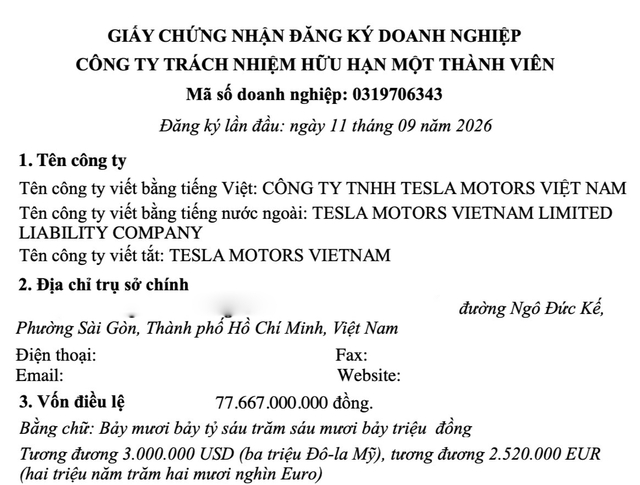
The landscape of the Vietnamese automotive industry has been significantly stirred by the formal registration of Tesla Motors Vietnam Limited Liability Company, a development that suggests the American electric vehicle (EV) giant is laying the groundwork for a long-anticipated entry into the country. Public records indicate that the company was officially established on September 11, 2026, with a charter capital of 77.667 billion VND—approximately 3 million USD. This strategic move, headquartered in the bustling Sài Gòn district of Ho Chi Minh City, marks a departure from Tesla’s historical reliance on third-party gray market imports, potentially signaling a shift toward direct, official distribution.
The Corporate Blueprint: Decoding the Registration
According to regulatory filings, Tesla Motors Vietnam Limited Liability Company (bearing business registration number 0319706343) has explicitly registered a wide array of business activities. These include the import, distribution, wholesale, and retail of automobiles and automotive spare parts. In the context of Vietnamese corporate law, the registration of such specific, high-level automotive business sectors is a prerequisite for any multinational manufacturer intending to operate a direct-to-consumer model.
The leadership team listed in the registration documents further confirms the gravity of this development. David Jon Feinstein has been identified as the Chairman, while Isabel Ching Fan serves as the General Director, and Nguyen Manh Hung acts as the Legal Representative. Industry observers have noted that these figures are not new to the global Tesla hierarchy. Isabel Ching Fan, in particular, has been instrumental in overseeing regional growth strategies for Tesla across Southeast Asia, suggesting that the Vietnamese entity is not an isolated initiative but part of a broader, well-coordinated regional expansion strategy.
Historical Context and the Gray Market Struggle
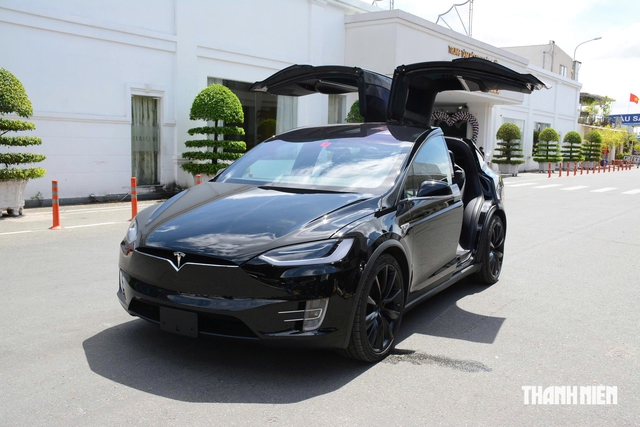
For many years, Tesla vehicles have been present on Vietnamese roads, albeit exclusively through private, independent importers. Enthusiasts and luxury car buyers have accessed models such as the Model S, Model X, and Model 3 by navigating complex third-party logistics. However, this fragmented approach has left owners in a precarious position regarding after-sales support.
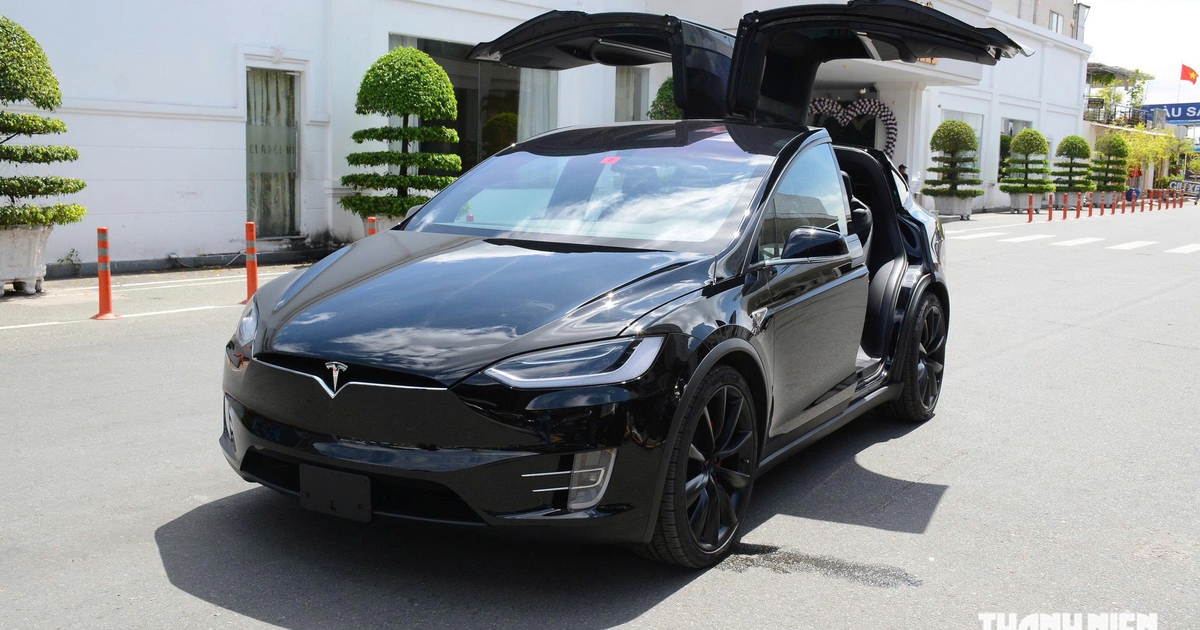
Without an official manufacturer presence, Vietnamese owners have faced significant hurdles in obtaining authorized service, software updates, and proprietary spare parts. The absence of a certified Tesla service network means that minor repairs often require international coordination or reliance on non-specialized local mechanics. The establishment of a local legal entity fundamentally changes this dynamic, as it provides a platform for the company to eventually roll out official service centers, warranty programs, and a dedicated customer support framework.
The Road Ahead: Why Registration is Not an Immediate Launch
While the establishment of a legal entity is a monumental step, industry analysts caution that it does not equate to an immediate commencement of vehicle sales. The transition from corporate registration to a showroom floor is governed by stringent Vietnamese automotive regulations.
Under current legislation, a foreign automotive firm must fulfill a multi-stage process before it can legally sell vehicles. This includes:
- Import Licensing: Securing specific permits for the importation of new vehicles.
- Infrastructure Development: Meeting rigorous standards for service, maintenance, and repair facilities.
- Regulatory Compliance: Adhering to technical safety standards and environmental regulations mandated by the Vietnamese Ministry of Transport.
- Warranty Obligations: Providing a comprehensive, manufacturer-backed warranty system that meets local consumer protection laws.
Furthermore, Tesla has yet to make a formal public announcement regarding its specific rollout plan in Vietnam. As of mid-September 2026, the company has remained silent on timelines for showroom openings, the development of its proprietary "Supercharger" network, or the specific models slated for the Vietnamese market.
Economic and Market Implications
The entry of Tesla into Vietnam would represent a transformative moment for the nation’s burgeoning EV sector. Vietnam has been aggressively pursuing green energy initiatives, with domestic manufacturers like VinFast leading the charge. The arrival of a global titan like Tesla would likely accelerate the adoption of electric vehicles by increasing competition and forcing a rapid expansion of the country’s charging infrastructure.
From a market perspective, the presence of an official Tesla entity would likely standardize pricing and provide consumer protections that the current gray market cannot offer. It would also signal to global investors that Vietnam is reaching a level of economic maturity capable of supporting high-end, technology-driven automotive brands.
Comparative Regional Strategy
To understand the implications for Vietnam, one must look at Tesla’s operations in neighboring markets. In Thailand and Malaysia, Tesla utilized similar corporate structures to initiate market entry. In these countries, the company focused first on establishing high-visibility showrooms in major urban hubs before systematically deploying its fast-charging network along key transit corridors.
The presence of David Jon Feinstein in the Vietnamese leadership, who has previously overseen legal and operational expansions for Tesla in other international markets, suggests that the company is applying a proven playbook to the Vietnamese context. The focus on "import and distribution" in the company’s business scope suggests a model similar to its Malaysian and Thai operations, where vehicles are imported as fully built units (CBU) rather than manufactured locally.
Challenges to Overcome
Despite the optimism surrounding the news, the company faces significant challenges. The "infrastructure gap" remains the most pressing issue. Unlike traditional internal combustion engine (ICE) vehicles, the Tesla experience is intrinsically tied to its charging ecosystem. Building a nationwide network of Superchargers in a country with Vietnam’s unique geographical layout will require extensive cooperation with local authorities and utility providers.
Additionally, the regulatory landscape for EVs is still evolving in Vietnam. While the government has expressed support for electric mobility through tax incentives and registration fee waivers, the long-term policy framework remains a subject of ongoing development. Tesla will need to navigate these policies carefully to ensure long-term viability.
Conclusion: A Calculated First Step
The formation of Tesla Motors Vietnam is a definitive signal of intent, but it is a measured one. By establishing a formal corporate entity, Tesla has secured the legal right to operate within the Vietnamese market while maintaining the flexibility to scale its operations at a pace that matches the country’s infrastructure readiness.
For the consumer, this is a long-awaited development that promises the eventual arrival of authorized sales and service. For the industry, it marks the beginning of a new era of competition that will likely catalyze the transition to sustainable transport. While there is no current roadmap for when a consumer will be able to purchase a vehicle directly from an authorized Tesla showroom in Hanoi or Ho Chi Minh City, the foundation has been laid. All eyes remain fixed on the company’s next move: the recruitment of local talent, the selection of site locations for showrooms, and the eventual public announcement of its strategic vision for the Vietnamese market. Until then, the registration stands as the most significant milestone to date in Tesla’s journey into the heart of Southeast Asia.