Ukraine Pressures Europe to Join Peace Talks, Russian Ambassador Dies at 66, and Iran Warns of Strikes on US Bases in Europe

The global political landscape experienced a series of high-stakes diplomatic developments and security warnings on November 13, 2026. From escalating geopolitical pressure surrounding ongoing negotiations over the conflict in Eastern Europe to an unexpected diplomatic loss for Moscow and stern military warnings emerging from the Middle East, international relations face a period of intense volatility. Key capitals are currently reassessing their strategic postures as multiple crises converge simultaneously, raising concerns among foreign policy experts regarding regional stability and international security frameworks.
Zelensky Urges Europe to Designate a Unified Negotiator
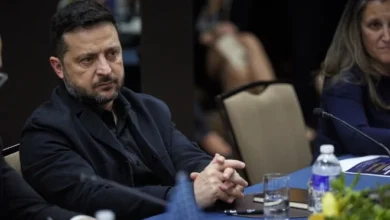
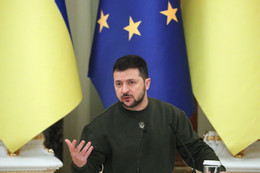
President Volodymyr Zelensky of Ukraine has formally called upon European nations to swiftly designate and empower a single representative to participate in ongoing trilateral peace negotiations. Speaking in Copenhagen, Denmark, on November 11, the Ukrainian leader emphasized that involving a dedicated European Union envoy equipped with comprehensive authorization is vital for the legitimacy and effectiveness of the diplomatic track.
These remarks follow the conclusion of initial trilateral preliminary discussions involving the United States, Russia, and Ukraine held in Abu Dhabi. According to diplomatic sources, President Zelensky has set a strict deadline for this decision, urging European partners to reach a consensus before the end of November. Alternatively, he suggested that the matter be formally addressed during an upcoming summit of Western European allies supporting Kyiv, scheduled to take place in Berlin on November 19.
The push for a unified European voice stems from concerns in Kyiv that crucial security arrangements and territorial discussions might proceed without adequate representation from continental European stakeholders. Analysts note that while the United States and international mediators have driven much of the preliminary diplomatic engagement, European capitals provide the bulk of financial and military assistance to Ukraine, making their direct inclusion at the negotiating table a logistical and political necessity for long-term peace implementation.
Sudden Passing of Russian Ambassador to the US Aleksandr Darchiev
In a separate development that sent shockwaves through Moscow’s diplomatic corps, the Ministry of Foreign Affairs of the Russian Federation announced the sudden death of its Ambassador to the United States, Aleksandr Darchiev. He passed away at the age of 66 in Moscow.
Initial reports from Russian state media indicated that the ambassador passed away unexpectedly, prompting widespread speculation before Ministry Spokesperson Maria Zakharova clarified later on November 11 that Ambassador Darchiev succumbed to a long-standing illness while visiting the Russian capital.
Ambassador Darchiev was widely recognized as a veteran diplomat and a seasoned architect of Russian foreign policy concerning North America. Fluent in both English and French, his extensive career included serving as Russia’s Ambassador to Canada from 2014 to 2021—a critical period marked by shifting diplomatic dynamics in the Western Hemisphere. Prior to his posting in Ottawa, Darchiev held several high-ranking positions within the Russian Embassy in Washington, D.C., including senior counselor and minister-counsellor, where he managed complex bilateral communications during various geopolitical friction points.
His passing leaves a significant vacancy in Moscow’s diplomatic apparatus in Washington at a time when channels of communication between the United States and Russia face unprecedented strain. The Russian Foreign Ministry is expected to announce a successor in the coming weeks, though the process may be complicated by ongoing diplomatic restrictions and bilateral tensions.
Iran Issues Stern Warning Over US Military Bases in Europe
Amidst compounding global tensions, the Middle East crisis has also taken a sharp rhetorical turn. Mohsen Rezaei, Secretary of Iran’s Supreme National Security Council, issued a severe warning to Washington on November 11, cautioning the United States against military escalation in the region and asserting that any aggressive posture would invite a catastrophic and geographically expansive response.
Speaking via regional media outlets, Secretary Rezaei warned the United States administration against making what he termed "miscalculated decisions" in the Middle East. He specifically addressed the strategic status of the Strait of Hormuz, declaring that the vital waterway would not return to its pre-conflict status quo should hostilities resume.
Most notably, the Iranian official expanded the scope of potential retaliatory targets far beyond the immediate Middle Eastern theater. "If the US side makes a mistake and decides to restart a military campaign, we will not just target military bases in the region, but also bases much further away," Rezaei stated. He added that Iranian capabilities could extend to targets previously considered beyond the reach of conventional regional arsenals, explicitly warning that Tehran’s strategic response could encompass United States military installations located within Europe.

Broader Implications and Global Security Analysis
The convergence of these events underscores the fragile state of international security in late 2026. The demand by Ukraine for a consolidated European negotiating stance highlights the fracturing architecture of Western security coordination, where European nations strive to maintain influence in a peace process largely shaped by Washington and Moscow.
Concurrently, the sudden loss of a pivotal diplomatic figure like Ambassador Darchiev removes a crucial bridge of communication between Washington and Moscow, increasing the risk of miscalculation during an era of heightened nuclear and conventional posturing. Finally, Iran’s explicit warnings regarding European-based US military assets demonstrate the truly globalized nature of modern regional conflicts, where geographical distance no longer guarantees immunity from asymmetric retaliation.
As the November deadlines approach—ranging from Europe’s internal deliberations on a peace envoy to ongoing diplomatic maneuvers—international observers remain watchful. The coming weeks will likely determine whether diplomatic frameworks can contain these escalating pressures or if further crises will materialize across multiple theaters.