VietinBank Partners with JCB and Hanoi Metro to Introduce Contactless Payment Solutions Across Hanoi Urban Railway Network


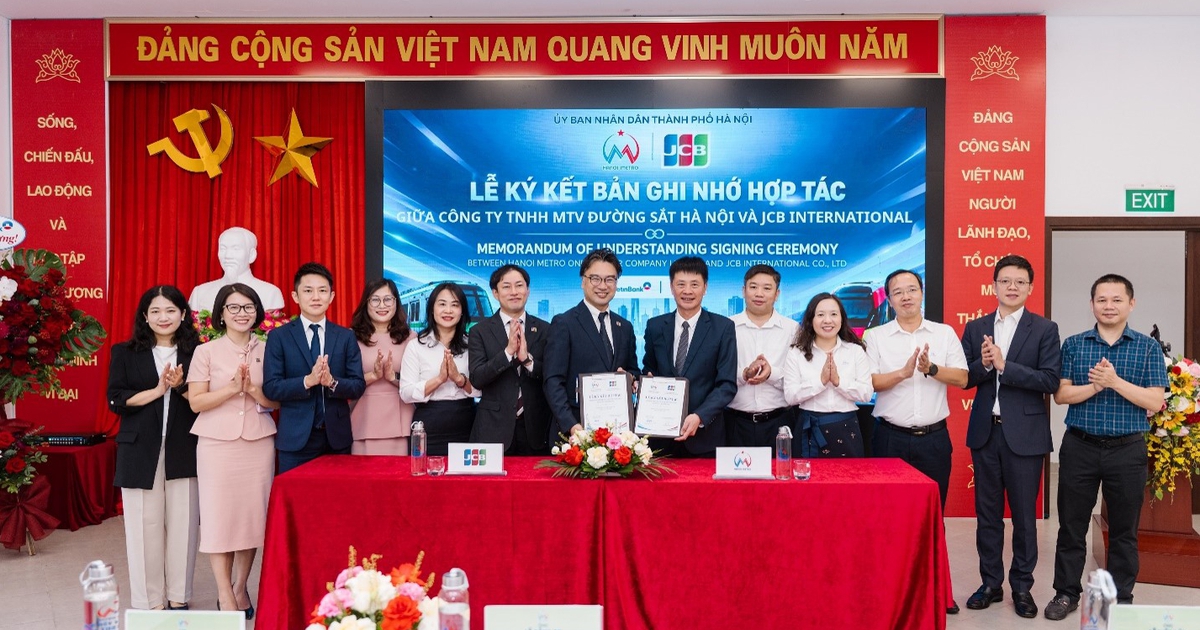
Hanoi’s public transportation landscape is poised for a major technological transformation following a landmark agreement signed yesterday between international payment brand JCB, Hanoi Metro (Hanoi One Member Limited Liability Railway Company), and VietinBank. Under this strategic partnership, the three entities will formally deploy the advanced JCB Transit solution across the capital city’s burgeoning urban railway network, with VietinBank serving as the core financial and payment solutions provider.
Scheduled for official commercial launch in early 2027, the implementation of JCB Transit aims to bridge the gap between international payment standards and everyday urban commuting. By integrating contactless card acceptance directly into turnstiles and automated fare collection gates across all operational metro lines in Hanoi, the project eliminates traditional friction points associated with public transit ticketing. Passengers will no longer need to queue for single-journey paper tickets or manage exact cash fares, aligning Vietnam’s capital infrastructure with smart city standards seen in major metropolitan areas worldwide.
Bridging Public Transit and Modern Financial Ecosystems
The collaboration addresses a long-standing objective for Vietnam’s transport and financial sectors: fostering a seamless, cashless digital economy. As Hanoi continues to expand its urban railway network—incorporating existing lines like Cat Linh–Ha Dong and upcoming routes under construction—efficient passenger throughput becomes a paramount operational challenge.
Under the terms of the Memorandum of Understanding (MOU), JCB brings its globally recognized transit payment framework, which allows cardholders to tap their contactless JCB credit, debit, or prepaid cards directly at station entry gates. Meanwhile, Hanoi Metro provides the physical infrastructure and operational integration necessary to adapt station turnstiles for open-loop payment acceptance. VietinBank acts as the vital financial conduit, anchoring the transaction processing architecture, ensuring inter-operability between banking systems and transit hardware, and guaranteeing secure, real-time settlement operations.
Industry observers note that open-loop transit payment systems significantly lower the barrier of entry for both local commuters and international tourists. Tourists arriving in Hanoi will be able to utilize their existing home-country JCB cards to board public transit immediately, circumventing the need to exchange currency, purchase local transit smart cards, or understand complex regional fare charts.
Strategic Timeline and Phased Implementation Roadmap
The journey toward a fully integrated contactless metro system follows a carefully structured multi-year roadmap designed to minimize disruption while ensuring rigorous system testing and security compliance.
- Q4 2026: Formalization of the tripartite partnership through the signing of the Memorandum of Understanding, alongside initial technical scoping and architectural design of the payment gateway integration.
- Throughout 2026–2027: Hardware procurement, firmware upgrades for Hanoi Metro turnstiles, and end-to-end testing of VietinBank’s payment processing engine alongside JCB’s network security protocols.
- Early 2027 (Targeted Launch): Commercial rollout of the JCB Transit service across active Hanoi Metro lines, accompanied by public awareness campaigns and customer service onboarding at major transit hubs.
- 2027 and Beyond: Post-launch monitoring, evaluation of transaction volumes, and potential scalability assessments to expand the open-loop payment model to other forms of public transit, such as Bus Rapid Transit (BRT) and municipal bus networks.
Stakeholder Perspectives and Official Commitments
Speaking at the signing ceremony, representatives from all three participating organizations emphasized the broader socio-economic significance of the initiative.
Mr. Le Viet Duc, representing VietinBank, highlighted the bank’s ongoing commitment to embedding financial services into the daily routines of Vietnamese citizens. "By acting as the premier payment solutions provider for the JCB Transit project, VietinBank is reinforcing its strategic role as a financial connector," Mr. Duc stated. "Integrating international payment rails into critical public infrastructure not only elevates the standard of living for urban commuters but actively accelerates the national transition toward a cashless society. Our customer-centric philosophy drives us to collaborate with visionary partners to deliver secure, frictionless, and innovative financial touchpoints."
Leadership from Hanoi Metro echoed these sentiments, noting that modernizing fare collection is essential for improving operational efficiency and passenger satisfaction. As the volume of urban rail commuters steadily rises, automating and streamlining station access reduces congestion during peak morning and evening rush hours.
Similarly, executives from JCB international card organization emphasized that expanding transit acceptance in key Southeast Asian markets remains a strategic priority. The deployment in Hanoi builds upon successful transit implementations of JCB contactless solutions in other global metropolitan centers, demonstrating the brand’s technical reliability and scalability in high-frequency transaction environments.
Economic Implications and the Broader Push for Cashless Payments
The collaboration between VietinBank, JCB, and Hanoi Metro arrives at a pivotal juncture for Vietnam’s digital economy. The Vietnamese government has aggressively pursued national digital transformation agendas, encouraging public-private partnerships that modernize essential public services.

Public transportation is uniquely positioned to drive behavioral change regarding payment habits. Because transit involves high-frequency, low-value transactions performed daily by millions of citizens, familiarizing commuters with contactless "tap-and-go" technology builds consumer trust in digital payment security. Once consumers routinely use their bank cards for daily transit, they are statistically more likely to adopt cashless transactions for retail, dining, and e-commerce.
Furthermore, the data-driven insights generated by open-loop transit systems offer long-term municipal planning benefits. Digitized fare collection allows Hanoi Metro to analyze passenger flow patterns, peak travel times, and network utilization rates with high precision. This data can subsequently inform infrastructure expansion projects, scheduling adjustments, and dynamic pricing strategies designed to optimize urban mobility.
Challenges and Risk Management in Transit Modernization
While the prospects of the JCB Transit rollout are overwhelmingly positive, experts point out that large-scale transit modernization projects require rigorous risk management. Key operational challenges include ensuring 100% uptime for payment gateways, maintaining low transaction latency at turnstiles to prevent bottlenecks during peak hours, and safeguarding consumer data against cyber threats.
VietinBank, leveraging its robust cybersecurity infrastructure and extensive experience in retail banking, is well-equipped to manage transaction security. Additionally, the open-loop architecture ensures that even if specific communication lines experience temporary disruptions, localized offline authorization protocols can maintain steady passenger throughput.
Conclusion: A New Era for Hanoi’s Urban Mobility
The formalization of the partnership between VietinBank, JCB, and Hanoi Metro marks a defining milestone in the modernization of Vietnam’s public infrastructure. By combining international payment expertise, domestic banking prowess, and municipal transit management, the initiative creates a robust blueprint for future smart city developments across the country.
As the early 2027 launch date approaches, stakeholders across the financial and transportation sectors will be closely monitoring the deployment. For the millions of residents and visitors who rely on Hanoi’s urban rail network every day, the promise of a faster, cleaner, and entirely cashless journey is rapidly becoming a reality.