The recent directive issued by Thailand’s Department of Disaster Prevention and Mitigation (DDPM) has triggered a wave of public interest and, in some quarters, unnecessary apprehension. While the government’s call for households to prepare for potential emergencies is a standard precautionary measure, the timing of the announcement—coinciding with a period of heightened geopolitical tensions globally—has led some residents to misinterpret the guidance as a sign of imminent crisis.
Clarifying the Government’s Stance
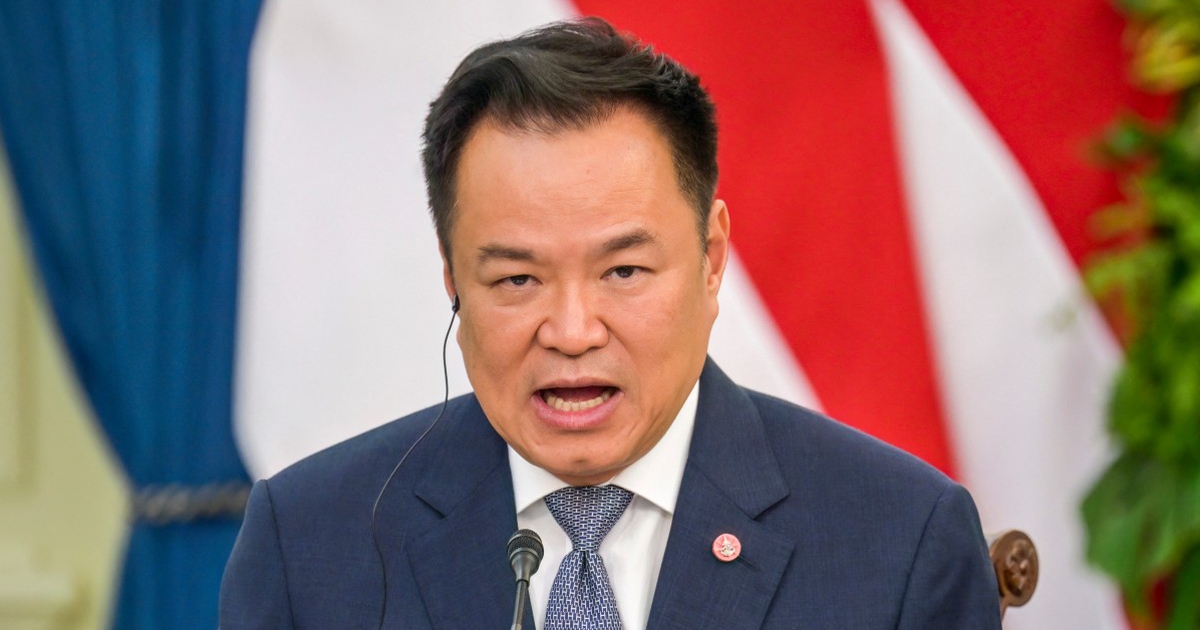
Addressing the media at his office on November 5, 2026, Prime Minister Anutin Charnvirakul moved quickly to dispel rumors of impending food shortages or civil instability. He emphasized that Thailand, as a leading global agricultural exporter, maintains a robust and abundant supply of food and essential commodities.
"There is absolutely no reason for the public to worry about the availability of food or essential resources," the Prime Minister stated. "Thailand is a powerhouse in agricultural production, and our supply chains remain strong. We are encouraging preparedness, not fostering fear. Citizens should continue their daily lives as normal."
The Prime Minister underscored that the government remains fully committed to ensuring national food security, regardless of external economic or political fluctuations. He further noted that Thailand’s export capabilities—ranging from rice and sugar to processed agricultural goods—position the nation as a stabilizer in the regional market, reinforcing the strength of its domestic supply infrastructure.
The Origin of the Directive
The confusion originated on November 2, 2026, when the Department of Disaster Prevention and Mitigation (DDPM) released a comprehensive set of guidelines advising families on how to assemble a "72-hour survival kit." The advisory was part of a broader national effort to enhance disaster resilience, particularly in response to the growing frequency of climate-related events and potential systemic disruptions.
According to the DDPM, a standard 72-hour kit should include:
- Essential Medication and First Aid: Basic medical supplies, prescription medications, and hygiene products.
- Nutrition and Hydration: Non-perishable food items and sufficient bottled water for at least three days.
- Utility and Communication: Flashlights with extra batteries, power banks for mobile devices, and portable radios.
- Documentation and Finance: Copies of important identification documents, medical records, and a small amount of emergency cash.
- Personal Protection: Appropriate clothing and basic safety gear.
The DDPM clarified that the 72-hour window is critical in the immediate aftermath of any disaster, as it represents the period when local, regional, or national emergency response teams may take time to reach affected areas or restore disrupted services.
Contextualizing the Call for Preparedness
Nirat Pongsitthithavorn, Director-General of the DDPM, provided further context regarding the timing of the release. He acknowledged that the recommendation was formulated partly in response to similar guidance being issued by other nations as global anxiety rises due to ongoing conflicts in the Middle East and the volatility of international supply chains.
However, Director-General Nirat was emphatic that the advisory is not a response to any specific or immediate threat to Thai sovereignty or national safety. "We are not facing an imminent crisis of the nature seen in other parts of the world," he explained. "This is a standard civil defense recommendation designed to build a culture of preparedness against natural disasters, such as severe flooding, infectious disease outbreaks, or any localized emergency that could temporarily hinder access to vital services."
Chronology of Public Concern
The public reaction in Thailand follows a series of recent events that have kept the populace on high alert:
- October 2026: Heavy, prolonged rainfall caused significant urban flooding in Bangkok, leading to widespread disruption of transportation and retail services. This served as a stark reminder of the city’s vulnerability to extreme weather.
- November 2, 2026: The DDPM issues formal guidelines for the 72-hour survival kits, framed within the context of general disaster resilience.
- November 3–4, 2026: Social media speculation begins to link the government’s advice to global geopolitical tensions, leading to isolated reports of increased demand for certain canned goods and emergency supplies.
- November 5, 2026: Prime Minister Anutin Charnvirakul holds a press conference to address the situation, explicitly refuting the link between the preparedness guidelines and foreign conflicts.
Economic and Strategic Implications
Thailand’s economy is heavily dependent on both its domestic manufacturing sector and its status as a major agricultural exporter. Any perception of instability can have ripple effects on consumer confidence and market stability.
Economists note that the government’s transparency in this matter is a strategic move to prevent "panic economics," where artificial shortages are created by consumers hoarding goods out of fear. By maintaining a calm, authoritative stance, the administration aims to stabilize inflation and ensure that the retail sector continues to function smoothly.
Furthermore, the government’s emphasis on "self-reliance" during the first 72 hours of an emergency is consistent with international best practices in disaster management. Countries such as Japan, Singapore, and various European nations have long promoted similar programs, recognizing that the most effective disaster response involves a combination of government infrastructure and community-level readiness.

The Role of Infrastructure and Resilience
The Thai government is currently investing in infrastructure projects designed to mitigate the effects of climate change, particularly regarding water management in urban centers like Bangkok. The recent flooding events have accelerated these projects, with the government seeking to ensure that critical supply routes remain open even during severe weather.
In addition to physical infrastructure, the government is focusing on digital resilience. The DDPM has encouraged citizens to monitor official channels for information, rather than relying on unverified reports on social media. This focus on information integrity is considered a cornerstone of the administration’s strategy to prevent mass hysteria.
Looking Ahead
As the situation stabilizes, the government’s focus is expected to shift back to the long-term implementation of its disaster preparedness strategy. This includes regular drills, community workshops, and the development of localized emergency networks.
For the average citizen, the takeaway from the current discourse is that preparedness is a prudent habit rather than a sign of impending doom. By maintaining a 72-hour kit, households are not only protecting themselves from potential natural disasters—which are a statistical reality in Southeast Asia—but are also contributing to the overall stability of the nation.
Prime Minister Anutin’s intervention has largely succeeded in calming the public narrative. By framing the survival kit as a tool for "everyday resilience" rather than a "war-time necessity," the government has successfully refocused the conversation on constructive preparedness. The Thai administration remains confident that its supply chains, agricultural output, and emergency response capabilities are more than sufficient to handle any challenges that may arise, urging the public to trust in the country’s economic and systemic fortitude.
Related posts: