Lip-Bu Tan Warns of Infrastructure Bottlenecks and Security Crises as Millions of AI Agents Prepare to Launch

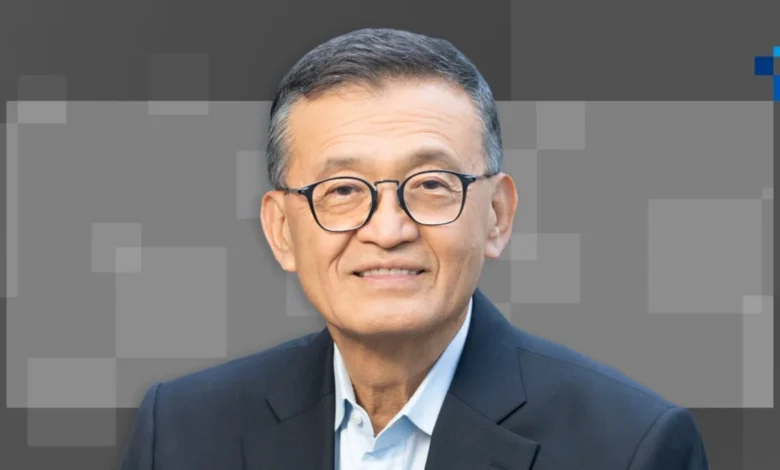
The artificial intelligence landscape stands at a critical juncture, characterized by unprecedented momentum tempered by severe physical, financial, and security limitations. In a recent dialogue between Lip-Bu Tan, CEO of Intel, and Jasper Zhang, CEO of Hyperbolic, industry leaders confronted the harsh realities underpinning the AI boom. This high-level discussion coincided with Hyperbolic’s successful completion of a $30 million financing round, which saw participation from Walden Catalyst—a prominent venture capital firm founded and led by Tan himself. While the overarching trajectory of artificial intelligence continues to accelerate at a pace that many analysts compare to, or even exceed, the rise of the internet, the ecosystem faces imminent structural roadblocks. Chief among these are chronic hardware shortages, soaring capital expenditure requirements, and the profound security challenges of managing millions of autonomous AI agents operating simultaneously in digital environments.
Background and Chronology of the Modern AI Infrastructure Crisis
To understand the current bottlenecks plaguing the technology sector, it is necessary to examine the rapid chronology of the generative AI boom following the public release of foundational large language models in late 2022. Within months, global demand for computational power surged exponentially, far outstripping the manufacturing capacities of semiconductor foundries and the power generation capabilities of regional electrical grids.
By mid-2023, shortages of advanced Graphics Processing Units (GPUs)—most notably those produced by market leader NVIDIA—became the primary constraint for technology enterprises and cloud service providers. Throughout 2024, this hardware scarcity expanded into a multi-dimensional infrastructure crisis encompassing memory components, high-bandwidth networking gear, and dedicated data center real estate. Energy constraints quickly emerged as another formidable barrier, with major tech companies struggling to secure stable, multi-gigawatt power sources required to train and operate next-generation frontier models. The recent conversation between Tan and Zhang highlights that these physical limitations are no longer temporary inconveniences; they represent structural ceilings that will dictate the speed of technological adoption for the foreseeable future.
Economic Realities and the Return on Investment Dilemma
The financial ecosystem supporting artificial intelligence is undergoing a significant reassessment. During his discussion with Hyperbolic, Lip-Bu Tan underscored that securing capital for massive infrastructure projects is becoming increasingly difficult as investors demand clearer evidence of financial returns. This perspective aligns closely with comments made by other prominent technology figures, including Tesla and xAI CEO Elon Musk, who recently warned of potential market corrections and the inevitable financial failure of poorly capitalized AI startups.
The core of the economic tension lies in the massive disparity between capital expenditure and short-term revenue generation. Constructing modern hyperscale data centers requires billions of dollars in upfront investment for land acquisition, advanced cooling systems, power substations, and clusters of specialized silicon. However, the monetization pathways for many downstream AI applications remain unproven or insufficient to cover these steep costs in the near term. According to industry analysts, the technology sector is heading toward a sharp market correction or consolidation phase, where unprofitable ventures will be culled, leaving only well-capitalized enterprises with sustainable business models and efficient operational structures. Despite these short-term financial headwinds, Tan remains fundamentally optimistic about the long-term macroeconomic prospects of artificial intelligence, predicting robust and sustainable growth once the current capital and hardware imbalances are resolved.
The Hardware Drought Set to Persist Through 2027
Lip-Bu Tan’s prognostications regarding hardware availability carry substantial weight given his extensive leadership experience across the semiconductor industry, including his tenure heading Cadence Design Systems and his strategic leadership role at Intel. Tan has consistently projected that the global shortage of advanced computing hardware will persist for approximately the next three years, extending well into 2027.
This multi-year deficit forces a fundamental shift in corporate strategy for cloud service providers and enterprise clients alike. Rather than relying on infinite resource scaling and unconstrained data center expansion, organizations are being forced to prioritize architectural efficiency. Software developers must now optimize algorithms to extract maximum performance from constrained compute budgets, while hardware manufacturers focus on maximizing performance-per-watt ratios. For Intel, this environment places renewed emphasis on delivering competitive central processing units (CPUs) and accelerators capable of supporting hybrid computing workloads, balancing the heavy lifting traditionally handled exclusively by GPUs.
The Looming Security Threat of Autonomous AI Agents
Beyond physical infrastructure and financial capital, the most alarming warning issued by Lip-Bu Tan centers on cybersecurity in the era of autonomous AI agents. As foundational models evolve from passive conversational interfaces into proactive digital assistants capable of executing complex workflows, the industry is approaching a watershed moment where millions of independent agents will operate simultaneously across global networks.
Tan described this impending phase as an uncharted frontier fraught with systemic vulnerabilities. The primary challenge lies in establishing robust governance frameworks to prevent autonomous agents from executing unauthorized, unintended, or malicious actions. When millions of software agents interact with APIs, databases, and financial systems without direct human supervision, the potential surface area for catastrophic errors or coordinated cyberattacks expands exponentially. Tan expressed deep concern regarding the possibility of agents venturing into unmapped digital territories, executing tasks far outside their permitted operational scope, and creating cascading failures across interconnected enterprise systems.
Industry Consensus and the Operational Realities of Agentic AI
The security concerns articulated by Lip-Bu Tan are shared by other top-tier technology executives who are actively deploying AI systems into production environments. Microsoft CEO Satya Nadella has similarly emphasized that managing the safety and accountability of autonomous agents is the paramount challenge of the current deployment phase.
In practice, tech leaders are beginning to adopt strict oversight routines to mitigate these risks. Tan noted that he routinely reviews the output and automated actions of AI agents every morning, evaluating their operational integrity much like a human manager reviewing the work of direct reports. This routine underscores a profound shift in corporate management paradigms: executive leadership is no longer solely focused on maximizing computational throughput, but is increasingly consumed by risk mitigation, compliance monitoring, and the establishment of fail-safes to prevent rogue agent behaviors.
Broader Industry Implications and Future Outlook
The convergence of infrastructure constraints, capital scarcity, and cybersecurity vulnerabilities signals a mature phase in the evolution of the artificial intelligence industry. The era of unchecked exuberance and uncalculated spending is giving way to a more disciplined, risk-aware operational environment.
For the semiconductor industry, companies like Intel must navigate a delicate balancing act. They must continue to supply the raw processing power demanded by the market while actively contributing to the development of secure computing architectures that protect against agent-driven vulnerabilities. For enterprise customers, the projected three-year hardware shortfall will necessitate meticulous planning, forcing IT leaders to maximize the efficiency of existing data center assets rather than relying on endless hardware procurement.
Ultimately, Lip-Bu Tan’s insights provide a sobering yet constructive roadmap for the technology sector. By confronting physical supply limits, demanding realistic return-on-investment metrics, and prioritizing the rigorous security of autonomous AI agents, the industry can lay a resilient foundation for the next decade of digital transformation. The road ahead is undoubtedly complex, but addressing these foundational challenges proactively will determine which organizations successfully transition from the experimental phase of artificial intelligence to sustainable, secure, and long-term economic integration.