Former United States President Barack Obama Issues Stern Warning on Artificial Intelligence and Calls for Urgent Regulatory Frameworks

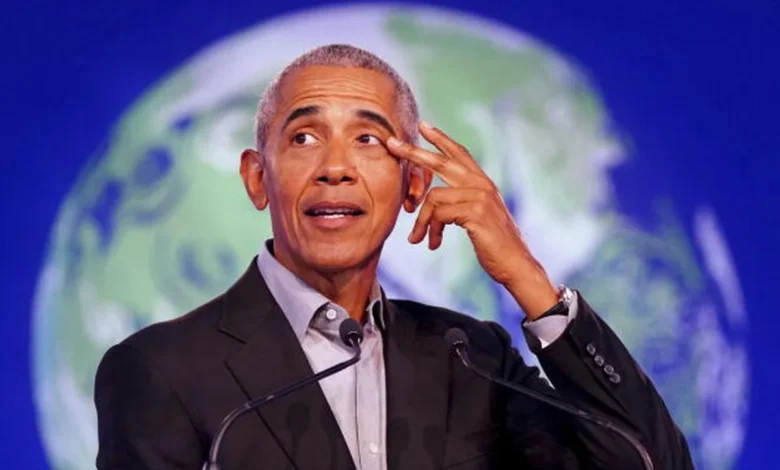
Former United States President Barack Obama has issued a profound warning regarding the rapid and largely unchecked advancement of artificial intelligence (AI), describing the technology as potentially "dangerous" if proper governance is not established. Speaking from the perspective of a former head of state who witnessed the dawn of modern digital transformation, Obama urged the Democratic Party and global lawmakers to proactively construct robust policy frameworks capable of mitigating the multifaceted risks posed by advanced automated systems.
The warning underscores a growing anxiety among political leaders, policy analysts, and technology pioneers who fear that the current trajectory of artificial intelligence development is outpacing the legal and ethical structures designed to keep society safe. As private entities pour billions of dollars into scaling foundational models, the question of who controls—and who should regulate—the most powerful technology of the twenty-first century has taken center stage in modern political discourse.
The Accelerating Growth of Private AI Development
According to reports from major news organizations, Obama’s remarks highlighted the unique nature of the current artificial intelligence boom. Unlike traditional technological revolutions that often began with government research or heavy public sector oversight, the modern AI landscape is being propelled primarily by the private sector. Tech giants and well-funded startups are operating at a breakneck speed, driven by intense market competition and the promise of unprecedented commercial returns.
"This is a field that is developing very rapidly in the hands of the private sector," Obama noted, as quoted by media sources tracking his recent policy addresses. "If we don’t control it, I think it’s going to become dangerous."
This perspective resonates with veteran technologists and ethicists who argue that corporate incentives alone are insufficient to guarantee public safety, national security, or socio-economic stability. Without binding regulations, market pressures may encourage companies to cut corners on safety audits, bias mitigation, and cybersecurity measures in a race to achieve artificial general intelligence (AGI).
Political Mobilization and Legislative Priorities
In addition to his broad warnings about technological safety, Obama’s office outlined specific political actions aimed at institutionalizing AI policy within the legislative branch. The former president reportedly reached out to House Minority Leader Hakeem Jeffries, urging him to prioritize public discussions and legislative frameworks regarding artificial intelligence should the Democratic Party secure control of the House of Representatives following the upcoming midterm elections.
"If you become Speaker of the House, I earnestly urge the Democratic Party to build a framework for public dialogue," Obama communicated to Jeffries.
This strategic push reflects an understanding that legislative bodies must transition from reactive observers to proactive rule-makers. Lawmakers are increasingly under pressure to draft comprehensive legislation that addresses copyright infringement, algorithmic transparency, workforce displacement, and the proliferation of hyper-realistic deepfakes capable of subverting democratic elections.
Furthermore, Obama’s intervention is part of a broader effort to ensure that artificial intelligence policy becomes a central pillar of the political debate leading up to the 2028 presidential election. By encouraging potential presidential candidates to formulate clear, comprehensive agendas addressing public safety and economic impacts, the political establishment is signaling that technological governance is no longer a niche policy issue, but a core component of national sovereignty and future prosperity.
A Confluence of Warnings from Industry Insiders
Obama’s cautionary statements arrive at a critical juncture, aligning with similar alarms raised by prominent figures within the artificial intelligence industry itself. The debate over AI safety has transitioned from theoretical academic discussions to urgent operational concerns among those building the technology.
Just days prior to the former president’s remarks, researchers at AI safety firm Anthropic published analyses warning that the exponential acceleration of AI capabilities could introduce catastrophic risks, with some extreme scenarios even touching upon threats to human survival. These concerns were echoed by Anthropic CEO Dario Amodei, who publicly called on AI development companies to deliberately slow down the rapid scaling of model capabilities. Amodei emphasized that the industry’s rush to deploy larger and more powerful systems leaves inadequate time for comprehensive safety evaluations and risk prevention.
Amodei’s cautious stance mirrors similar apprehensions previously voiced by industry leaders such as OpenAI CEO Sam Altman and xAI founder Elon Musk. Despite fierce commercial rivalry and differing philosophies on open-source versus closed-source development, a rare consensus appears to be forming among elite technologists: unconstrained scaling without commensurate safety architecture represents an unacceptable gamble for humanity.
The Legislative Landscape and Global Regulatory Push
The growing chorus of warnings from political leaders and tech executives alike has galvanized lawmakers in Washington and international capitals. In the United States, a bipartisan group of legislators has introduced various bills aimed at establishing federal oversight, export controls on advanced semiconductors, and safety standards for dual-use foundation models.
Internationally, regulatory bodies—most notably the European Union with its landmark Artificial Intelligence Act—are moving forward with comprehensive legal frameworks that classify AI applications based on risk levels. However, the United States faces the ongoing challenge of balancing rigorous safety protocols with the imperative to maintain its competitive edge against geopolitical rivals like China.
Experts point out that effective AI governance must address several interconnected dimensions:
- National Security: Preventing the weaponization of autonomous systems and securing critical infrastructure against AI-enabled cyberattacks.
- Economic Stability: Managing labor market disruptions and designing social safety nets for workers displaced by automation.
- Information Integrity: Combating the mass generation of misinformation, synthetic media, and automated political propaganda designed to destabilize democratic institutions.
- Ethical AI Development: Ensuring transparency, accountability, and the minimization of systemic biases embedded within training datasets.
Implications for the Future of Governance
Barack Obama’s recent interventions highlight a sobering reality for modern democracies: the speed of technological innovation consistently outpaces the machinery of government. While past industrial revolutions allowed generations to adapt to structural changes, the cognitive and autonomous nature of artificial intelligence compresses this adaptation window dramatically.
As the political establishment prepares for upcoming electoral cycles and legislative battles, the call for structured, inclusive, and forward-thinking AI policy is no longer viewed as optional. Whether current and future leaders possess the foresight and bipartisan cohesion required to implement effective guardrails remains one of the defining questions of the modern era. Without deliberate intervention, the promise of artificial intelligence may be overshadowed by the systemic vulnerabilities it introduces, making the frameworks advocated by Obama and industry whistleblowers more urgent than ever.
Related posts: