Tài xế chọn quốc lộ thay vì cao tốc: Điều chỉnh mức phí và cách quản lý cao tốc có xe chạy, quốc lộ bắt tải

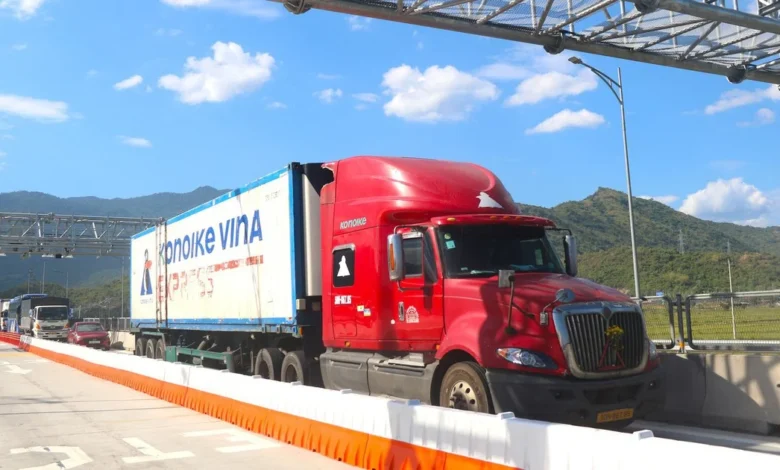
The ongoing debate surrounding the operational efficiency of Vietnam’s expressway network versus parallel national highways has reached a critical juncture. As of September 19, transport experts and policymakers are grappling with a growing trend among heavy-duty vehicle operators: the deliberate avoidance of newly constructed expressways in favor of older, toll-free or lower-cost national highways. This shift in driver behavior is not merely a matter of individual preference but a reflection of systemic economic pressures, infrastructure utilization challenges, and the urgent need for a more sustainable model of toll management.
The Economic Catalyst: Why Drivers Shun Expressways
At the heart of the issue is the stark disparity in operational costs for heavy-duty logistics. For a 40-foot container truck traveling the route from Cam Lam to Van Giam in Khanh Hoa province, the economic calculation is straightforward. Under the current toll structure, utilizing the Nha Trang – Cam Lam and Van Phong – Nha Trang expressway segments requires a payment of approximately 611,000 VND. Conversely, by opting for the parallel National Highway 1 and passing through the Ninh Loc BOT toll station, the driver pays only 200,000 VND.
This 400,000 VND difference for a 130-kilometer stretch represents a significant margin for transport companies operating on tight, trip-based contracts. Nguyen Thanh Hung, a policy expert at Fulbright University Vietnam, emphasizes that this behavior is a rational response to market forces. When a large volume of heavy vehicles simultaneously opts for a single, cheaper route, it signals that the cost burden of the modern expressway system has become prohibitive for the logistics sector. While these highways are designed to expedite trade and reduce transit times, the current pricing models risk pricing out the very vehicles they were built to accommodate.
Infrastructure Impact and Safety Concerns
The consequences of this migration back to national highways are multifaceted. National highways, which often pass directly through densely populated residential areas, were not originally designed to handle the high volume and heavy load of modern container traffic. The concentration of heavy vehicles on these routes accelerates the degradation of road surfaces, necessitating more frequent and costly repairs.
Furthermore, the safety implications are severe. When heavy-duty vehicles share narrow corridors with local traffic, including motorcycles and pedestrians, the risk of accidents increases exponentially. These accidents not only lead to human tragedy but also impose long-term fiscal burdens on the state budget, which must cover emergency response, healthcare, and infrastructure rehabilitation.
In contrast, the expressways, built to international standards with separated lanes and controlled access, remain underutilized. The Van Phong – Nha Trang section, for instance, has seen its daily traffic volume dip to between 4,000 and 5,000 vehicles. This underutilization creates a "dead-weight" effect, where the massive investment in high-speed infrastructure fails to yield the projected social and economic dividends, leaving authorities to question whether current toll collection strategies are viable in the long run.
The Challenge of Toll Management and PPP Models
The complexity of the situation is further exacerbated by the different ownership models of these roads. Many expressways in Vietnam are developed under Public-Private Partnership (PPP) contracts. In these arrangements, investors rely on toll revenue to recover their initial capital investment and cover operational costs.
"If the government intends to lower tolls to attract heavy traffic, it must compensate the private investors for the shortfall," notes Hung. "This compensation, however, must be weighed against the potential savings the state would gain by avoiding the repair costs on national highways and the indirect economic benefits of reduced accident rates."
Currently, the authorities are caught in a difficult position. Rigid toll structures are struggling to balance the need for capital recovery with the need for high traffic utilization. There have been proposals to use tolls as a regulatory tool rather than just a revenue generator. By offering discounted rates for off-peak hours or for vehicles that commit to long-distance expressway travel, authorities might be able to nudge the market toward a more balanced distribution of traffic.
The Crucial Role of Driver Behavior and Safety Standards
Beyond the economic arguments, the physical safety of expressway travel depends heavily on the discipline of the drivers. Associate Professor Nguyen Thanh Tuan from Nha Trang University highlights that regardless of road quality, safety is dictated by adherence to international standards, particularly regarding safe following distances.
"At speeds of 100 km/h, a vehicle covers roughly 28 meters per second," Tuan explains. "When a driver perceives a need to brake, there is an inherent delay of 0.3 to 0.8 seconds before the reaction occurs, followed by the mechanical delay of the braking system itself. This makes the strict maintenance of following distances on expressways a non-negotiable safety requirement."
To address this, transport departments have implemented various visual aids, such as painted markings on the road surface and specialized signage, to help drivers gauge their distance from the vehicle ahead. However, these tools are only effective if drivers possess the awareness and willingness to comply. The challenge is not just infrastructure; it is fostering a driving culture that respects the unique requirements of high-speed travel.
Toward a Sustainable Future
The phenomenon of drivers abandoning expressways for national highways serves as a warning light for Vietnam’s infrastructure development strategy. The transition from an aging road network to a modern expressway system is not a simple "build and they will come" proposition. It requires a holistic approach that integrates:
- Dynamic Toll Pricing: Moving toward flexible, market-responsive toll rates that reflect real-time demand and the socioeconomic cost of road degradation.
- Integrated Traffic Management: Using technology to monitor traffic flows and providing real-time incentives for heavy vehicle operators to shift to expressways.
- Policy Coordination: Ensuring that toll revenues from expressways are reinvested in a way that reduces the overall burden on the national logistics chain, rather than just serving the financial interests of individual concessionaires.
- Public Awareness Campaigns: Continuously educating drivers on the safety and time-saving benefits of expressways to shift the prevailing culture of risk-taking and cost-cutting at all costs.
As Vietnam continues to expand its North-South expressway network, the lessons from the Van Phong – Nha Trang and other segments will be vital. The goal must be to ensure that these roads act as arteries of economic growth rather than isolated infrastructure projects. By refining the intersection of toll policies, private sector incentives, and driver education, the government can achieve a more harmonious and efficient transportation landscape that serves the interests of both the logistics industry and the general public. The path forward requires a shift from viewing roads as isolated revenue streams to viewing them as a unified national asset where safety and economic efficiency are inextricably linked.