Elderly Hanoi Patient Hospitalized in Critical Condition Following Severe Canine Attack While Bedridden

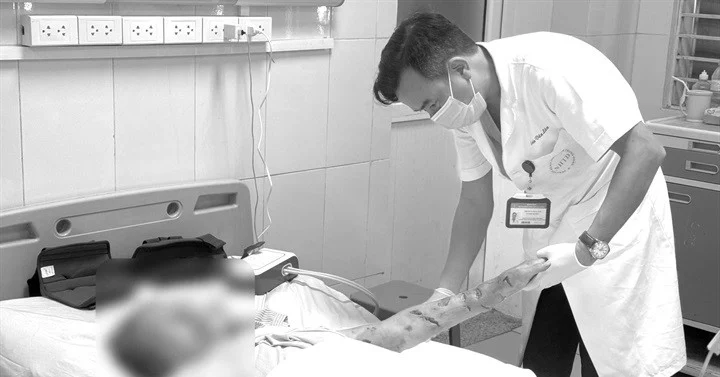
Hanoi, Vietnam – In a stark reminder of the hidden dangers posed by domestic animals within residential settings, medical professionals at the National Hospital of Tropical Diseases in Hanoi have reported the emergency admission of a 76-year-old male patient suffering from severe, complex traumatic injuries. The victim, identified as Mr. N.T.K., a resident of Hanoi, was rushed to the medical facility following a brutal attack by a household dog while he was resting in bed.
The incident has once again brought to the forefront the critical issue of pet management, the mechanics of animal bite trauma in vulnerable populations, and the precise medical protocols required to manage severe soft-tissue injuries compounded by underlying health vulnerabilities.
Incident Chronology and Emergency Admission
The sequence of events leading to Mr. K’s hospitalization highlights the sudden and devastating nature of domestic animal attacks, particularly when directed at individuals with limited mobility. According to clinical records released by the hospital on September 25, Mr. K had been paralyzed for approximately six years, a debilitating condition that rendered him bedridden for the vast majority of his time.
On the day of the incident, the family dog suddenly lunged at the elderly man as he lay motionless in bed. Due to his physical paralysis and advanced age, Mr. K possessed virtually no capacity to defend himself or evade the onslaught. The dog’s powerful jaws clamped down viciously, relentlessly biting, grinding, and tearing at the patient’s flesh.
Master of Science and Medical Doctor Lê Trung Thành, affiliated with the Department of Plastic, Aesthetic, and Microsurgery at the National Hospital of Tropical Diseases, detailed the extensive physical damage inflicted during the attack. Dr. Thành noted that the sheer force of the canine’s grip and the subsequent shredding motion resulted in a massive degloving injury to the patient’s left arm. The wound spanned an alarming 20 to 25 centimeters, stretching from the elbow down toward the wrist, with an associated tissue defect measuring roughly 10 centimeters in breadth.
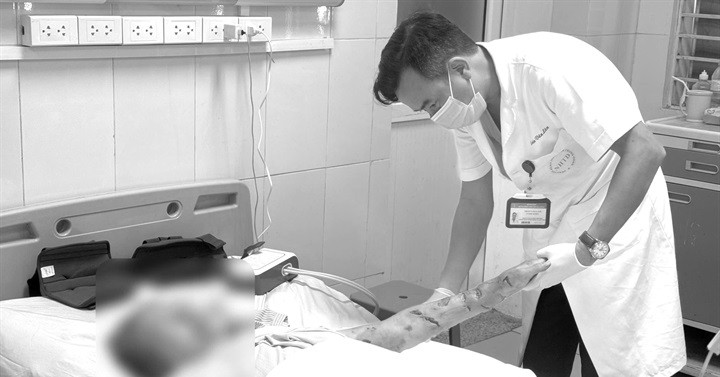
Upon arrival at the emergency department, Mr. K presented in severe pain with extensive soft-tissue trauma, profuse bleeding, and a high vulnerability to systemic complications. The medical team immediately initiated emergency stabilization protocols, thoroughly cleansing the massive wound, surgically excising devitalized and necrotic tissue, and implementing targeted interventions to manage the acute trauma.
Clinical Progression and Surgical Management
Managing a complex canine bite injury in an elderly, paralyzed patient requires a carefully staged multi-disciplinary medical approach. Because animal bites are inherently high-risk environments for severe microbial contamination, immediate primary closure is frequently contraindicated by clinical guidelines.
Following the initial emergency debridement, Mr. K was placed under close observation while medical staff administered prophylactic rabies vaccinations and specialized antimicrobial therapies to curb the spread of infection. After approximately one week of intensive inpatient care, the acute inflammatory response and localized swelling in the patient’s left arm began to recede.
Once the wound bed showed signs of stabilization, the surgical team performed secondary interventions, meticulously cleaning the site and executing preliminary serial debridements followed by staged partial closure. This gradual approach allowed physicians to progressively reduce the vast surface area of the open wound while minimizing the risk of trapping anaerobic or aerobic pathogens beneath the skin sutures. Throughout the treatment window, specialists in infectious diseases collaborated closely with the plastic surgery unit to monitor systemic health parameters, ensuring that the patient’s fragile physiological state could withstand the prolonged healing process.
Medical Analysis of Canine Bite Mechanics and Trauma
The severity of injuries sustained by Mr. K underscores a broader clinical reality regarding animal bites: the external appearance of a wound often belies the catastrophic structural damage occurring beneath the skin. When a dog bites, the combination of immense jaw pressure, tearing motions, and crushing forces can produce trauma far exceeding simple puncture wounds.
Medical literature indicates that canine teeth can exert hundreds of pounds of pressure per square inch, capable of fracturing bones, pulverizing deep muscle tissue, severing tendons, and crushing major blood vessels and peripheral nerves. In severe cases, such as Mr. K’s presentation, the friction and pulling force can cause extensive degloving—a traumatic separation of the skin and subcutaneous tissue from the underlying fascia and muscle groups.
Furthermore, the microbiological profile of a dog’s oral cavity introduces a formidable array of pathogens, including Pasteurella species, Staphylococcus aureus, Streptococcus species, and Capnocytophaga canimorsus. Without prompt and aggressive medical intervention, these bacteria can rapidly multiply within crushed tissue spaces, leading to necrotizing fasciitis, cellulitis, sepsis, and permanent functional impairment.
Expert Protocols for Animal Bite Management
In light of the rising number of domestic animal attack cases presenting to major metropolitan hospitals, medical authorities have reiterated standard clinical guidelines for the immediate handling of animal bites.
When an individual is bitten by a dog or other domestic animal, the initial response at the scene is critical in determining the trajectory of healing. Medical experts strongly advise the following protocol:
- Immediate Irrigation: The wound must be washed thoroughly and continuously for at least 10 to 15 minutes under a running tap using clean water and mild soap. This mechanical action helps dislodge saliva and reduce the initial bacterial load.
- Avoid Unproven Remedies: Patients and caregivers must refrain from applying traditional herbal pastes, household powders, unverified chemicals, or raw ointments directly onto the open wound, as these substances frequently introduce secondary contaminants and complicate clinical diagnosis.
- Professional Evaluation: The injured party should be transported to a qualified medical facility as quickly as possible. Professional evaluation is essential to assess the depth of trauma, determine whether deep structures (such as nerves and tendons) are compromised, and administer necessary prophylaxis against tetanus and rabies.
- Selective Wound Closure: As demonstrated in Mr. K’s case, physicians may deliberately choose to delay wound closure, leaving the site open or utilizing loose, partial sutures to prevent the entrapment of bacteria within deep tissue pockets.
Broader Public Health Implications and Pet Management
The incident involving Mr. K serves as a sobering reminder of the responsibilities incumbent upon pet owners, particularly households housing vulnerable populations such as the elderly, infants, or individuals with mobility impairments. Public health officials emphasize that domestic animals, regardless of their prior temperament or training history, must be strictly managed, regularly socialized, and kept up to date with core veterinary immunizations, including mandatory rabies inoculations.
In residential environments where family members suffer from chronic illnesses, paralysis, or cognitive decline, the potential for unpredictable animal behavior requires heightened vigilance. Behavioral specialists suggest that dogs may react defensively or unpredictably to unfamiliar movements, medical equipment, or perceived vulnerabilities in immobile individuals. Ensuring clear physical separation between unrestrained pets and vulnerable family members remains the most effective preventative measure against catastrophic trauma.
As Mr. K continues his recovery under the dedicated care of the plastic surgery and infectious disease teams at the National Hospital of Tropical Diseases, medical professionals hope that heightened public awareness surrounding proper bite management and pet safety will prevent similar domestic emergencies from recurring in the future.