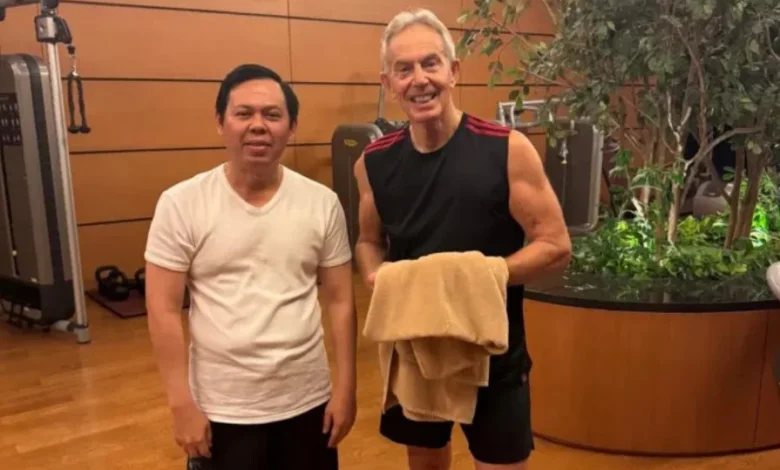
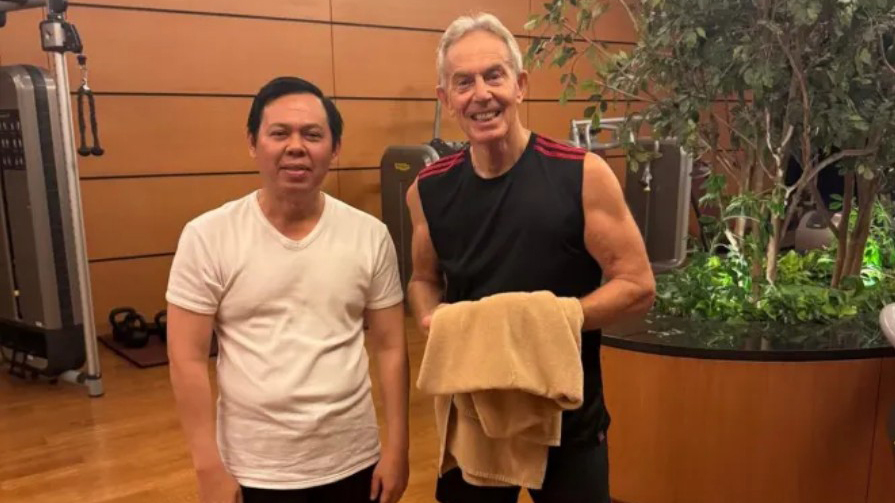
At 73 years old, former British Prime Minister Tony Blair has become an unlikely fitness icon, sparking a global conversation about healthy aging and the physiological potential of the human body well into one’s seventh decade. A recent photograph shared on social media by Sultan Bachtiar Najamudin, Chairman of the Regional Representative Council of Indonesia, features the former world leader in a gym setting, displaying a level of physical fitness and muscular definition that defies traditional expectations of aging. The image has since gone viral, serving as a tangible testament to the efficacy of disciplined resistance training and evidence-based nutrition.
The Context of the Viral Image
The photograph, which surfaced on Instagram, captured a moment during Mr. Blair’s recent diplomatic engagements in Indonesia. While his political career is characterized by his tenure at 10 Downing Street from 1997 to 2007, his current public profile is increasingly defined by his commitment to longevity and physical performance. The viral nature of the image stems from the stark contrast between the public’s perception of "elderly" individuals and the visibly toned physique of the 73-year-old politician.
In an era where the aging population is growing globally, Mr. Blair’s physical state provides a visible argument for the "pro-aging" movement—a shift in societal attitudes that emphasizes maintaining vitality, strength, and independence through deliberate lifestyle interventions.
The Physiology of Aging and Muscle Loss
The medical phenomenon known as sarcopenia—the age-related loss of skeletal muscle mass and strength—is a primary concern for geriatric health. Generally, adults lose between 3% to 8% of their muscle mass per decade after the age of 30, a rate that accelerates significantly after 60. This decline contributes to frailty, increased risk of falls, and metabolic disturbances.
However, clinical research has long suggested that this process is not inevitable. A landmark 1990 study conducted on ten frail nursing home residents with an average age of 90 demonstrated that after only eight weeks of high-intensity resistance training, the participants’ strength increased by 174%, and their muscle mass grew by 9%. This fundamental research supports the current observation of Mr. Blair’s physique: the aging body retains the capacity to respond to mechanical stress through hypertrophy, provided the stimulus and nutritional support are adequate.
Strategic Nutrition for Longevity
Experts in sports science emphasize that for individuals over 70, nutrition is not merely about caloric intake but about the precise composition of macronutrients. Sean Murphy, Director of Personal Training at the fitness network Ultimate Performance, notes that as the body ages, muscle tissues become less sensitive to protein. Consequently, older adults require a higher protein intake to stimulate muscle protein synthesis compared to a 30-year-old.
"The body needs more protein than what many older people are consuming," Murphy explains. While the recommended dietary allowance (RDA) of 0.8 grams per kilogram of body weight is sufficient to prevent deficiency in sedentary individuals, it is woefully inadequate for muscle development. Experts suggest a target closer to 2.0 grams per kilogram, totaling roughly 140–180 grams of protein daily for the average male. Furthermore, the timing of this intake is crucial; rather than consuming a large amount in a single evening meal, spreading protein intake across three to four meals ensures a steady supply of amino acids to the muscles.
Training Methodologies for the Older Athlete
For those beginning a resistance training journey later in life, the methodology must prioritize safety and structural integrity. Bear White, a London-based personal trainer, advises a shift away from free-weight exercises that require excessive stability, favoring machine-based movements initially.
"The goal for the older athlete is to isolate the muscle group while minimizing the risk of joint injury," White states. Movements such as cable rows, chest presses, and leg presses allow for controlled tension and a better mind-muscle connection. The objective is to achieve progressive overload—the gradual increase of resistance—without compromising the joints or connective tissues.
Moreover, supplementation has entered the conversation as a legitimate tool for the aging demographic. Creatine monohydrate, often stigmatized as a supplement for bodybuilders, is now widely recommended by longevity experts for older adults. A daily dose of 5 grams has been shown to support cognitive function, bone density, and muscle maintenance, providing a significant "insurance policy" against the natural decline associated with aging.
The Role of Hormonal Health
A critical factor in the discussion of muscle growth at 73 is the role of testosterone. As men age, serum testosterone levels naturally decline, often leading to fatigue, reduced muscle mass, and mood fluctuations.
"Supplementing testosterone when clinically deficient can be transformative, similar to wearing glasses when your vision begins to blur," says White. However, he cautions that medical intervention should only follow rigorous blood testing. Often, low testosterone levels in older men are a secondary symptom of an unhealthy lifestyle—poor sleep, sedentary behavior, and high alcohol consumption—rather than a primary medical failure.
Studies have shown that by correcting metabolic health—improving sleep hygiene and diet—the body can often recover its natural hormonal balance within six months, negating the need for pharmacological intervention.
Implications for Public Health
The attention surrounding Mr. Blair’s fitness highlights a broader, positive shift in public discourse. The prevailing medical sentiment is moving away from a "decline-only" model of aging toward one of "managed vitality." The implications are significant:
- Reduced Healthcare Burden: By maintaining muscle mass, older adults are less likely to suffer from chronic diseases like Type 2 diabetes and cardiovascular issues, reducing the long-term strain on public health systems.
- Psychological Well-being: The discipline required to maintain such a physique at 73 correlates with improved mental health, cognitive sharpness, and a sense of agency, which are vital for aging successfully.
- Reframing Retirement: Figures like Blair challenge the traditional narrative of retirement as a period of inactivity, suggesting instead that the later stages of life can be a time of physical and intellectual optimization.
Challenges and Misconceptions
Despite the benefits, experts acknowledge that the greatest barrier to fitness for the elderly is the psychological hurdle of "perceived weakness." Many individuals in their 70s internalize the cultural narrative that they are "too old" to lift weights, leading to a self-fulfilling cycle of atrophy.
"The biggest mistake is believing that because you are older, you must be weaker," says Sean Murphy. He cites cases of individuals starting in their 70s and doubling their lifting capacity within three months. The requirement is consistent, challenging, and safe training at least twice a week.
Conclusion
The viral image of Tony Blair is more than a celebrity fitness anecdote; it is a clinical demonstration of human potential. Through a combination of science-backed protein intake, controlled resistance training, and a proactive approach to hormonal and metabolic health, aging does not have to be a trajectory of decline. As the global population continues to age, the model demonstrated by the former Prime Minister—one of discipline, evidence-based nutrition, and the rejection of age-related limitations—offers a compelling blueprint for a healthier, more capable future.
While not everyone will achieve the specific definition seen in the viral photograph, the underlying principles of muscle maintenance and metabolic health are accessible to most. The evidence is clear: it is never too late to begin, and the body’s capacity for adaptation remains a powerful tool, regardless of the number of candles on the birthday cake.