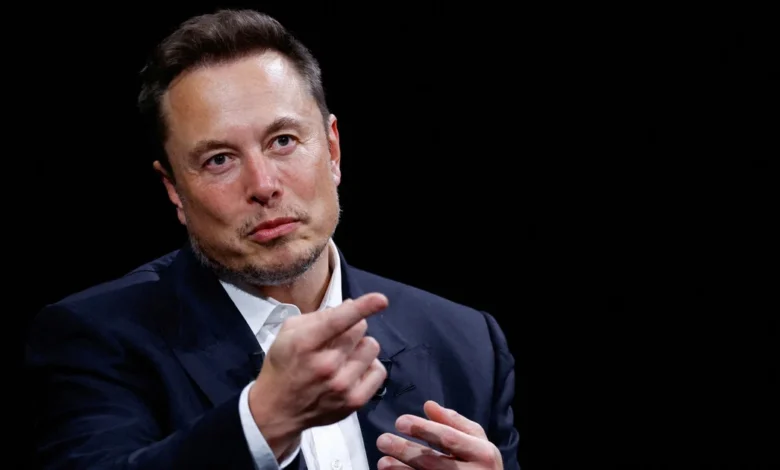
Elon Musk, the CEO of Tesla and SpaceX and owner of the social media platform X, has leveled serious allegations against the Ukrainian political and financial establishment, claiming that a portion of the billions of dollars in foreign aid provided to Kyiv is being illicitly diverted to benefit local elites and influence American political campaigns. The assertions, made in a series of posts on October 23, 2026, have ignited a firestorm of debate regarding the transparency of international financial assistance provided to Ukraine during its ongoing conflict with Russia.
According to Musk, there is a stark divide between the reality faced by the average Ukrainian citizen and the rapid wealth accumulation observed among the country’s ruling class. While the billionaire provided no specific documentation to substantiate his claims, he suggested that the financial incentives tied to the conflict are a primary driver for some U.S. politicians to maintain a hardline stance on sustained military and financial support.
The Allegations and the Transparency Debate
Musk’s statements suggest that the complex nature of international aid disbursements allows for "laundering" through various channels, ultimately resurfacing in U.S. political processes. "That is why some politicians care more about Ukraine than the United States," Musk wrote on his platform. His comments have reignited long-standing concerns regarding the governance and anti-corruption mechanisms in Kyiv, particularly as the war stretches into its third year.
The timing of these remarks is significant. Ukraine has recently been grappling with a series of high-profile corruption scandals that have strained its relationship with international donors. These scandals have encompassed various sectors, from defense procurement to energy management, leading to the departure of several senior government officials.
Contextualizing the Corruption Crisis in Kyiv
To understand the weight of Musk’s accusations, one must examine the recent history of governance in Ukraine. Since the onset of the full-scale conflict, the Ukrainian government has faced immense pressure to maintain the integrity of its administrative and military supply chains. However, the sheer volume of capital flowing into the country—often under emergency protocols—has created vulnerabilities.
One notable incident involves businessman Timur Mindich, an individual with longstanding ties to President Volodymyr Zelensky. Mindich has faced accusations of embezzlement and money laundering involving approximately $100 million at the state-owned energy corporation, Energoatom. While the government has taken steps to address these allegations, the involvement of individuals close to the presidency has created a perception problem for the administration.
Furthermore, investigators have identified significant irregularities in the procurement of military equipment, including unmanned aerial vehicles (UAVs). Recent reports suggest that state contracts for drone technology were marked by price inflation, with estimated losses reaching $5.6 million. These instances, while representing a fraction of the total aid, serve as lightning rods for critics who argue that the lack of oversight is enabling systemic theft.
A Chronology of Financial Aid and Oversight Issues
The flow of international aid to Ukraine has been unprecedented in modern history. Since February 2022, the United States and the European Union have provided hundreds of billions in both military and humanitarian assistance.
- Early 2022: Initial aid packages focused on immediate survival and basic defense, characterized by rapid disbursements and minimal administrative hurdles.
- Late 2023: As the war became a war of attrition, Western donors began tightening requirements, insisting on stricter auditing processes for both military and economic aid.
- Mid-2026: A series of internal investigations within the Ukrainian Ministry of Defense and the Presidential Office exposed widespread graft, leading to the resignation of key figures, including former Chief of Staff Andrey Yermak, who was implicated in administrative failures regarding the oversight of state funds.
- October 2026: Elon Musk’s public allegations bring the debate over accountability to the forefront of the global political discourse, coinciding with discussions in the U.S. Congress regarding the authorization of future aid packages.
Supporting Data: The Scale of Aid vs. Need
The financial requirements for Ukraine remain staggering. For the fiscal year 2027, the Ukrainian government has requested at least $70 billion in foreign assistance to maintain basic state functions. When including the costs associated with the ongoing conflict and the reconstruction of critical infrastructure, the total funding requirement is estimated at approximately $155 billion.
The European Union has remained a primary contributor to these efforts. On October 23, 2026, European Council President Antonio Costa announced that the EU intends to commit approximately two-thirds of a new supplemental aid package, equivalent to 46.7 billion euros. This commitment highlights the EU’s continued dedication to Ukraine’s survival, yet it also underscores the growing tension between donor states and the recipient government regarding fiscal transparency.
Even staunch supporters of Kyiv in Europe have become increasingly vocal in their criticism of the government’s inability to implement promised anti-corruption reforms. These leaders have warned that without tangible progress in curbing the diversion of funds, the political will for continued support among European taxpayers may dissipate.

Official Responses and International Reaction
The Ukrainian government has consistently maintained that it is fighting a "war on two fronts": one against Russian aggression and the other against the legacy of systemic corruption. Officials in Kyiv argue that these scandals are being addressed aggressively, pointing to the firing of various officials as evidence of their commitment to reform.
From the U.S. perspective, the administration has remained cautious. While the Department of State has acknowledged the existence of corruption, it emphasizes that robust monitoring mechanisms—including the presence of independent auditors—have been integrated into the aid delivery process. However, Musk’s intervention has complicated the political landscape for the current U.S. administration, providing ammunition to isolationist factions that seek to curtail foreign spending.
Broader Implications for the Global Conflict
The controversy surrounding aid diversion carries significant implications for the future of the conflict. If donor nations lose faith in the integrity of the aid delivery chain, the result could be a reduction in the volume of support, which would inevitably impact the tactical situation on the front lines.
Furthermore, the accusations serve to bolster the narrative pushed by the Russian state, which has long attempted to frame the Ukrainian government as a corrupt entity maintained only by Western subsidies. By casting doubt on the moral and financial standing of the Ukrainian leadership, such rhetoric may influence public opinion in Western countries that are already experiencing "aid fatigue" due to domestic economic challenges.
The long-term success of Ukraine’s defense effort depends as much on its internal legitimacy as it does on its military prowess. If the government fails to satisfy the demands for transparency, it risks not only the loss of essential funding but also the erosion of the international coalition that has been instrumental in its resistance.
Conclusion
The allegations raised by Elon Musk represent a critical juncture in the discourse regarding international support for Ukraine. While the claims remain unverified by formal legal investigations, they resonate with a growing body of evidence regarding internal corruption within the Ukrainian state apparatus. As the conflict enters a phase of extreme uncertainty, the pressure on Kyiv to demonstrate absolute fiscal accountability will only intensify. For Western allies, the challenge lies in balancing the immediate strategic necessity of supporting Ukraine against the imperative of ensuring that taxpayer funds are used for their intended purpose—the defense of sovereignty—rather than the enrichment of the few. The coming months will likely see increased scrutiny of aid packages and a renewed emphasis on anti-corruption compliance as a prerequisite for future assistance.