Southeast Asia Housing Market Paradox: Soaring Inventories Leave First-Time Homebuyers Stranded in Search of Affordable Shelter

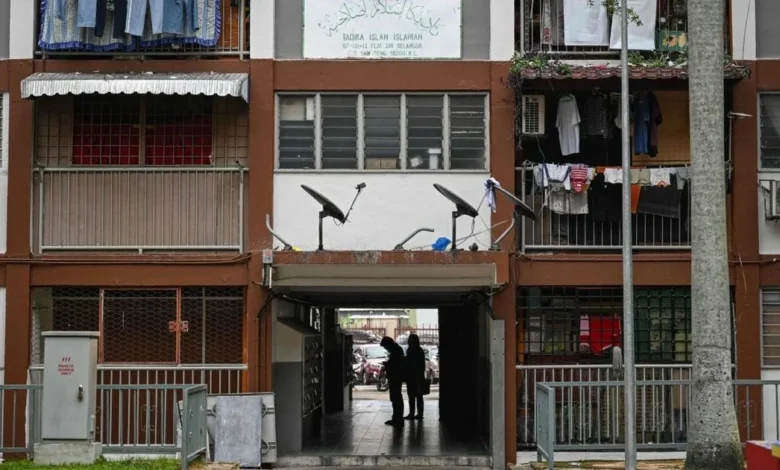
The real estate landscape across major urban centers in Southeast Asia is currently defined by a striking structural paradox: while luxury and mid-market residential towers report growing inventories of unsold units and developers desperately scramble to secure buyers, the region’s growing cohort of first-time homebuyers remains entirely locked out of the property ladder. Despite an unyielding, fundamental demand for affordable housing, millions of young working-class citizens find themselves priced out of homeownership, creating a deep economic and social divide that urban planners and financial regulators can no longer ignore.
This widening chasm reflects a severe mismatch between the types of residential properties being constructed by major developers and the actual, day-to-day purchasing power of the local workforce. Even as demand for affordable homes remains remarkably high across the region, unsold properties continue to accumulate on developers’ balance sheets. Industry analysts point to a confluence of systemic root causes: speculative investment waves of the past, increasingly rigid financial barriers imposed by traditional lenders, and structurally flawed project locations that place basic shelter far out of reach for average wage earners.
The Illusion of Affordability: Decoding Financial Traps and Developer Marketing
In countries like the Philippines, the journey to homeownership is frequently obfuscated by aggressive developer marketing designed to mask the true cost of acquiring property. Real estate sales strategies often promote complex payment schemes that give the illusion of low entry barriers, comparing monthly equity down payments to the everyday cost of buying luxury coffee.
According to Joey Roi Bondoc, Director of Research at Colliers Philippines, many property developers successfully lure prospective buyers by advertising minimal monthly installment payments spanning across the multi-year construction lifecycle of a residential tower. For instance, a condominium unit priced at 7 million pesos (approximately $109,000 USD) might be marketed with a modest 10% down payment spread conveniently across 60 months. However, this superficial affordability shatters the moment the building reaches completion and official turnover occurs.
At the point of turnover, buyers are suddenly required to settle the massive remaining balance—usually through commercial bank mortgages. Consequently, monthly financial commitments can immediately triple or quadruple overnight. Numerous unsuspecting buyers suddenly find themselves trapped, facing severe liquidity constraints, unexpected refinancing charges, or outright rejection from conservative commercial banks that refuse to approve mortgage applications based on real-world debt-to-income thresholds.
This structural disconnect has historical roots. The demand for speculative condominium investments reached a fever pitch between 2017 and 2019, driven by aggressive development cycles where developers consistently handed over nearly 14,000 units annually in Metro Manila alone. However, long-term projections by real estate advisory firms indicate that annual completions will drop significantly to approximately 6,000 units through the late 2020s, heavily crippled by enduring weak purchasing power among domestic end-users.
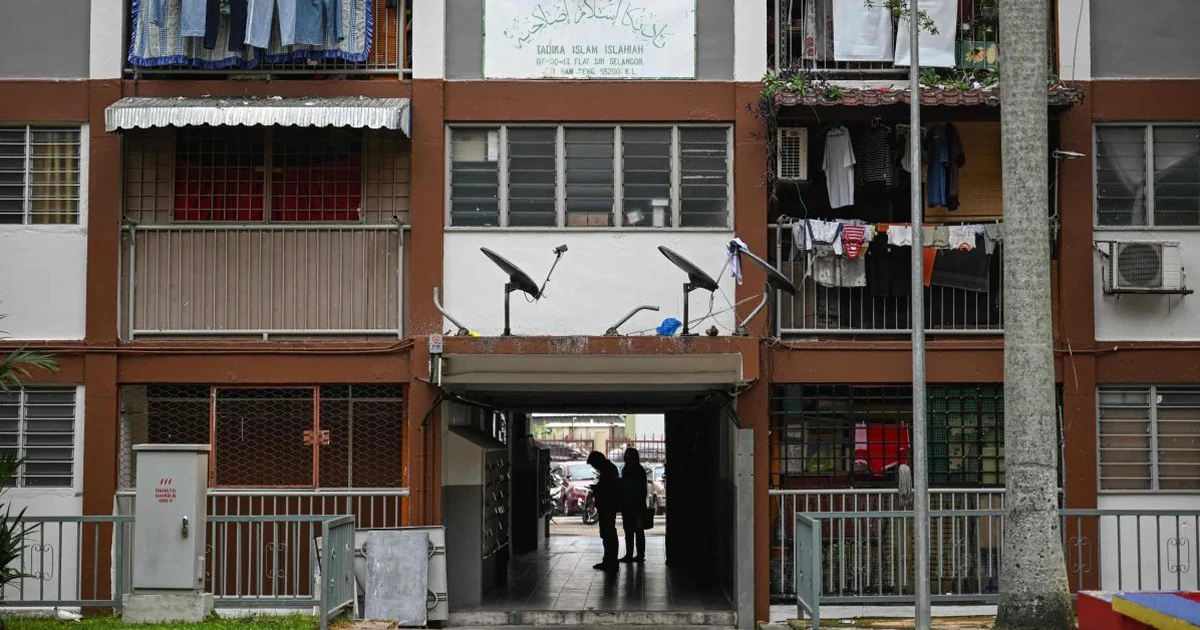
Despite this notable slowdown in new inventory pipelines, existing overhangs remain completely detached from real consumer needs. Comprehensive market data compiled by Colliers reveals that well over 40% of the tens of thousands of unsold condominium units scattered across the expansive Metro Manila urban region belong to the lower-middle-income bracket, with price points ranging from 3.6 million to 7 million pesos.
To qualify for a mortgage within this specific segment, an average consumer must demonstrate a stable monthly household income of at least 70,000 pesos ($1,100 USD)—an astronomical figure that stands at nearly 2.4 times the official average monthly wage in Metro Manila, which hovers around 29,310 pesos. As a result, countless working-class families who cannot afford the exorbitant cost of living near their urban employment hubs are forced to make grueling daily compromises. Many accept punishing daily commutes of one to two hours each way, traveling from distant peripheral provinces such as Cavite, Bulacan, and Laguna just to reach their workplaces in the capital city.
Location Mismatch: The Malaysian Housing Paradox
The systemic mismatch between supply and demand is not unique to the Philippines; neighboring Malaysia exhibits identical market vulnerabilities, proving that surplus inventories plague multiple segments of the broader regional economy. According to official statistics released by the National Property Information Centre (Napic) of Malaysia, tens of thousands of completed residential units remained unsold during the early phases of recent market cycles, with a staggering percentage concentrated within affordable price ceilings of 300,000 ringgit ($73,400 USD) and below.
Siva Shanker, a prominent real estate expert and representative of the property consultancy Rahim & Co Chestertons, evaluates this phenomenon through the lens of fundamental location economics. According to Shanker, properties fail to find buyers primarily due to pricing misalignment or unfavorable geographical positioning, with location standing out as the ultimate dealbreaker.
Too often, developers construct low-cost housing projects in remote peripheral zones far removed from primary commercial hubs, essential industrial clusters, and educational infrastructure. The resulting daily transportation costs and time losses transform these ostensibly "affordable" homes into severe financial and logistical liabilities.
"Ordinary citizens would rather rent a modest living space situated in close proximity to their workplaces than recklessly squander their hard-earned savings purchasing remote properties that drain their daily quality of life," Shanker notes.
Furthermore, structural financial prerequisites act as an impenetrable wall for young buyers. For a standard residential property valued at 500,000 ringgit (approximately $122,600 USD) backed by an 80% maximum commercial bank loan, the prospective buyer must still independently accumulate at least 100,000 ringgit in upfront cash merely to cover initial deposits. This calculation completely excludes auxiliary expenses such as legal transfer fees, stamp duties, mandatory mortgage insurance, and essential interior finishing or renovation costs.
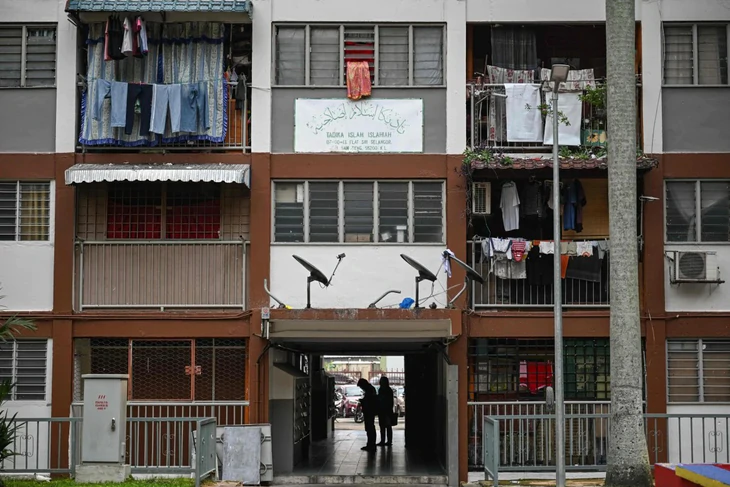
Even when young professionals possess the steady monthly income required to service long-term debt, they frequently stumble at the hurdle of assembling massive upfront deposits. Many are forced to repeatedly postpone their homeownership timelines in order to accumulate additional capital. Yet, by the time they manage to save sufficient funds, regional property values have invariably inflated further, trapping them within a relentless, frustrating cycle of chasing an ever-receding dream of domestic security.
Socio-Economic Implications and Regulatory Responses
The persistent inability of the working class to secure affordable housing carries profound socio-economic consequences for Southeast Asia’s rapidly developing economies. As urbanization accelerates, the widening wealth gap threatens to hollow out the urban middle class, forcing young professionals to indefinitely delay major life milestones such as marriage and family planning due to housing instability.
Economists warn that prolonged structural stagnation in the affordable housing sector could eventually dampen domestic consumption. When an oversized portion of household income is relentlessly funneled into exorbitant rent or unsustainable mortgage servicing—or conversely, trapped in savings accounts desperately chasing unattainable down payments—discretionary spending across retail, automotive, and service sectors contracts accordingly.
In response to these compounding pressures, regional policymakers and central banks are increasingly stepping in to recalibrate regulatory frameworks. Governments across Southeast Asia are re-evaluating urban zoning laws, attempting to incentivize developers to allocate a mandatory percentage of large-scale master-planned communities to genuine social and affordable housing initiatives rather than luxury high-rise developments designed solely for foreign or domestic investors.
Additionally, central monetary authorities are tightening surveillance on speculative lending practices while exploring targeted fiscal support mechanisms, such as subsidized credit guarantee schemes for first-time buyers. However, industry experts caution that regulatory interventions alone will not suffice. True market correction requires a fundamental shift in corporate strategy among real estate developers—moving away from speculative hyper-construction driven by short-term capital gains, and pivoting toward sustainable, transit-oriented development models that align product pricing with the genuine economic reality of the regional workforce.
Until structural reforms successfully bridge the widening chasm between developer profit margins and consumer purchasing power, the streets of Southeast Asia’s bustling metropolises will continue to host a bittersweet irony: gleaming glass towers standing half-empty against the skyline, while the region’s economic backbone—its young workforce—remains perpetually unhoused.