Ministry of Industry and Trade Announces Fuel Price Adjustments Following Special Consumption Tax Reductions

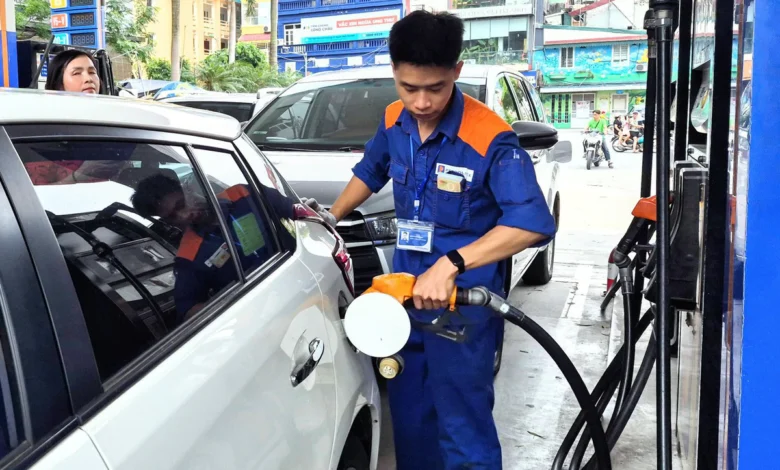
The Vietnamese Ministry of Industry and Trade has officially announced a nationwide downward adjustment in retail fuel prices, effective from midnight on November 1. This significant economic update follows the implementation of a new governmental decree aimed at providing fiscal relief through targeted reductions in the special consumption tax applied to petroleum products. The adjustment brings notable financial relief to domestic consumers, transport enterprises, and various industrial sectors that rely heavily on refined petroleum for day-to-day operations.
Immediate Price Revisions Across Key Fuel Categories
Under the newly issued regulatory framework by the Ministry of Industry and Trade and the Ministry of Finance, retail prices for popular consumer gasoline products have experienced a substantial drop. Specifically, E5RON92 gasoline is now priced at 24,223 Vietnamese dong per liter, representing a direct decrease of 1,804 dong per liter compared to the previous ceiling price. Meanwhile, E10RON95-III gasoline has been adjusted to 24,159 dong per liter, reflecting a reduction of 1,575 dong per liter. Notably, this adjustment places E10RON95-III at 64 dong per liter lower than the E5RON92 blend, creating an unusual market dynamic where a higher-octane eco-friendly fuel is priced more competitively than its standard counterpart.
However, the downward trend did not encompass all petroleum products. Certain types of commercial and industrial oils maintained an upward trajectory or remained unchanged. Diesel 0.05S rose by 696 dong, reaching a new retail price of 30,246 dong per liter. Similarly, mazut 180CST 3.5S increased by 223 dong, settling at 23,596 dong per kilogram. These contrasting movements in gasoline versus diesel prices highlight the complex interplay of global refining margins and domestic supply-demand fundamentals for heavier distillate fuels.
Suspension of Price Stabilization Funds
In a departure from traditional administrative management during periods of high market volatility, the joint Ministries of Industry and Trade and Finance elected not to allocate funds toward the centralized price stabilization fund for this pricing cycle. Furthermore, regulatory authorities have opted to maintain the suspension of disbursements from the stabilization fund across almost all monitored petroleum products.
This decision contrasts sharply with the preceding administrative cycle, during which international crude oil fluctuations forced regulatory bodies to implement upward price adjustments ranging from 500 to 700 dong per liter for gasoline, and 300 to 700 dong per liter for diesel variants. By stepping back from active price smoothing, the government has allowed domestic retail prices to align more closely with immediate fiscal adjustments and regional cost realities, demonstrating increased confidence in market-based pricing mechanisms supported by direct tax interventions.
Legislative Background and the Zero-Percent Tax Framework
The primary catalyst for the recent price cuts stems from a decisive legislative resolution issued by the government, mandating a sweeping reduction in the special consumption tax levied on gasoline. Designed as a temporary fiscal stimulus, the resolution takes effect from November 1, running through March 31 of the following year. Under this policy, the special consumption tax rate for all categories of gasoline has been slashed to zero percent (0%).
To maintain flexibility and ensure long-term national energy security, regulatory mechanisms have been built into the legislative framework. Should economic conditions necessitate an extension or a truncation of the tax reduction period to adequately support broader macroeconomic goals, the Ministry of Industry and Trade retains the authority to submit formal recommendations to the Ministry of Finance. The Ministry of Finance will subsequently forward these proposals to the central government for review and final execution.

Regional Price Comparisons and Competitiveness
To contextualize the domestic retail market, the Ministry of Industry and Trade released a comparative analysis detailing fuel pricing structures across neighboring Southeast Asian nations and regional trading partners as of October 31. The data indicates that despite recent domestic adjustments, Vietnam maintains one of the most competitive retail fuel pricing environments in the region.
In Thailand, government-subsidized retail fuel prices hovered at approximately 32,550 dong per liter. Similarly, Cambodia, which also utilizes government price-support mechanisms, recorded fuel prices at around 32,010 dong per liter. In Laos, where heavy reliance on imported refined products exposes the economy to severe external shocks, retail prices reached a staggering 48,276 dong per liter. Meanwhile, in China, where retail prices are governed by state-monitored price caps rather than direct consumer subsidies, prices stood at 36,125 dong per liter. By comparison, Vietnam’s new ceiling price of 24,159 dong per liter for E10RON95-III positions the country advantageously, offering a distinct cost buffer for cross-border logistics and domestic commercial transport operators sharing common land borders.
Macroeconomic Implications and Inflationary Control
The decision to lower fuel prices through targeted tax cuts is anticipated to generate positive ripple effects across the broader national economy. During a parliamentary plenary session focused on socioeconomic development held on October 31, Deputy Prime Minister Nguyen Van Thang addressed the legislative body regarding the anticipated macroeconomic outcomes of these fiscal measures.
According to the Deputy Prime Minister, the combination of special consumption tax reductions on gasoline and concurrent adjustments to electricity pricing is projected to exert a downward pressure on the Consumer Price Index (CPI), shaving approximately 0.07 percentage points off core inflation indicators. This strategic intervention provides vital policy room for monetary authorities to keep inflation tightly anchored within the ceiling targets established by the National Assembly, thereby safeguarding purchasing power and fostering a stable business environment as the fiscal year draws to a close.