Motorcyclist Thrown High Into the Air After Sudden Loss of Control During Hazardous Overtake in Thai Nguyen

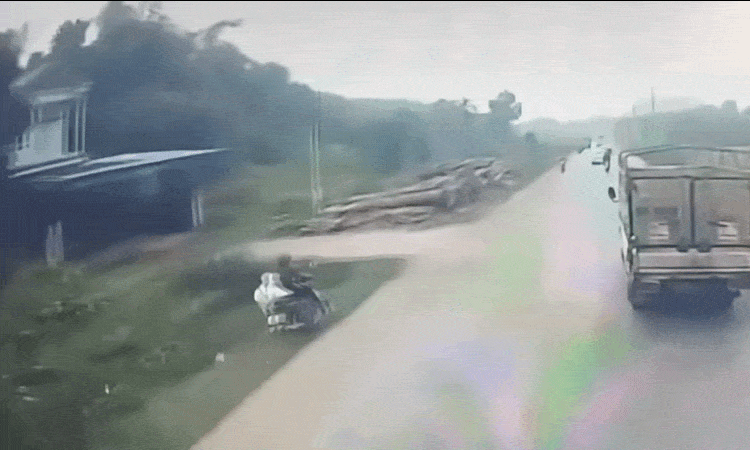
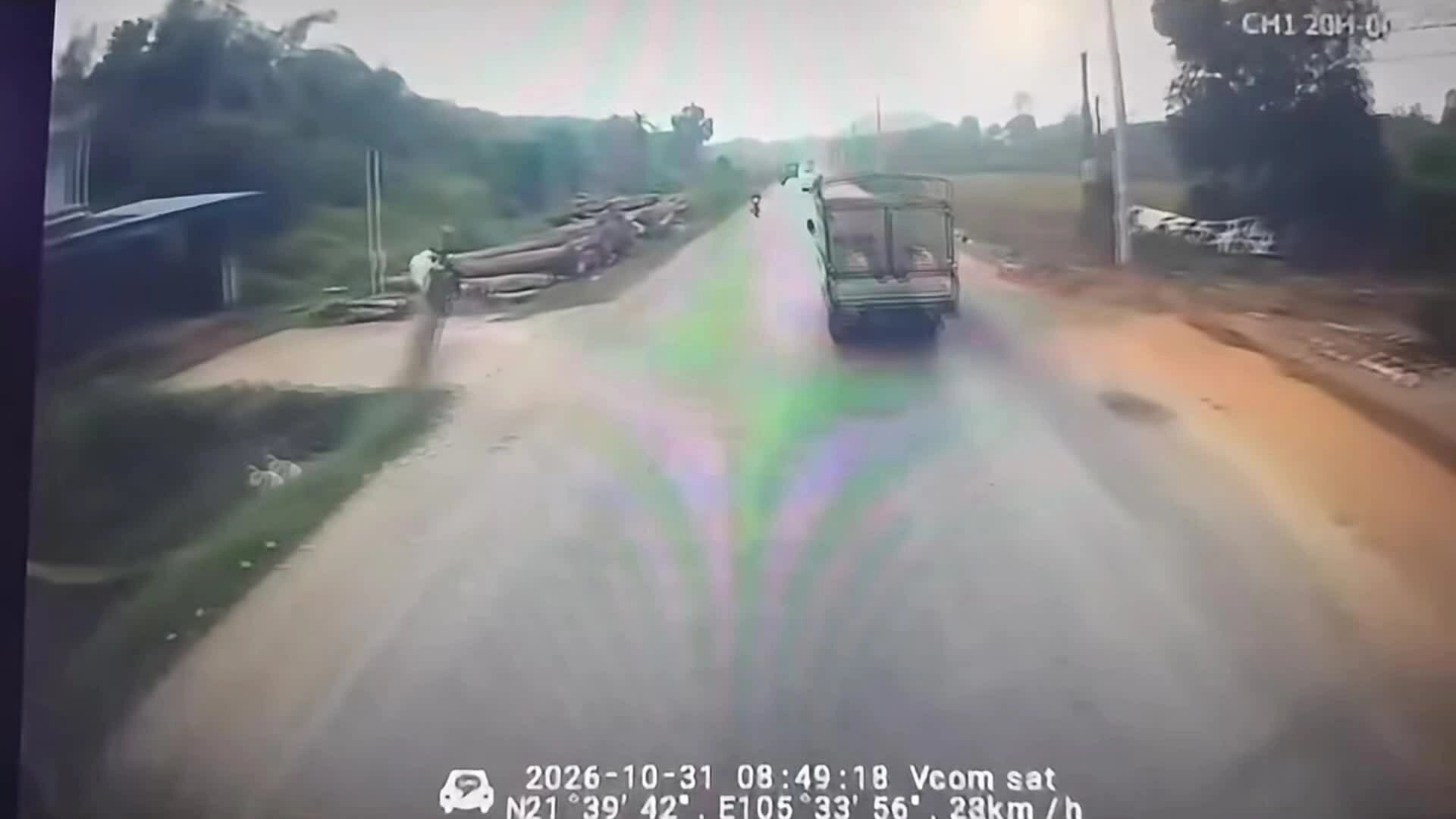
A harrowing traffic accident unfolded on the morning of October 31 along National Highway 37, passing through Phu Xuyen Commune in Thai Nguyen Province, when a heavily loaded motorcycle lost control during a passing maneuver, resulting in a violent crash that launched both the rider and the vehicle into the air. Captured by the dashcam of an automotive vehicle traveling directly behind the incident, the footage has since ignited widespread discussions concerning road safety, the physics of overloaded two-wheeled transport, and the persistent hazards of aggressive driving on rural and semi-urban arterial roads in Vietnam.
The terrifying event underscores an ongoing nationwide crisis involving traffic safety compliance among motorcyclists, particularly commercial and transport-heavy operators navigating mixed-traffic environments. While authorities continue to process the aftermath of the crash, the incident serves as a stark, visual reminder of the catastrophic consequences that accompany structural instability, sudden steering adjustments, and reckless overtaking maneuvers on regional highways.
Chronology and Breakdown of the Incident
The sequence of events began at approximately mid-morning on October 31 along a stretch of National Highway 37 traversing Phu Xuyen Commune. Weather conditions at the time of the accident were reported to be clear, offering adequate visibility for motorists. However, the inherent dangers of the roadway infrastructure combined with driver error quickly turned a routine transit into a life-threatening emergency.
According to analysis derived from the dashcam footage of a nearby passenger car, a motorcycle heavily laden with rear cargo attempted to execute a passing maneuver, moving into the left lane to overtake another automobile. Shortly after successfully passing the car equipped with the dashcam, the motorcycle rider experienced a catastrophic loss of directional stability.
The vehicle violently swerved to the right, hurtling off the paved portion of the lane and careening toward the gravel-strewn shoulder of the road. Unable to recover control, the motorcycle struck a rigid roadside barrier at high speed. The kinetic energy of the impact triggered a severe catapult effect, abruptly halting the motorcycle while hurling both the driver and the heavy chassis high into the air. The rider and the wreckage spun violently before crashing down onto the unforgiving tarmac and roadside ditches.
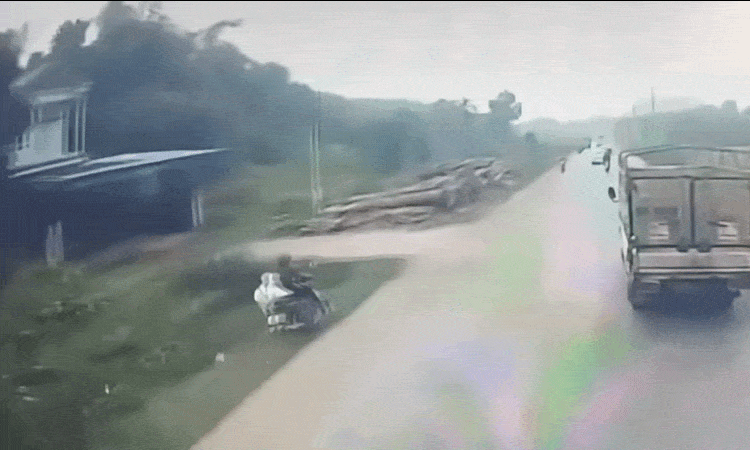
Local emergency response units and medical personnel were dispatched to the scene shortly after the collision occurred. As of initial reporting periods, official updates regarding the precise medical status and survival of the rider have not been fully disclosed, leaving authorities to continue their investigation into the exact severity of the injuries sustained.
The Physics of Overloading and Loss of Control
Transportation safety experts emphasize that the primary catalyst for the Thai Nguyen crash lies in the hazardous combination of excessive rear loading and dynamic weight transfer. When a motorcycle is heavily weighted toward the rear, its center of gravity shifts upward and backward. This fundamental alteration in physics drastically compromises steering responsiveness, tire traction, and the machine’s ability to maintain equilibrium, particularly when navigating uneven road surfaces, transition zones, or minor roadway depressions.
When an overloaded motorcycle attempts to change direction or execute an aggressive lane change, the rear-biased weight distribution creates a pendulum effect. The rider must exert significantly more physical effort to keep the handlebars steady. If the cargo is unevenly distributed or permitted to shift, protrude, or hang loosely, it immediately destabilizes the vehicle’s lateral balance.
In this specific case, the attempt to overtake a vehicle at speed while carrying unstable rear cargo pushed the motorcycle beyond its threshold of physical recovery. Once the front wheel began to shimmy or chao đảo (chao dao)—a common Vietnamese term for a high-speed weave or wobble—the rider lost the ability to counter-steer effectively. The subsequent panic reaction, characterized by an abrupt steering correction or panic braking while unstable, sealed the trajectory of the crash.
Broader Traffic Safety Implications in Vietnam
The accident on National Highway 37 is far from an isolated occurrence; rather, it reflects systemic vulnerabilities within Vietnam’s secondary and tertiary transportation networks. National Highway 37, alongside similar regional arteries like National Highway 3, frequently witnesses heavy mixed traffic comprising high-speed commercial trucks, passenger automobiles, and vulnerable two-wheeled vehicles sharing the same limited road space.
Data from the National Traffic Safety Committee consistently highlights that motorcycle-related incidents account for the vast majority of traffic fatalities and severe injuries across the country. A significant percentage of these accidents involve commercial delivery riders, agricultural workers, and vendors transporting bulky, irregular cargo that exceeds the structural and volumetric capacity of standard two-wheeled motor vehicles.
Despite ongoing public awareness campaigns and stringent administrative penalties outlined in Decree 100/2019/ND-CP (and its subsequent amendments) regarding the transportation of oversized goods, enforcement remains a persistent challenge. Rural and semi-urban police jurisdictions often lack the personnel to continuously monitor arterial stretches for cargo violations, leaving enforcement heavily reliant on automated surveillance systems and post-incident investigations.
Comparative Incidents and Safety Precedents
Traffic safety analysts note striking similarities between the Phu Xuyen accident and other high-profile incidents recorded across the region. For instance, a remarkably similar collision occurred on June 5 on National Highway 3 within Phu Luong Commune, where a motorcyclist recklessly wove between opposing traffic lanes to bypass commercial trucks and passenger vehicles, ultimately culminating in a head-on collision with oncoming traffic.
Such incidents demonstrate a dangerous cognitive bias among certain drivers who underestimate the stopping distances and kinetic forces involved when operating motorcycles at speed. In environments where road infrastructure features variable surface quality, lack of physical lane dividers, and high volumes of commercial traffic, the margin for error is razor-thin. A momentary lapse in concentration or an overly ambitious passing maneuver routinely transforms into a life-altering tragedy.
Expert Recommendations and Defensive Riding Protocols
In the wake of the Thai Nguyen collision, transportation authorities and defensive driving instructors have reiterated critical safety guidelines aimed at mitigating the risks associated with cargo transport and overtaking maneuvers on highways:
- Strict Cargo Management: Motorcyclists must ensure that weight is distributed evenly across the frame of the vehicle, maintaining a low center of gravity. Transporting loose, protruding, or excessively heavy rear loads that can shift during transit is strongly discouraged.
- Comprehensive Pre-Overtaking Assessment: Before initiating any pass, riders must thoroughly evaluate forward visibility, check blind spots, and confirm that the maneuver can be completed without encroaching upon oncoming traffic or compromising safe braking distances.
- Smooth Control Inputs: Drivers should maintain a stable throttle, keep a firm yet relaxed grip on the handlebars, and strictly avoid sudden, erratic steering corrections. If a motorcycle begins to exhibit signs of a weave or wobble during a high-speed transit, the rider should gradually reduce speed without panic braking and safely pull off the roadway to inspect the cargo and chassis.
- Prudence Over Speed: When road conditions are less than optimal, or when operating an encumbered vehicle, riders should prioritize defensive positioning, lower speeds, and increased following distances over the temptation to pass slower-moving traffic.
As local law enforcement agencies in Thai Nguyen finalize their report on the October 31 incident, the harrowing dashcam footage stands as an enduring cautionary tale for all road users. It highlights the absolute necessity of vehicular discipline, load compliance, and acute hazard awareness in safeguarding lives on Vietnam’s rapidly evolving transportation networks.