U23 Vietnam Navigates Roster Shuffling and Squad Adjustments Following Narrow Victory Against U23 Singapore at the Gia Lai VTV Cup 2026

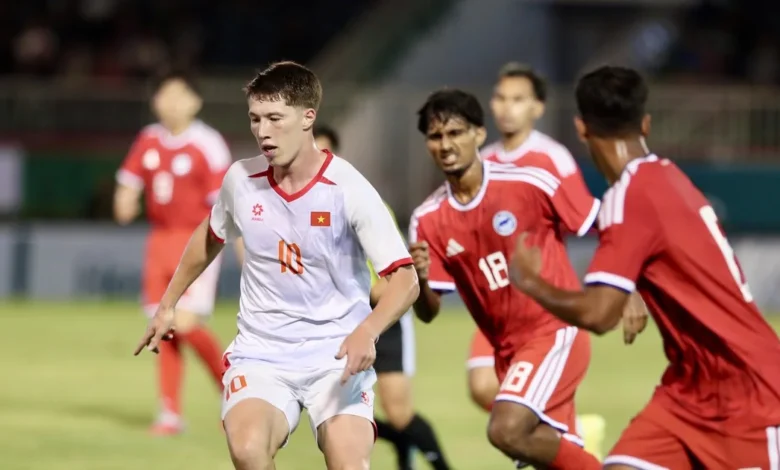
The landscape of international youth football often demands remarkable adaptability, a reality that the Vietnam national under-23 team is currently experiencing firsthand. Following a hard-fought and narrow 1-0 victory over U23 Singapore in their second fixture of the prestigious international friendly tournament, the U23 – Gia Lai VTV Cup 2026, the coaching staff found themselves simultaneously celebrating a crucial win and grappling with significant personnel losses. Staged at the Peliku Stadium, the match on the evening of November 12 showcased both the resilience of the young Vietnamese squad and the logistical challenges inherent in managing elite prospects who simultaneously shoulder heavy club commitments.
As the tournament heads toward its climax, with a highly anticipated final group stage clash against U23 Qatar scheduled for November 14 to determine the ultimate champion, head coach Dinh Hong Vinh faces the arduous task of recalibrating his tactical blueprint. The victory over Singapore, secured courtesy of a clever, opportunistic goal by Bao Long in the 70th minute, propelled the team to the summit of their group alongside their Qatari counterparts. Yet, this success is heavily overshadowed by an immediate exodus of key players, raising critical questions about squad depth, tournament preparation, and the perpetual tug-of-war between national team ambitions and domestic club priorities in modern Southeast Asian football.
The Match Context: Overcoming Stubborn Defences at Pleiku Stadium
The encounter against U23 Singapore was far from a straightforward affair for the hosts. Entering the fixture with high expectations following earlier positive showings in the regional youth circuit, U23 Vietnam quickly found themselves confronting a deeply entrenched defensive block. The Singaporean side deployed a pragmatic, low-block strategy, suffocating space in the final third and frustrating Vietnamese attacking sequences through disciplined positional play and robust physical challenges.
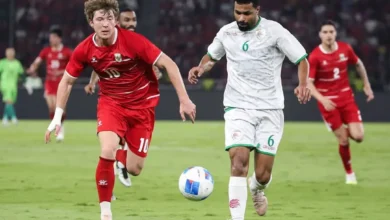
Despite dominating possession and territory, U23 Vietnam struggled to find clinical efficiency in front of goal. The first half elapsed with numerous near-misses, half-chances, and blocked efforts, reflecting a lack of composure under pressure. The tension escalated shortly after the interval when Khoa Ngo, introduced as a tactical substitute to inject pace and unpredictability into the attack, unleashed a venomous strike that violently rattled the crossbar in the 61st minute. The near-miss served as a catalyst, galvanizing the team to redouble their attacking intensity.
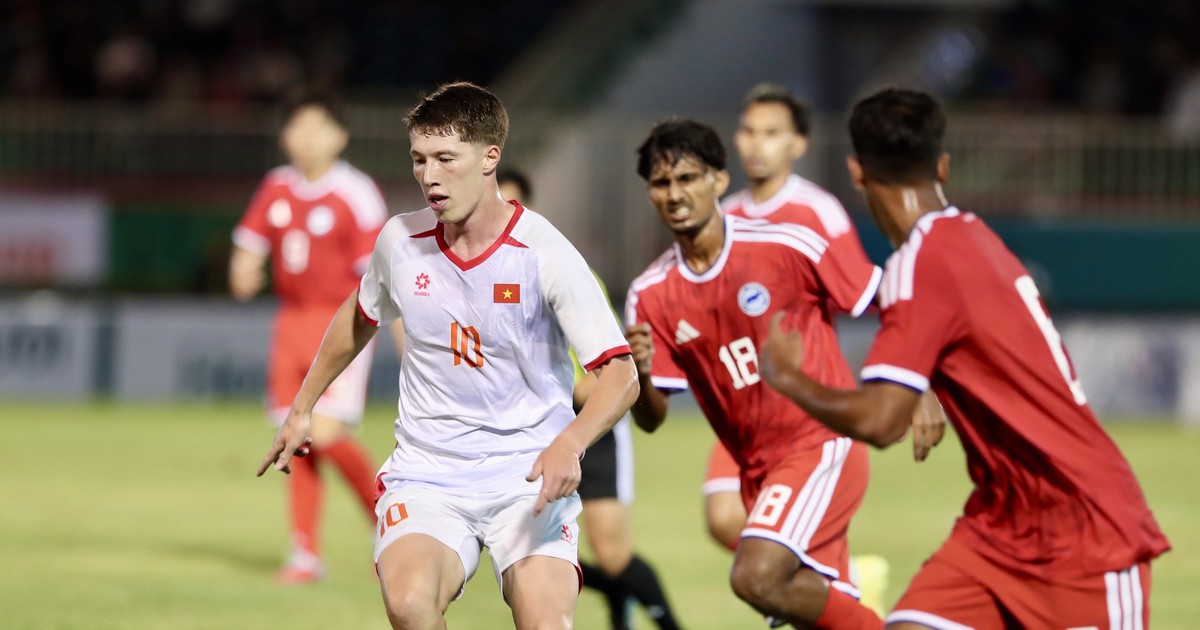
The breakthrough finally arrived in the 70th minute. Amidst a frantic goalmouth scramble following a sustained period of pressure, defender Bao Long reacted quickest to a loose ball, executing a clever, instinctive backheel flick that deceived the Singaporean goalkeeper and nestled into the back of the net. The solitary goal proved decisive, preserving U23 Vietnam’s undefeated run in the tournament and setting the stage for a championship-deciding showdown against U23 Qatar. However, the celebrations in the Vietnamese dressing room were noticeably muted, as the looming departures of several core players cast an immediate shadow over the squad’s tactical preparations.
A Massive Roster Exodus: The Club Versus Country Dilemma
Barely had the final whistle blown at Pleiku Stadium when official notifications confirmed that U23 Vietnam would lose four prominent players ahead of their crucial tournament finale. The players departing the camp include dual-heritage midfielder Williams Minh Hoang (joining from English football pathways), German-Vietnamese attacker Khoa Ngo, dynamic midfielder Duc Phu, and towering central defender Dinh Quang Kiet.
The rationale behind this abrupt departure lies in the stringent scheduling demands of domestic and regional club competitions. All four players are required to report back for intensive training sessions with their parent club, Cong An TP.HCM (Police Football Club of Ho Chi Minh City), starting the very next day, November 13. The police-backed club is currently deep in preparations for a high-stakes continental fixture: an upcoming clash against Thai powerhouse Buriram United in the second match of Group A for the ASEAN Club Championship (Shopee Cup) 2026-2027, slated for November 18 at the Binh Duong Stadium.
This scenario underscores a recurring friction point within Vietnamese football development. While international friendlies and regional cups like the Gia Lai VTV Cup serve as vital developmental milestones for youngsters aspiring to break into the senior national team, clubs operating under intense commercial and competitive pressures in continental tournaments inevitably prioritize their own immediate objectives. Consequently, national team coaches are frequently left to navigate tournaments with heavily depleted or fluid rosters, transforming tactical preparation into a continuous exercise in crisis management.
The Roster Ripple Effect: Assessing the Remaining Attacking Options
The departure of Williams Minh Hoang and Khoa Ngo significantly depletes U23 Vietnam’s attacking arsenal, leaving head coach Dinh Hong Vinh with razor-thin margins in the final third. With these two creative outlets gone, the tactical burden shifts heavily onto the remaining forward line, which now consists of just three recognized attackers: Minh Tam, Gia Bao, and Hoang Anh.
Managing fitness, fatigue, and tactical variations during the demanding schedule of a round-robin tournament becomes exponentially more difficult with only three natural forwards available. Coach Dinh Hong Vinh will likely be forced to adopt pragmatic deployment strategies, utilizing versatile midfielders as auxiliary attackers or shifting formations to a more compact, counter-attacking shape against a physically imposing U23 Qatar side. The tactical adaptability of players like Minh Tam and Gia Bao will be tested to its absolute limit as they shoulder the primary goalscoring responsibilities in the absence of their departed peers.
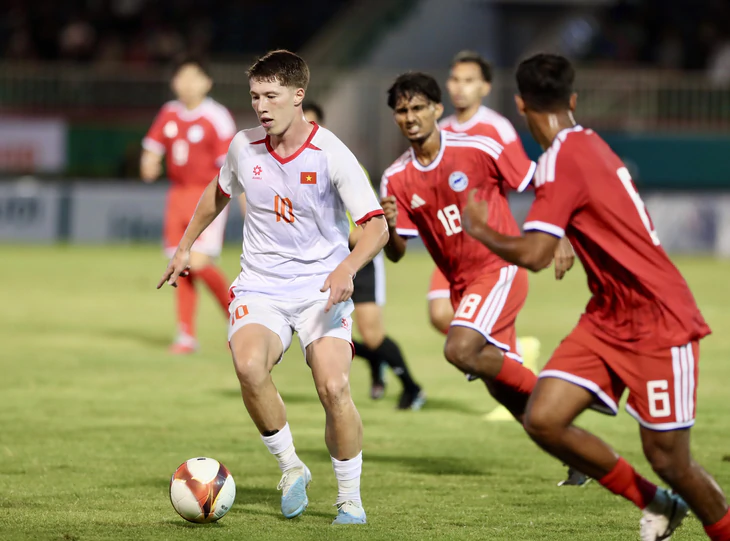
Conversely, the defensive and midfield departments, though also losing personnel, possess slightly more structural elasticity. While the departure of Duc Phu and Dinh Quang Kiet removes established anchors from the center of the pitch and the heart of the defense, the coaching staff has proactively cultivated alternative tactical solutions through prior squad planning and recent call-ups.
Rising Stars and Strategic Replacements: The Emergence of Quang Duyet
In the wake of these high-profile departures, attention naturally turns to the players tasked with filling the void. U23 Vietnam’s roster management ahead of the Gia Lai VTV Cup had already accounted for potential turbulence, featuring strategic additions designed to test emerging talent against international opposition.
Players such as Cao Hoang Minh, Thai Ba Dat, and Quang Duyet stand fully prepared to step into the central midfield and transitional zones vacated by departing veterans. Among these emerging talents, 2005-born midfielder Quang Duyet has captured the spotlight with a series of remarkably composed and mature performances throughout the tournament.
Having previously caught the eye with a brief 30-minute cameo for Hoang Anh Gia Lai FC against SHB Da Nang during round 3 of the V-League, Duyet was handed a golden opportunity to test his mettle on the international youth stage. Coach Dinh Hong Vinh’s decision to thrust the youngster into the starting lineup has reaped immediate dividends. Duyet displayed exceptional positional discipline and tactical intelligence, playing with remarkable assurance across two consecutive starts—first partnering with Cao Hoang Minh in the victory over U23 Thailand, and subsequently anchoring the midfield alongside Duc Phu in the triumph over U23 Singapore.
Speaking candidly after the match against Singapore, Coach Dinh Hong Vinh heaped lavish praise on the teenager, emphasizing the long-term vision underpinning his inclusion in the squad.
"I specifically want to single out Quang Duyet for praise," Dinh Hong Vinh stated. "Before this tournament commenced, I had only observed Duyet play for about 30 minutes in the V-League match between Hoang Anh Gia Lai and SHB Da Nang. However, I made the conscious decision to give him this platform to test his capabilities, with a clear eye on building a robust talent pool for the national teams looking toward 2027."
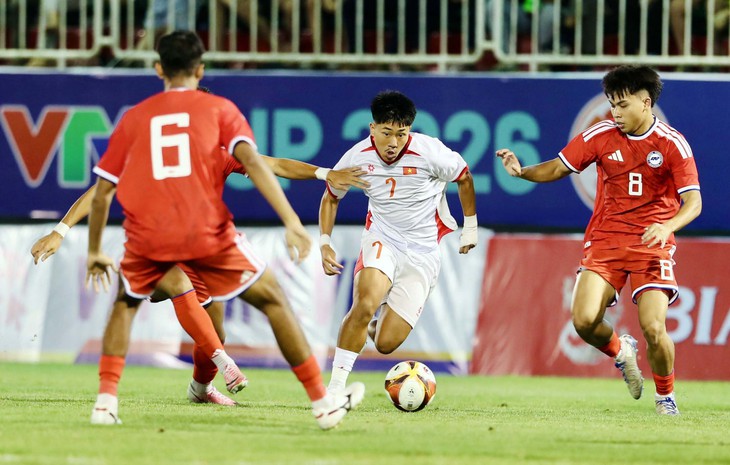
"Duyet was born in 2005. Across our last two matches, he has consistently left a profoundly positive impression. He is a player endowed with innate technical quality, an exceptional work ethic, and an undeniable hunger to progress further in his career."
Defensive Resilience Amidst Ongoing Departures
Beyond the midfield engine room, the defensive line also faces restructuring following Dinh Quang Kiet’s departure. Fortunately for U23 Vietnam, the defensive department boasts considerable depth, featuring proven central defenders capable of stepping seamlessly into the starting XI. Quality operators such as Le Nguyen Hoang, Manh Hung, Anh Tiep, and Tuan Khai remain available to anchor the backline against U23 Qatar’s potent forward line.
This current wave of departures is part of a broader, systemic trend affecting the national youth setups this autumn. The phenomenon of mid-tournament releases was vividly highlighted just days prior, following U23 Vietnam’s victory over Chinese Taipei in the Casper Cup 2026 international friendly held at the historic Thien Truong Stadium in Ninh Binh on November 11. Immediately following that fixture, four additional national team players—La Giang Patrik, Olaha Manh Duc, Quoc Cuong, and Nhat Minh—simultaneously exited the camp to resume training with Cong An TP.HCM ahead of their crucial continental assignment against Buriram United.
The recurring pattern underscores the complex ecosystem of Vietnamese football, where the national team program functions concurrently as a developmental incubator for elite youth and a direct feeder system for ambitious clubs competing on the regional stage. While it complicates short-term tournament strategies for coaches like Dinh Hong Vinh, it simultaneously accelerates the professional maturation of young prospects by exposing them to high-pressure environments across both club and country commitments.
Broader Implications for Vietnamese Youth Football
As U23 Vietnam shifts its complete focus toward the ultimate test of the Gia Lai VTV Cup 2026 against U23 Qatar on November 14, the broader implications of these roster adjustments extend far beyond the immediate silverware. Tournaments of this caliber are ultimately evaluated not solely by final match scores, but by their efficacy in broadening the talent pipeline and stress-testing tactical frameworks under adverse conditions.

Losing key players like Williams Minh Hoang, Khoa Ngo, Duc Phu, and Dinh Quang Kiet undoubtedly diminishes the team’s overall experience and star power on paper. However, it paradoxically creates an invaluable vacuum of opportunity for emerging talents like Quang Duyet, Cao Hoang Minh, and the remaining members of the squad. In high-stakes fixtures against technically gifted opponents like U23 Qatar, depth, tactical discipline, and collective cohesion often outweigh individual brilliance.
The resilience demonstrated in breaking down Singapore’s stubborn low block proved that U23 Vietnam possesses the tactical patience required to grind out results. Yet, meeting the physical and technical challenge posed by Qatari youth football will demand an elevated level of execution from every player remaining in the camp.
For Coach Dinh Hong Vinh, the next 48 hours will be defined by intensive tactical drills, mental conditioning, and meticulous squad rotation to maximize the output of a depleted roster. Whether this hastily reorganized group can summon the inspiration required to overcome U23 Qatar and claim the Gia Lai VTV Cup 2026 crown remains one of the most compelling storylines in contemporary Vietnamese football. Regardless of the final outcome at Pleiku Stadium, the invaluable international experience gleaned by the younger contingent ensures that the overarching objective of long-term player development continues to move steadily forward.
Related posts: