United States Department of Justice Issues 48-Hour Ultimatum to California Election Officials Over Voter Registration Verification

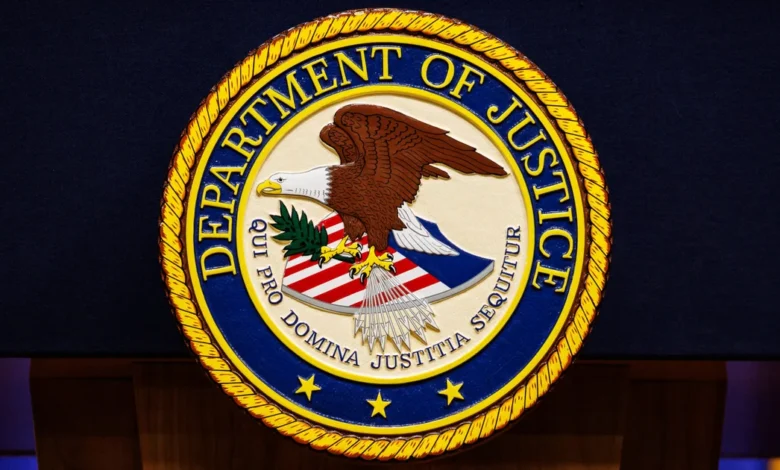
The United States Department of Justice (DOJ) has escalated an ongoing legal and political conflict by issuing a stern ultimatum to election authorities across all counties in California. Federal officials have demanded immediate verification and segregation of registered voters whose citizenship status remains unverified, setting a strict 48-hour deadline for compliance. This federal intervention arrives merely days before the highly anticipated midterm elections, intensifying a fierce national debate over election integrity, voter roll transparency, and the balance of power between federal authorities and state-run election machinery.
According to correspondence reviewed by major news outlets, the federal directive was dispatched on October 23 by the Office of the U.S. Attorney for the Central District of California. The letters explicitly warn local municipal and county election officials that they will face severe, heightened federal oversight, potential legal penalties, and investigations if they fail to comply with the mandated verification procedures. Enclosed with the DOJ communications were specific lists containing individuals whom federal agencies suspect may not be United States citizens but who could potentially receive mail-in ballots from state and local election boards.
The federal government’s sudden and aggressive stance highlights a growing tension surrounding the administration of federal elections. Under the terms of the Department of Justice directive, local registrars are required to review the provided lists within a 48-hour window to definitively classify who is an eligible citizen and who is not. For individuals whose citizenship status cannot be immediately and conclusively verified through standard administrative databases, the DOJ has outlined a specific protocol regarding mail-in ballots. Instead of canceling or discarding these disputed ballots outright—which could disenfranchise eligible citizens—federal authorities have instructed local officials to segregate them. These ballots must be held in isolation, with their processing paused until the voter’s citizenship status is officially confirmed beyond doubt.
Background Context and Escalating Legal Battles
The roots of this sweeping federal intervention extend across months of rising friction between federal authorities and Democratic-led states regarding voter list maintenance. The Trump administration and allied voting integrity groups have repeatedly voiced concerns that existing state practices fail to adequately screen out non-citizens from active voter rolls. California, as the nation’s most populous state, has frequently found itself at the center of these ideological and legal clashes.
Federal officials argue that the state’s current administrative frameworks do not proactively cross-reference voter registration databases with federal immigration and citizenship records to the degree required to guarantee absolute security. State officials, conversely, maintain that California complies with federal voting laws, including the National Voter Registration Act (NVRA), and assert that local election boards already employ robust, multi-layered verification processes designed to protect the integrity of the ballot box while safeguarding eligible voters’ constitutional rights.
The current 48-hour ultimatum follows a series of escalating legal maneuvers between the federal government and California authorities. Just one week prior to the DOJ’s latest letters, the administration officially filed a lawsuit against the state of California. That legal action was triggered after state election officials initially pushed back against a federal request to cross-reference approximately 20,000 specific voter records with data compiled by the Department of Homeland Security (DHS). At the time, federal lawyers warned that any failure to cooperate with federal oversight would invite immediate civil and criminal enforcement actions.
Local and State Reactions
The federal mandate has elicited swift, sharp condemnation from California officials, who view the ultimatum as an unprecedented and partisan intrusion into state-administered elections. Governor Gavin Newsom, speaking at a campaign event in New Hampshire, forcefully denounced the federal directive, accusing the administration of attempting to manipulate the electoral process from Washington.
"The administration is aggressively trying to seize control of our state’s voter rolls," Governor Newsom stated. "It is truly extraordinary and deeply alarming that this kind of heavy-handed intervention is happening in real-time, right before an election."
State election administrators have similarly expressed deep frustration over the short turnaround time. Municipal clerks and county registrars noted that verifying thousands of complex voter files within a 48-hour window is an operational impossibility, particularly while they are simultaneously processing millions of incoming mail-in ballots and preparing for in-person voting. Local officials warn that forcing hasty, forced segregations without adequate due process risks creating widespread confusion and disenfranchising lawful voters who happen to be flagged by imperfect federal databases.
Conversely, federal prosecutors and administration supporters have defended the directive as a necessary, common-sense measure to uphold federal law. Bill Essayli, the leading U.S. Attorney for the Southern District of California, defended the enforcement action on social media, describing the federal requirements as straightforward and legally binding.
"California has consistently failed to independently verify the citizenship status of every registered voter," Essayli wrote on the platform X. "We have stepped in to do that work. We have gathered lists of registered voters and notified local authorities of individuals whom we have strong reason to believe are not U.S. citizens."
Essayli further emphasized the gravity of the legal penalties associated with mishandling the situation, pointing to federal statutes governing elections. "The deliberate handling or processing of ballots cast by non-citizens constitutes a federal crime under Title 18, Sections 611 and 2 of the United States Code. We will hold election officials fully accountable. No one is above the law."
Broader Implications for Midterm Elections
The standoff in California carries significant national ramifications as the country approaches the midterm elections. Voting rights advocates have expressed alarm that the DOJ’s strategy could establish a troubling precedent for federal intervention in local election administration, potentially sowing distrust in election outcomes across multiple jurisdictions. Legal scholars note that while the federal government possesses legitimate oversight interests under the U.S. Constitution and federal statutory law, compelling local jurisdictions to alter ballot handling procedures mere days before voting concludes creates profound logistical hurdles and constitutional concerns regarding due process.
As the 48-hour deadline elapses, legal teams representing the state of California are weighing emergency judicial interventions to block the DOJ’s directives. With millions of ballots already cast through early voting and mail-in channels, the ultimate fate of the disputed voter files remains uncertain. The unfolding legal battle ensures that the integrity, transparency, and administration of American elections will remain at the forefront of national discourse long after the final midterm votes are tallied.