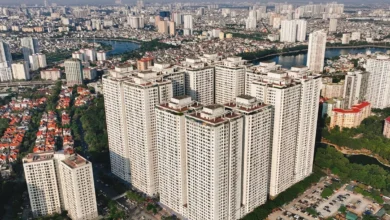
Ministry of Construction Reports Q3 2026 Real Estate Slump as High Housing Prices Choke Market Liquidity and Prompts Urgent Government Intervention

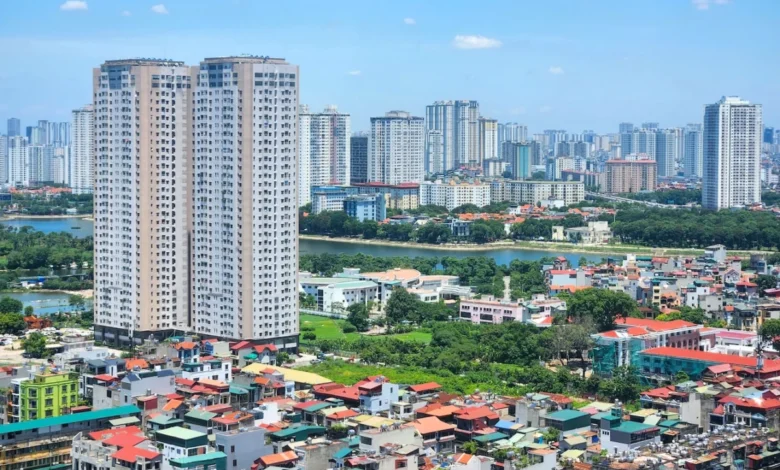
The third quarter of 2026 has exposed deep structural challenges within Vietnam’s property market, marked by a noticeable cooling in transactional volume while primary and secondary housing prices across major metropolitan areas continue to hold stubbornly high. According to the latest comprehensive market evaluation report released by the Ministry of Construction detailing the first ten months of the year, the widening gap between inflated asking prices and the actual purchasing power of local residents has severely dampened market liquidity. In response to these growing systemic pressures, regulatory bodies are accelerating urgent consultative reports for the Prime Minister, drafting comprehensive risk scenarios, and formulating targeted intervention policies designed to prevent localized real estate vulnerabilities from cascading into the broader financial and banking sectors.
Cooling Transactions Amid Persistent Price Resilience
The trajectory of Vietnam’s real estate sector through the third quarter of 2026 presents a paradoxical economic landscape where sluggish trading activity coexists with unyielding price floors. Despite localized downward adjustments in specific niche segments, the general price index for residential real estate remains elevated, driven primarily by escalating investment costs, higher construction material expenses, and climbing capital servicing costs.
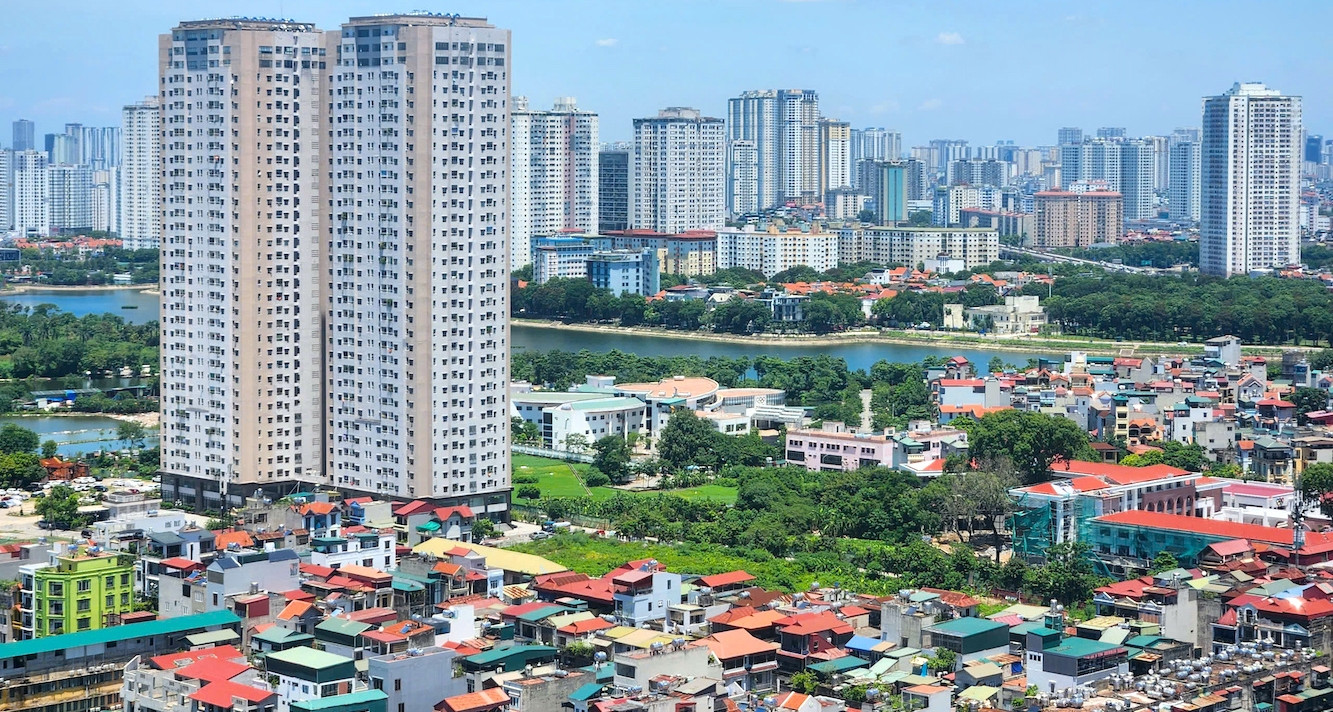
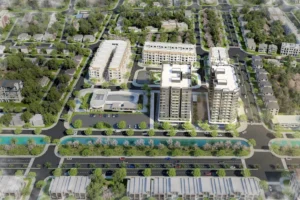
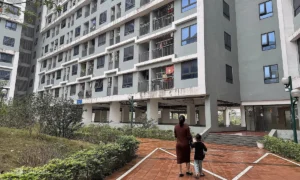
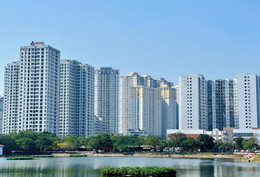
In the apartment segment, while minor downward corrections have been observed compared to the preceding quarter, primary pricing in core urban centers remains remarkably high. Market surveys conducted at the close of Q3 illustrate this stubborn trend. In Hanoi, high-end condominium projects such as The Zen Residence command secondary prices ranging between 83 and 94 million VND per square meter, while units at Mipec Riverside fluctuate between 99 and 110 million VND per square meter. The southern economic hub of Ho Chi Minh City mirrors this reality, where luxury developments like Saigon Royal Residence record asking prices between 110 and 121 million VND per square meter, and units at The Privé trade in the range of 105 to 128 million VND per square meter.
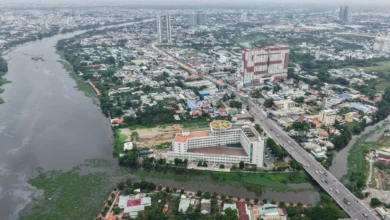
Low-rise residential products, including landed townhouses and villas within master-planned communities, have experienced similar downward pressures on transaction frequency alongside marginal price softeners compared to Q2. Market liquidity for these asset classes remains subdued as buyers demonstrate extreme selectivity, favoring only completed projects with impeccable legal transparency, fully developed infrastructure, and immediate operational or commercial utility. In Hanoi, landed properties at Mon City surveyed between 447 and 459 million VND per square meter, with peripheral locations like Nam An Khánh and Hinode Royal Park posting averages of 137–148 million VND per square meter and 166–176 million VND per square meter respectively. Meanwhile, Ho Chi Minh City projects such as Văn Phú City and Jamona Golden Silk recorded secondary asking prices of 208–220 million VND and 160–175 million VND per square meter.
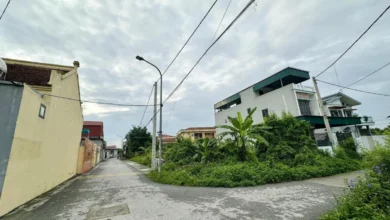
The land plot segment has also undergone localized price adjustments, though performance remains heavily fragmented. While select regional projects like Melorita Hòa Lạc in Hanoi experienced a modest average price increase of 5.6% to reach 25.9 million VND per square meter, others like An Lạc Green Symphony contracted by 4.7% to 124.4 million VND per square meter. In Ho Chi Minh City, Thành Mỹ Lợi land values appreciated by 4.1% to 124 million VND per square meter, whereas Tăng Long Garden saw prices dip by 4.5% to 43 million VND per square meter. The Ministry of Construction notes that successful land transactions are now strictly confined to plots with clean titles, complete infrastructure, and genuine end-use value, while speculative plots dependent entirely on anticipated capital gains face acute transactional paralysis.
Broad-Based Transaction Decline Highlights Buyer Caution
The most striking indicator of the third quarter slowdown is the significant contraction in transaction volume across nearly all segments of the property market. Official data compiled from provincial and municipal reporting channels indicate that the entire country recorded approximately 92,000 successful real estate transactions involving commercial housing projects and residential land use rights transferred to citizens for homebuilding during Q3 2026.
This aggregate figure represents an 8% decrease compared to the second quarter of 2026 and a staggering 32.7% reduction when measured against the corresponding period in 2025. A breakdown of these figures reveals that apartment sales and individual private houses accounted for slightly more than 22,800 successful deals—a 14% quarter-on-quarter drop and a 28.9% year-on-year decline. The land plot sector fared similarly, recording roughly 69,100 successful transactions, down 6% from Q2 and shrinking by 34% compared to Q3 2025.
When aggregating data for the first ten months of 2026, the total volume of successful real estate transactions nationwide surpassed 331,800 units, comprising approximately 80,200 apartment and standalone house deals alongside 251,600 land plot transactions. These cumulative metrics underscore a market grappling with structural fatigue. The steep year-over-year decline in transaction velocity reflects profound caution among end-users and investors alike, who are increasingly unwilling or unable to absorb prevailing market valuations in the face of tighter credit conditions and economic uncertainties.
Ministry of Construction Prepares Prime Ministerial Report and Safeguard Scenarios
In light of these challenging market dynamics, the Ministry of Construction has intensified its monitoring framework to evaluate underlying risk factors and deploy timely remedial measures aimed at fostering a safe, transparent, and sustainable real estate ecosystem. A central administrative priority for the final quarter of the year is the finalization of a comprehensive report destined for the Prime Minister in November, which will offer a granular assessment of the national property landscape.
This upcoming submission will thoroughly evaluate core metrics including housing supply pipelines, liquidity levels, pricing structures across diverse tiers, transaction velocities, and inventory accumulations categorized by product type and geographical territory. By synthesizing these empirical indicators, the Ministry aims to explicitly identify emerging systemic risks, outline detailed crisis scenarios, and formulate robust contingency plans. A primary directive of these safety protocols is to prevent localized real estate distress from triggering a chain reaction across the broader financial and banking architecture.
To maintain macroeconomic stability, the Ministry of Construction is actively collaborating with the Ministry of Finance, the State Bank of Vietnam, and local municipal authorities. This inter-agency task force utilizes a synchronized matrix of economic indicators to track market health, closely monitoring primary and secondary real estate pricing trends, transactional volumes, unsold inventories, credit growth, corporate bond issuances, and the construction progress of major development projects.
Targeted Interventions and the Push for Affordable Housing
Concurrently, regulatory authorities are shifting strategic momentum toward unlocking housing projects that meet verified implementation criteria, actively steering developer focus away from speculative luxury assets and toward commercially viable affordable housing, social housing developments, and rental properties.
As part of its core mandate for the remaining two months of 2026, the Ministry of Construction continues to intensify inspections and accelerate the execution of the national initiative aiming to construct one million social housing units for low-income earners and industrial park workers over the 2021–2030 period. Administrative authorities remain fully committed to fulfilling specific social housing and rental targets mandated under Government Resolution No. 303, ensuring that municipal governments allocate adequate land reserves and administrative resources to meet housing deficits.
Industry analysts point out that while secondary prices have pulled back in certain micro-segments, these adjustments largely reflect a compression of speculative profit margins rather than wholesale distressed liquidations. With debt servicing pressures mounting for leveraged investors holding unsold inventory, market analysts suggest that developers and secondary holders alike may need to further realign pricing strategies with actual consumer incomes. By dissecting the fundamental cost components of housing—ranging from land acquisition and construction expenses to debt servicing and developer profit margins—policymakers hope to guide the market toward a sustainable equilibrium where homeownership returns within reach of the broader workforce.