The tumultuous period marking the transition from China’s imperial Qing Dynasty to the nascent Republic of China witnessed the rise of extraordinary individuals whose skills and vision left an indelible mark on history. Among these, Li Jinglin (often romanized as Li Jinglin), born in 1885 in Hebei province, stands out as a unique confluence of military acumen and martial arts mastery. Revered by his contemporaries and subsequent generations, he was not merely a general navigating the civil strife of his era but also a martial arts luminary credited with perfecting traditional Chinese swordplay, particularly the esoteric Wudang style. His widespread recognition as the "Wudang Sword Immortal" underscores his profound influence and the legendary status he achieved within the martial arts community. This epithet not only celebrated his exceptional prowess but also acknowledged his pivotal role in preserving and advancing a martial tradition rooted in Daoist philosophy, placing him in a distinct position within the annals of Chinese martial history.
The Genesis of a Martial Arts Legend: Early Life and Influences
Li Jinglin’s journey into martial arts began in Hebei, a region historically rich in martial traditions. From an early age, he immersed himself in the study of traditional Chinese boxing (quan) and various weapons (bing qi). However, the pivotal turn in his martial development occurred when he began to formally study Wudang swordplay under the tutelage of Song Weiyi. Song Weiyi was widely recognized as the ninth-generation inheritor of the authentic Wudang sword lineage, making Li Jinglin’s apprenticeship under him a direct link to a profound and ancient martial tradition. This master-disciple relationship was foundational, providing Li with a deep understanding of Wudang’s unique internal principles and combat applications.
Recognizing Li Jinglin’s innate talent, unwavering dedication, and deep passion for martial arts, Song Weiyi made the decision to accept him as a direct disciple. This acceptance granted Li access to the closely guarded secrets and advanced techniques of the Wudang lineage. While pursuing his military education, Li Jinglin’s passion for martial arts led him to seek out additional masters. During his time in Baoding, he dedicated extra hours to train in quan (fist forms) in Yongnian. It was here that he encountered Yang Jianhou (Yang Chien-hou), a renowned master of Yang-style Tai Chi Quan and the son of the legendary Yang Luchan, the founder of the Yang style. This encounter proved to be another transformative experience. Yang Jianhou, known for his profound internal martial arts skills, further refined Li Jinglin’s understanding of internal power, body mechanics, and the subtle art of "softness overcoming hardness."
The Fusion of Styles: Wudang Swordplay and Tai Chi Quan
The integration of Wudang swordplay with Yang-style Tai Chi Quan became a defining characteristic of Li Jinglin’s martial art. Tai Chi Quan, with its emphasis on internal cultivation, circular movements, balance, and the harmonious flow of Qi (life energy), provided Li with a robust foundation in internal power. It taught him to achieve unwavering stability, coordinated movements, and precise control over his body and spirit. When these internal principles were applied to the swift and precise movements of Wudang swordplay, his technique reached an unprecedented level of sophistication. The combination resulted in a martial art characterized by a perfect equilibrium between lightning speed, formidable power, and absolute accuracy. This synergy allowed Li Jinglin to transcend the conventional boundaries of martial arts, developing a style that was both devastatingly effective and aesthetically profound.
A significant moment in Li Jinglin’s martial journey occurred in 1922 when, while serving in the military, his troops were stationed in Beizhen, Liaoning—the hometown of his Wudang master, Song Weiyi. This reunion provided Li with an invaluable opportunity to reconnect with his sifu and dedicate concentrated time to further hone his sword skills. During this period, Song Weiyi imparted the complete essence and most profound secrets of Wudang swordplay to Li Jinglin. This included highly confidential texts and techniques such as "Wudang Swordplay," "Bagua Zhang Swordplay" (Bagua Palm Swordplay), and other Daoist cultivation materials. This comprehensive transmission officially designated Li Jinglin as the true inheritor of the Wudang lineage, solidifying his position as a grandmaster.

The "Sword Immortal" Emerges: A Reputation Forged in Skill
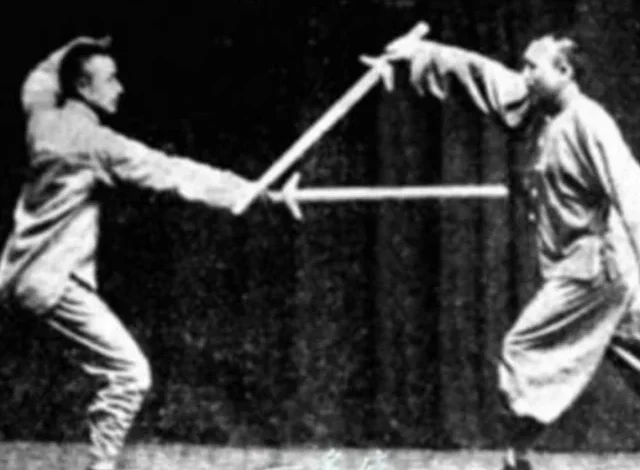
Li Jinglin’s extraordinary skill quickly earned him widespread recognition. Within the Chinese martial arts community, he was often mentioned in the same breath as other legendary figures like Sun Lu Tang and Li Shu Wen, together forming the illustrious group known as the "Three Great Masters" (San Gao Shou). His swordplay was particularly celebrated for its unparalleled speed and overwhelming suppressive force. Anecdotes from the era speak volumes about his prowess; it was widely believed that within a range of ten paces, Li Jinglin’s sword was far more lethal than a firearm. The reasoning was simple yet chilling: an opponent would be neutralized before they even had a chance to cock a pistol.
Numerous tales circulated about Li Jinglin’s combat abilities. Some recounted his capacity to defeat an opponent in the blink of an eye at close quarters. On April 18, 1926, the prominent Shenbao (Shun Pao) newspaper, a highly influential publication of the time, published an article lauding his swordplay. The newspaper specifically highlighted Li Jinglin’s exceptional ability to wield a long sword with a rare combination of flexibility and pinpoint accuracy, noting that few, if any, could rival his mastery. This public endorsement from a mainstream media outlet further cemented his legendary status and brought his martial accomplishments to a broader audience beyond the traditional martial arts circles.
Military Service and Tactical Innovation: Bridging Tradition and Modernity
Beyond his martial arts achievements, Li Jinglin was also a distinguished military officer. At the age of eighteen, he enrolled in the Baoding Military Academy, one of China’s foremost modern officer training institutions during that era. His outstanding academic and physical performance allowed him to quickly rise through the ranks, serving in the late Qing army and later transitioning to the forces of the nascent Republic of China. He distinguished himself in numerous campaigns, earning accolades for his strategic acumen and leadership.
Throughout his military career, Li Jinglin never ceased his martial arts training. He constantly sought to integrate the principles of traditional Chinese martial arts with modern military tactics. He pursued a philosophy that unified the body and the sword, aiming for a state where the sword became an extension of his own being. Contemporaries remarked that when he brandished his sword, he regarded it as an intrinsic part of his own body, reflecting a deep spiritual and physical connection to his weapon.
Li Jinglin also innovated military training by incorporating martial arts into the curriculum for his soldiers. His units were rigorously trained in quick reaction skills, especially against moving targets, and proficient use of weapons while mounted on horseback. Through strict discipline and his unique training methodologies, Li Jinglin’s military units quickly became renowned as some of the most elite and formidable fighting forces of their time.
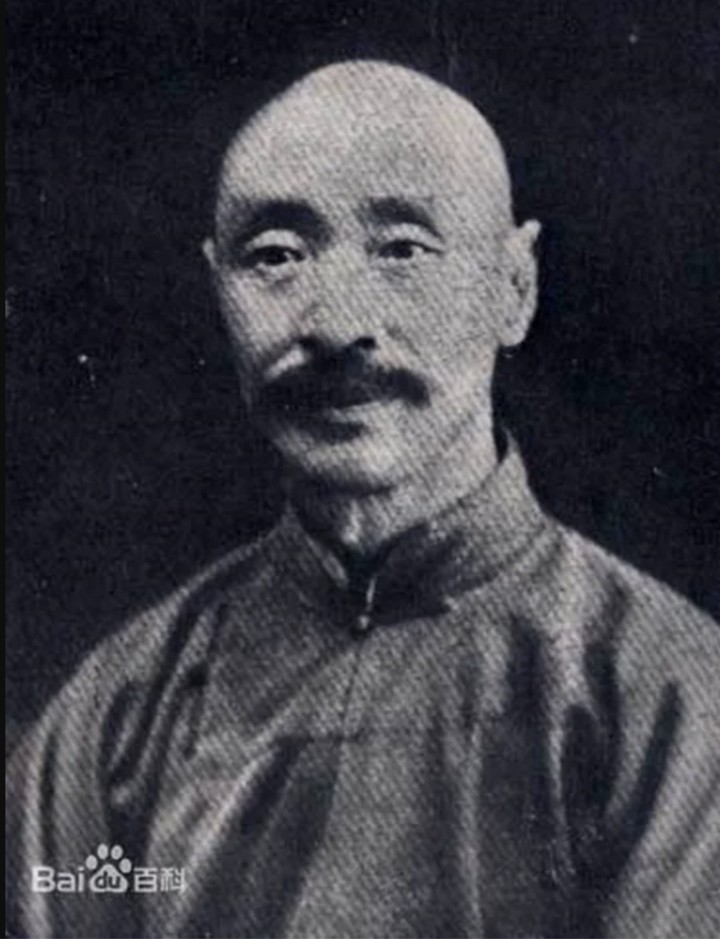
In 1911, amidst significant national upheaval, Li Jinglin demonstrated his exceptional military capabilities. In a critical battle, he personally led a daring assault unit, successfully navigating intense enemy fire to capture a strategically vital position. His consecutive military victories brought him widespread recognition, leading to him being bestowed with the prestigious yellow jacket – a rare and distinguished honor during that period, signifying exceptional bravery and service. Upon his return to Dongbei (Northeast China), his soldiers held him in immense admiration, and his unit was universally regarded as an elite fighting force.
Championing Guoshu: Modernizing and Popularizing Martial Arts
After retiring from active military command, Li Jinglin fully devoted himself to the pursuit and propagation of swordplay. His final transmission from Song Weiyi, encompassing the complete essence of Wudang martial arts, firmly established his reputation as the "Wudang Sword Immortal," a title that became widely recognized throughout the Republic of China era.
Unlike many traditional masters who preferred to keep their knowledge exclusive, Li Jinglin was a fervent advocate for the open dissemination and popularization of martial arts. He relocated to Shanghai, which rapidly became a vibrant hub for the martial arts community. Masters from across the nation converged there to exchange knowledge and techniques, drawn by Li Jinglin’s reputation and his open approach. He actively participated in demonstrations, delivered lectures, and spearheaded a movement to encourage public participation in martial arts. He viewed martial arts not merely as a combat skill but as a vital means to cultivate physical health and foster national spirit, particularly crucial during a time of national weakness and foreign encroachment.
In the late 1920s, in collaboration with other influential figures, Li Jinglin played a crucial role in the establishment of the Central Martial Arts Academy (Zhongyang Guoshu Guan), often referred to as the Central Guoshu Institute. This institution marked a watershed moment in the history of Chinese martial arts. At its grand opening, Li Jinglin’s sword demonstration captivated the audience and garnered extensive media coverage, further amplifying the academy’s visibility and importance. The founding of this academy represented a significant shift: for the first time, martial arts were systematically integrated into an organized educational framework, moving towards standardization and widespread societal adoption.
Following a year of meticulous preparation, Li Jinglin spearheaded the organization of a national martial arts competition on a grand scale. This event attracted a multitude of martial artists from all corners of China, sparking an unprecedented surge in martial arts enthusiasm across the country. Capitalizing on this newfound momentum, Li Jinglin consistently urged the public to engage in martial arts practice for health benefits, effectively transforming martial arts into a popular and accessible physical activity. His efforts laid the groundwork for the modern Guoshu (National Arts) movement, which aimed to preserve, standardize, and promote traditional Chinese martial arts as a cultural heritage and a means of national rejuvenation.
Legacy and Enduring Influence
Li Jinglin’s legacy is multifaceted, spanning both military leadership and martial arts mastery. As a military commander, he exemplified strategic brilliance and personal bravery, leading his troops with distinction during a turbulent period. However, it is his profound contributions to martial arts that cemented his place in history. He not only preserved the ancient art of Wudang swordplay but also enriched it through his integration of Tai Chi principles, creating a unique and highly effective synthesis. His open philosophy and dedication to public education were instrumental in transitioning martial arts from secretive family traditions to a standardized and widely practiced national sport.
His work with the Central Guoshu Institute and the national competitions he organized provided a structured platform for martial arts development, influencing generations of practitioners. Li Jinglin bridged the gap between traditional martial arts and the demands of a modernizing society, demonstrating how ancient wisdom could be relevant in contemporary contexts. His title, "Wudang Sword Immortal," is more than a mere honorific; it is a testament to his unparalleled skill, his innovative spirit, and his enduring vision for the future of Chinese martial arts. His life story continues to inspire, embodying the spirit of dedication, innovation, and national pride.
Related posts: