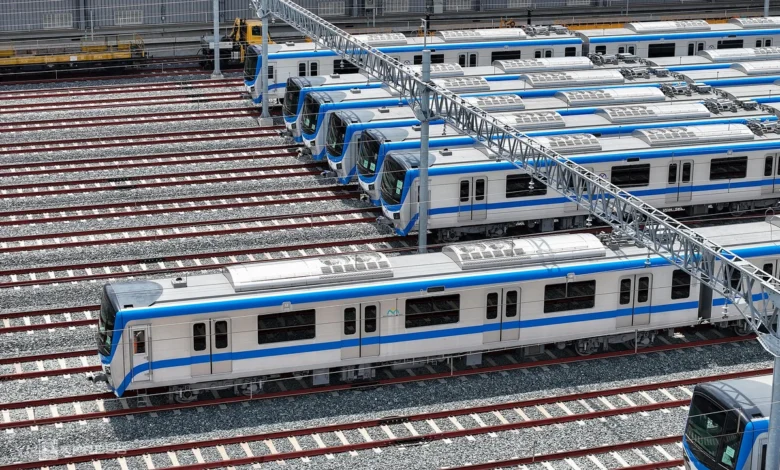
The People’s Committee of Ho Chi Minh City has officially set ambitious financial performance targets for the operator of the city’s inaugural metro line, Metro Line 1 (Bến Thành – Suối Tiên). The Hanoi Urban Railway Company (HURC), a 100% state-owned enterprise responsible for the operational management of the line, has been tasked with achieving a cumulative profit of 133 billion VND over the 2026-2030 period. This mandate translates to an average annual profit target of approximately 27 billion VND, signaling a strategic shift toward operational efficiency and fiscal sustainability for the city’s burgeoning public transit network.
Strategic Financial Directives for HURC
The directive issued by the municipal government emphasizes the necessity for HURC to optimize its business model, ensuring the preservation and appreciation of state-owned assets. Under the new five-year plan, the company is expected to maintain a steady revenue growth rate of 10% per annum.
According to the projections, HURC must reach a total revenue of nearly 3.76 trillion VND by the end of 2030. The trajectory for this growth is structured to be progressive, starting with a base in the early years and scaling up to an annual revenue target of 900 billion VND by the final year of the current phase. This financial roadmap is designed to transition the operator from a phase of early-stage integration to a more mature, revenue-generating entity that contributes meaningfully to the municipal budget.
Revenue Streams and Operational Framework
The revenue model for HURC is primarily derived from two distinct sources. The most significant portion comes from service subsidies, calculated based on the total distance operated and a set price per kilometer—a figure established through formal agreements between the company and the Ho Chi Minh City Public Transport Management Center. The remaining portion of the revenue is generated through direct ticket sales to commuters, which covers essential operational costs and the maintenance of critical infrastructure.
Beyond the profit margins, the city has set specific goals for pre-tax earnings. The target for pre-tax profit is slated to grow from approximately 22 billion VND in the current fiscal year to nearly 32 billion VND by 2030, culminating in the aforementioned total of 133 billion VND over the five-year cycle.
Background and Development Chronology of Metro Line 1
The Bến Thành – Suối Tiên metro line represents the cornerstone of Ho Chi Minh City’s ambitious urban rail master plan. Stretching nearly 20 kilometers, the line serves as a vital artery connecting the historic central business district of the city to the rapidly developing eastern gateway.
The project has been a landmark of urban development, marked by a lengthy and complex construction history. With a total investment exceeding 43.7 trillion VND, the project spanned 12 years of construction and testing. The line features 14 stations, including three underground stations in the heart of the city, designed to alleviate the chronic traffic congestion that has long hampered the economic productivity of Vietnam’s largest metropolis.
Timeline of Development:
- 2012: Official commencement of major construction activities.
- 2019-2022: Completion of key civil works and track-laying processes.
- 2023: Rigorous safety testing and integration of signaling and rolling stock systems.
- 2024: Operational readiness and the transition to commercial management by HURC.
- 2026-2030: Strategic growth phase aimed at maximizing passenger volume and fiscal efficiency.
Broader Urban Impacts and Transit Objectives
The municipal government’s push for financial efficiency is not merely an accounting exercise; it is part of a broader policy to reshape the daily commute of millions of residents. By setting rigorous targets for passenger volume and train frequency, the city aims to foster a culture of public transport adoption.
The ultimate goal is to integrate the metro system into the fabric of the city’s public transportation network. As the network expands, the administration envisions the metro becoming the primary mode of transit for a significant segment of the population. Official projections indicate that the metro system should account for 20-30% of total travel demand by 2030. This target is expected to climb to 35-50% by 2035 and eventually reach 50-60% by 2045, significantly reducing the city’s reliance on private motorcycles and automobiles.
Analysis: Implications for Urban Rail Management
The decision to set specific profit targets for HURC reflects a modern approach to managing state-owned public utilities. In many global cities, transit operators struggle with the tension between providing affordable public service and maintaining financial solvency. By mandating a 10% annual revenue growth and a specific pre-tax profit margin, the Ho Chi Minh City government is signaling that while public transit is a public good, it must be managed with the discipline of a commercial enterprise to minimize the fiscal burden on the state.
However, analysts note that the success of this plan will depend on several external factors, including:
- Feeder Network Integration: The ability of the city to provide efficient bus and shuttle services that connect residential areas to the metro stations.
- Transit-Oriented Development (TOD): The growth of commercial and residential hubs around the metro stations, which will naturally increase foot traffic and ticket demand.
- Pricing Policy: Balancing ticket prices to ensure they remain accessible to the general public while still meeting revenue targets.
Official Stance and Future Outlook
The municipal government has expressed high expectations for the coming years, urging HURC to not only meet but exceed these performance indicators. Increased passenger traffic and efficient scheduling are viewed as the most critical levers for achieving these financial milestones.
In a recent statement, city officials underscored that the performance of the Bến Thành – Suối Tiên line will serve as the blueprint for future lines, including Metro Line 2 and other proposed orbital lines. By establishing a professional, data-driven management culture at HURC, the city aims to build public trust in the reliability and safety of the metro system.
As the city continues to navigate the challenges of rapid urbanization and climate-conscious infrastructure development, the success of this first metro line is of paramount importance. The financial targets set for 2026-2030 provide a clear roadmap for the operator, ensuring that the infrastructure investment of over 43 trillion VND delivers long-term value to the citizens of Ho Chi Minh City.
In conclusion, the directive to achieve a 27 billion VND average annual profit is a clear indicator that the city is committed to both the operational success and financial accountability of its urban railway system. With a focused strategy on increasing ridership and optimizing operational costs, HURC is positioned to play a central role in the future of mobility in Vietnam’s most dynamic economic hub. The coming five years will be a definitive test of the city’s ability to transition its transportation sector into a modern, efficient, and sustainable model for the 21st century.