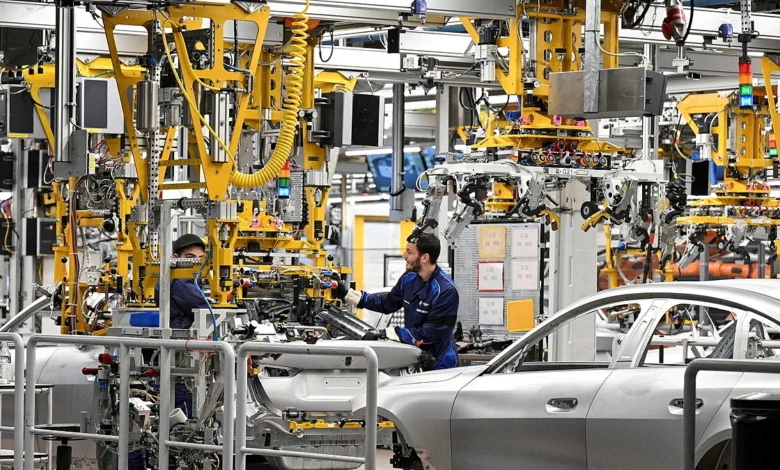
The bedrock of the German economy—a powerhouse built on sophisticated manufacturing and high-value exports—is currently undergoing a painful transformation. Once the undisputed leader in sectors ranging from heavy machinery and automotive engineering to advanced construction equipment, Germany is facing a new and formidable reality: the rise of China as a direct, high-quality, and lower-cost competitor. This shift is forcing a paradigm change for German corporations, which must now balance their historical reliance on the Chinese market with the harsh reality of being outcompeted by the very companies they once viewed as junior partners.
The Erosion of Competitive Advantage
For decades, German firms enjoyed a comfortable "technological moat," banking on the prestige of "Made in Germany" to command premium prices. However, the current economic malaise gripping the nation—marked by stagnant growth of only 0.2% in 2023—has brought the "China Shock" into sharp relief. Economists now point to this dynamic as a primary culprit for the country’s industrial slowdown following the global pandemic.
Historically, German firms viewed China as a goldmine, a massive market for high-end exports that provided the capital to sustain operations back home. In recent years, however, the tide has turned. As the Chinese domestic economy slows, Beijing has pivoted toward an export-heavy strategy, flooding international markets with high-quality goods that mirror German offerings but at a fraction of the cost. From electric vehicles (EVs) and wind turbines to medical diagnostic tools, Chinese manufacturers are no longer just catching up; they are setting the pace.
Chronology of the Industrial Shift
The transformation of the German-Chinese economic relationship can be traced through several critical phases:
- 2000–2010 (The Golden Era): German industrial giants expanded rapidly into China, treating it as a captive market for high-tech machinery and luxury automobiles. German exports to China surged, fueling domestic employment and corporate profits.
- 2015–2020 (The Rise of Local Competitors): Beijing implemented the "Made in China 2025" initiative, heavily subsidizing high-tech sectors. Chinese domestic companies began to master complex manufacturing processes, reducing their dependency on German imports.
- 2021–2023 (The Post-Pandemic Divergence): As global supply chains faced disruptions, Chinese manufacturers aggressively scaled up production capacity. Simultaneously, the German economy struggled with high energy costs, inflation, and a labor shortage, further eroding its competitiveness.
- 2024 (The Current Crisis): Major German industrial players, including Volkswagen, BMW, and Bosch, have been forced to announce significant workforce reductions and restructuring plans. The realization has dawned that the Chinese market is no longer a guaranteed source of growth, but a source of intense price pressure.
Supporting Data and Industrial Impact
The fiscal reality for German firms is increasingly dire. Volkswagen, a pillar of the German industrial identity, has faced immense pressure as its market share in China—once its most profitable region—declines. Arno Antlitz, the Chief Financial Officer of Volkswagen, noted earlier this year that the company is grappling with a 20% contraction in the Chinese market coupled with an influx of aggressive, low-cost competition, which is significantly compressing profit margins.
The impact is not limited to the automotive sector. Germany’s renewable energy industry provides a cautionary tale. In the early 2000s, Germany was the global pioneer in solar energy. However, the subsequent influx of cheaper Chinese solar panels decimated the German manufacturing base. Today, the vast majority of solar modules installed in Germany are imported from China, a trend that policymakers are now desperate to avoid repeating in other strategic sectors like battery technology and heavy rail.
Corporate Strategies: If You Can’t Beat Them, Join Them
Recognizing the shifting landscape, many German firms are moving away from purely defensive stances toward strategic partnerships. The mantra for many is no longer "protect the borders," but rather "cooperate to survive."
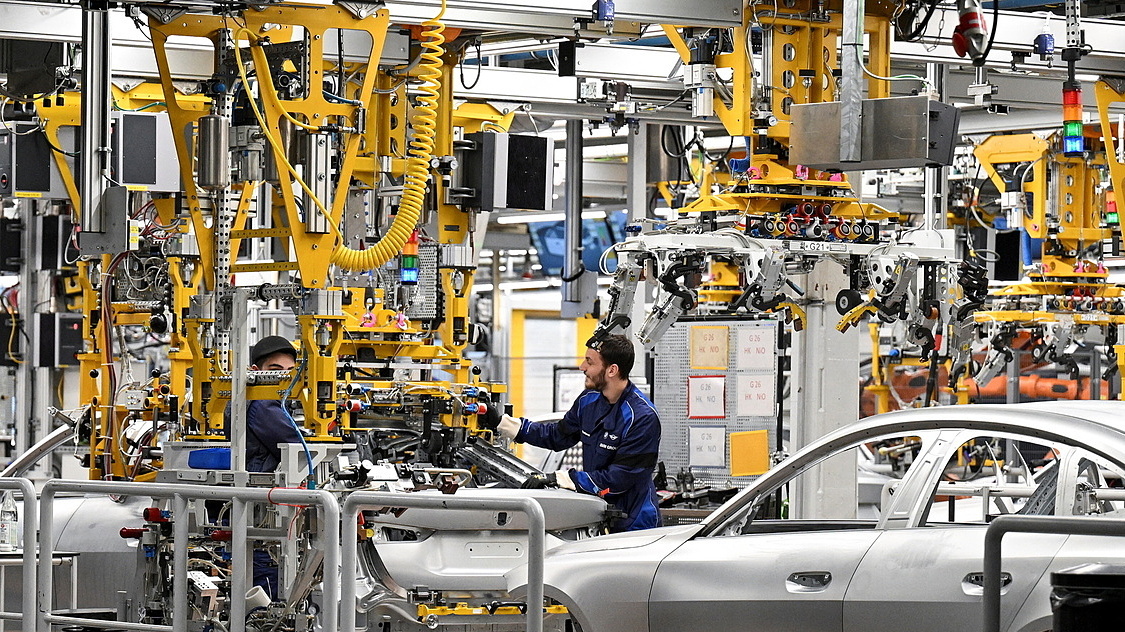
Jungheinrich, a world leader in warehouse logistics and forklift manufacturing, provides a prime example of this pivot. The company recently entered a joint venture with China’s EP Equipment to produce "AntOn," a mass-market forklift. By combining EP Equipment’s cost-efficient, large-scale production capabilities in China with Jungheinrich’s global distribution network and engineering reputation, the firms have created a competitive product that meets the needs of customers who do not require the high-end, 24/7 durability of premium German-made units.
Volkswagen is pursuing a similarly pragmatic strategy dubbed "In China, for China." By establishing a development center in Hefei, the automaker is designing vehicle models specifically tailored to Chinese consumer preferences, rather than trying to force-fit European designs into a market that has moved beyond them.
Government Policy and the Broader Implications
The German government has responded with a massive 500 billion euro (579 billion USD) investment package aimed at revitalizing infrastructure, including roads, bridges, and rail networks. This, combined with tax cuts for low- and middle-income earners and a push to reduce administrative red tape, is designed to stimulate domestic growth.
However, many analysts, including economist Brad Setser, argue that these domestic fixes are insufficient to address the structural competitive disadvantage. The root cause is a global trade landscape that is increasingly skewed by state-led industrial policies. In China, key industries receive state support through subsidized credit, cheap raw materials, and land grants, alongside lower labor costs.
Looking Ahead: The Need for a New Trade Architecture
The consensus among trade experts is that Germany cannot solve this challenge in isolation. The European Commission (EC) has taken a more assertive stance, applying targeted tariffs on specific Chinese imports, such as electric vehicles, to protect the European industrial base. Yet, this has sparked concerns about a potential trade war that could hurt German firms with deep ties to the Chinese supply chain.
"Europe needs a more coherent and robust trade policy if it wants to safeguard its internal market from the ripple effects of China’s industrial policy," Setser recently told the Associated Press.
The dilemma for Germany is profound: how to maintain its status as an industrial powerhouse while the global economic order shifts toward a model defined by state-backed competition and cost-optimization. The survival of the "Mittelstand"—the backbone of small-to-medium-sized German enterprises—may depend on the country’s ability to innovate, partner strategically, and navigate the increasingly protectionist winds of global trade. Whether Germany can pivot effectively or whether it will see its industrial hegemony continue to erode remains the defining economic question for the next decade. As the country moves forward, the focus must shift from merely lamenting the loss of historical dominance to actively fostering an environment where agility, technological edge, and strategic cooperation with global partners become the new foundations of German prosperity.