NASA Invites Internet Users to "Inspect" Space Photos and Help Train Artificial Intelligence to Spot Anomalies

Space enthusiasts and everyday internet users now have a unique opportunity to contribute directly to cutting-edge astrophysical research without needing a background in computer programming or professional astronomy. Launched in September 2026, a groundbreaking citizen science initiative allows anyone with a smartphone, tablet, or personal computer to act as a digital validator for artificial intelligence models, helping scientists sift through vast archives of deep-space imagery and correct machine-learning errors.
This collaborative endeavor, titled the "Artifact InSPECtor" project, is hosted on the popular citizen science platform Zooniverse. Participants are tasked with analyzing astronomical data captured by space-borne telescopes to verify whether specific anomalies flagged by automated algorithms are genuine celestial phenomena or mere technical artifacts. By reviewing these flagged regions, public volunteers are playing an essential role in refining machine-learning pipelines, ensuring that future astronomical discoveries are built upon clean, highly reliable data.
The democratization of space science represents a significant shift in how cosmic research is conducted. As modern observatories generate unprecedented volumes of high-resolution imagery, traditional methods of manual data curation by professional researchers have become a major bottleneck. By harnessing the collective power of the global internet community, space agencies are accelerating data processing while simultaneously fostering a deeper public connection with the cosmos.
The Role of the Euclid Space Telescope and Future Observatories
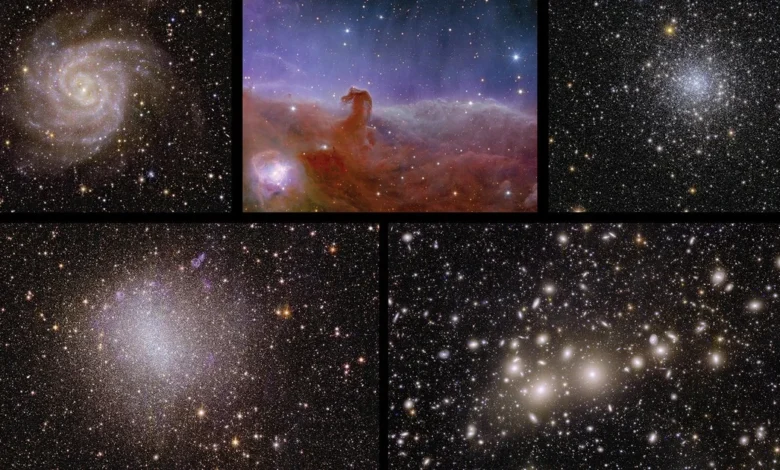
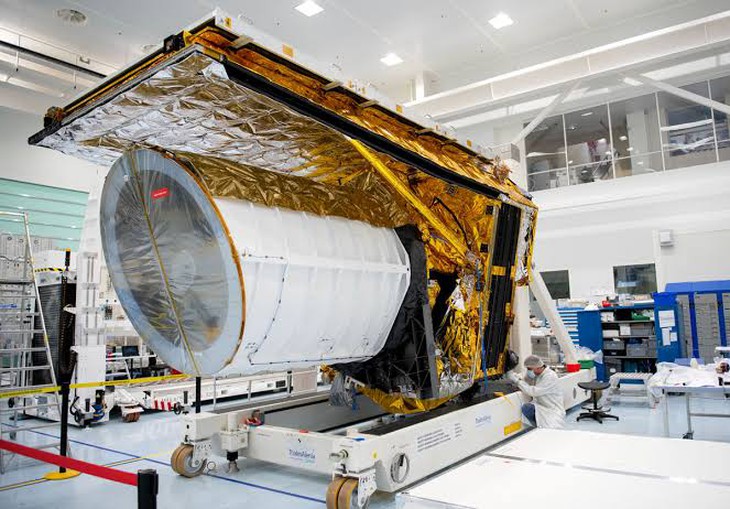
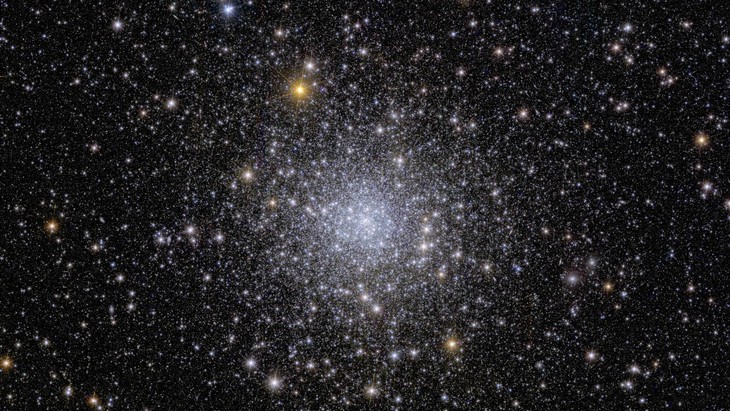
The primary data source for the Artifact InSPECtor project currently originates from the Euclid space telescope—a flagship mission spearheaded by the European Space Agency (ESA) with substantial technological and scientific contributions from NASA. Launched to explore the mysteries of the dark universe, Euclid is uniquely equipped to map the large-scale structure of the cosmos with extraordinary precision, capturing wide-field images of billions of galaxies across vast expanses of space.
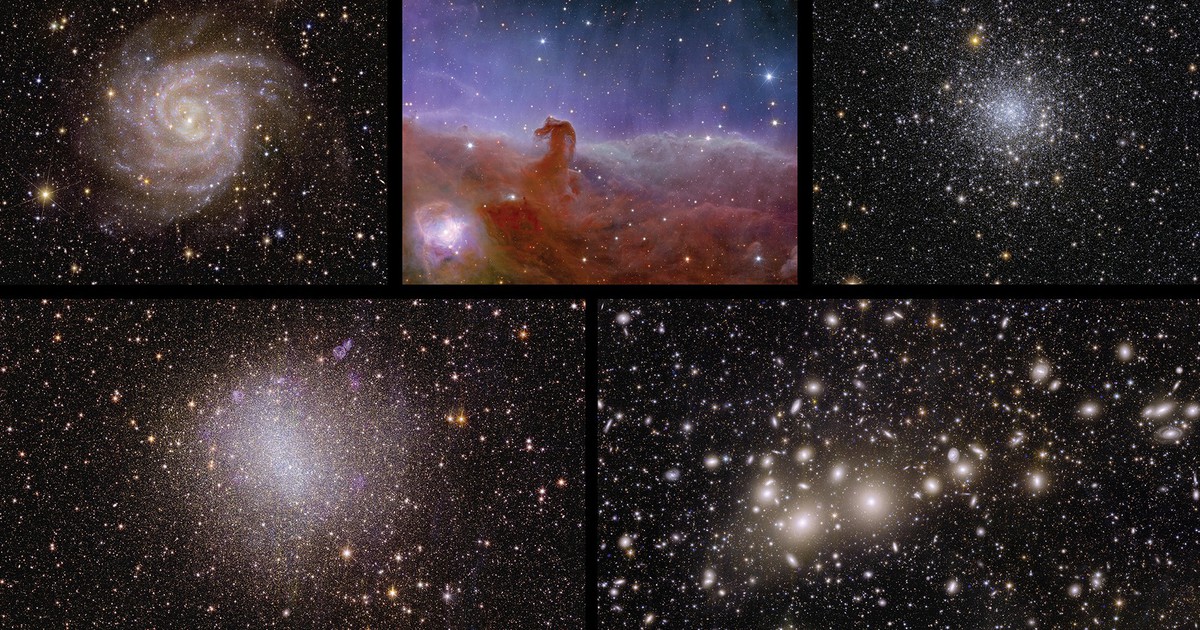
However, the immense volume of data returned by Euclid presents a monumental challenge for data analysts. To streamline the identification of distant galaxies, nebulae, and stellar clusters, mission operators rely heavily on sophisticated artificial intelligence and machine-learning algorithms. Yet, even the most advanced AI systems are prone to misinterpretations when confronted with the complex optical realities of deep-space observation.
Looking ahead, the project is scheduled to expand its data intake early in 2027 by incorporating observations from NASA’s upcoming Nancy Grace Roman Space Telescope. Designed to study dark energy, exoplanets, and infrared astrophysics, the Roman Space Telescope will generate datasets that dwarf those of its predecessors. Preparing AI frameworks to handle the sheer scale of the Roman mission makes the crowd-sourced validation efforts currently underway on Zooniverse an indispensable step for contemporary astronomy.
Understanding Artifacts: Why Machines Get Confused
To the untrained eye, deep-space photographs often appear as breathtaking tapestries of brilliant stars and swirling galaxies. However, beneath the aesthetic appeal lies a complex array of instrumental artifacts that can easily trick both human observers and automated algorithms.
When a telescope captures light from distant celestial bodies, various mechanical and optical phenomena inevitably leave unintended traces on the sensor. Stray reflections bouncing off the internal structure of the telescope, cosmic ray strikes slamming directly into digital detectors, and electrical interference within the readout electronics can all produce faint streaks, smudges, or anomalous bright spots.
These unintended marks frequently mimic the appearance of real astronomical objects, such as distant supernovae, transient phenomena, or faint dwarf galaxies. For a human looking at a smartphone screen, these artifacts can bear a striking resemblance to a stray hair or a smudge on the camera lens. In scientific data, they represent noise that must be rigorously identified and filtered out to prevent flawed scientific conclusions.
While scientists have developed specialized AI tools designed to detect and remove these blemishes automatically, early-stage software often struggles with edge cases. Automated classifiers frequently generate false positives, flagging genuine cosmic structures as artifacts or misidentifying instrumental noise as groundbreaking discoveries. This is precisely where human intelligence excels. By enlisting internet users to review ambiguous cases, researchers gather invaluable training data that teaches algorithms how to distinguish subtle visual nuances with greater accuracy.
Spectroscopy and the Quest to Understand Cosmic Expansion
The datasets featured in the Zooniverse project differ significantly from the visually striking, multi-color composite images typically featured in mainstream media headlines. Instead, the initiative focuses heavily on spectroscopic data—a specialized format that records starlight after it has been separated into its individual component wavelengths.
Spectroscopy serves as an indispensable tool for astrophysicists. By analyzing the unique spectral fingerprints of light emitted by distant stars and galaxies, researchers can determine the chemical composition, temperature, motion, and precise distance of celestial objects. Consequently, filtering out instrumental artifacts from spectroscopic data is not merely a matter of producing a cleaner picture; it is critical for preserving the integrity of the underlying physical information encoded within the light.
This meticulous data curation ultimately serves the broader, ambitious goals of missions like Euclid and the Roman Space Telescope: unraveling the fundamental mysteries of cosmic acceleration, dark matter, and dark energy. Dark energy—the enigmatic force driving the accelerated expansion of the universe—remains one of the most profound unsolved puzzles in modern physics. Because its effects are extraordinarily subtle, measuring them requires cosmological datasets of unprecedented precision, free from systematic errors or algorithmic bias.
How to Participate: A Simple Process for Everyone
Participating in the Artifact InSPECtor project requires no specialized education, expensive equipment, or prior experience in astronomy. The platform is designed to be fully accessible to the general public, welcoming contributors of all ages and backgrounds.
To get started, volunteers visit the Zooniverse platform and navigate to the Artifact InSPECtor project page. A comprehensive interactive tutorial, lasting approximately 10 to 15 minutes, guides users through the basics of identifying instrumental artifacts versus genuine astronomical targets. Once familiarized with the visual markers, participants can immediately begin reviewing real space telescope imagery.
The interface highlights specific regions of interest within the data using color-coded bounding boxes—typically outlined in green or blue—where automated software has detected a potential anomaly. Users simply observe the highlighted area, evaluate whether the machine-learning algorithm made a correct or incorrect identification, and submit their confirmation with the click of a button.
There are no rigid quotas or mandatory time commitments; volunteers are entirely free to contribute as much or as little time as they prefer. Furthermore, for those encountering particularly ambiguous or baffling images, an active community forum allows citizen scientists to discuss complex cases directly with professional researchers and fellow volunteers.
The Broader Implications of Citizen Science in Modern Research
The integration of citizen science into flagship space missions underscores a broader transformation within the scientific community. As the scale of scientific data expands exponentially across fields ranging from genomics to climate science and astrophysics, traditional research teams can no longer process information efficiently on their own.
Crowdsourcing data analysis not only solves logistical challenges but also democratizes the pursuit of knowledge. It transforms passive consumers of science media into active participants in the scientific method. Projects like Artifact InSPECtor demonstrate that the human brain remains an un-replaced instrument for pattern recognition and contextual judgment, capable of outperforming machine intelligence in complex, ambiguous environments.
As millions of data points continue to stream back from observatories stationed millions of kilometers away from Earth, the partnership between human intuition and artificial intelligence will remain a cornerstone of space exploration. For anyone with an internet connection and a few spare minutes, the universe is now open for inspection, offering a direct hand in shaping humanity’s understanding of the cosmos.