PNJ announces strategic adjustments to repurchase payment policies for jewelry products to optimize financial management and operational efficiency

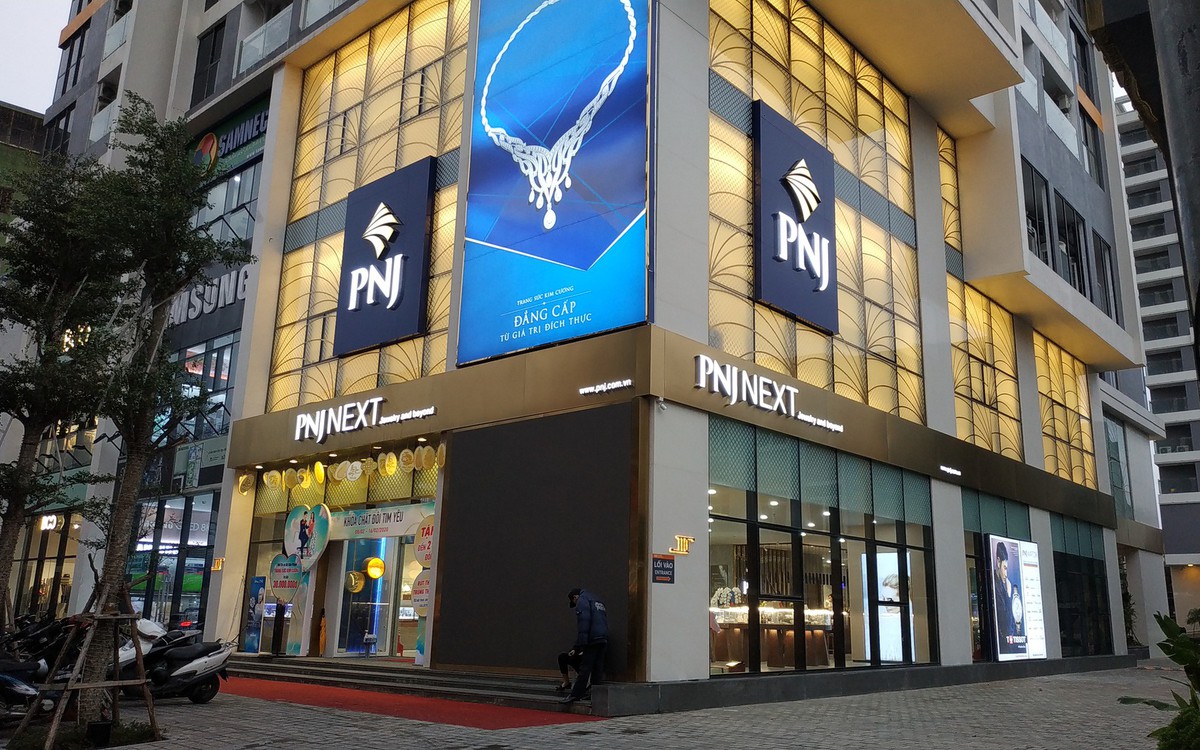
On September 15, Phu Nhuan Jewelry Joint Stock Company (PNJ), Vietnam’s leading jewelry retailer, officially announced a resolution from its Board of Directors regarding the adjustment of payment timelines for product repurchases. This strategic shift is designed to align the company’s liquidity management with its broader financial objectives, marking a significant evolution in how the company handles customer-facing buyback operations. While the specific technical adjustments remain subject to product-line categorization, the policy change signals a move toward a more dynamic, flexible, and sustainable financial framework for the jewelry giant.
Contextualizing the Financial Adjustment
The decision to revise the repurchase structure follows a period of rigorous internal review at PNJ. Historically, PNJ has maintained a robust buyback program that serves as a cornerstone of consumer trust, allowing customers to return products under clearly defined terms. However, as global gold price volatility persists and domestic market conditions fluctuate, the company has sought to recalibrate its cash flow cycles.
Financial analysts have noted that by moderating the pace of cash outflows associated with repurchases, PNJ can maintain higher levels of working capital for inventory acquisition and expansion initiatives. The adjustment, which deviates from the previously established 120-day standard payment window, is a proactive measure to ensure that the company’s financial obligations remain in perfect equilibrium with its capital allocation strategies.
Chronology of the Repurchase Policy
To understand the current shift, one must look at the framework introduced in mid-July of this year. At that time, PNJ formalized a dual-track system for customers seeking to sell back their jewelry. Under that system, customers were presented with two primary paths:
- The Exchange Path: Trading the value of the repurchased item toward the acquisition of new inventory within the PNJ ecosystem.
- The Cash Liquidity Path: Opting to receive the buyback value in cash, spread across a 120-day installment schedule.
This structure was designed to encourage reinvestment within the company’s network while providing a structured exit for those requiring cash. The current adjustment announced on September 15 does not scrap this system but rather optimizes the timing and mechanisms by which these payments are executed. By tailoring the duration of these payments to specific product lines, PNJ is applying a more granular risk-management approach.
Breakdown of the Payment Mechanism
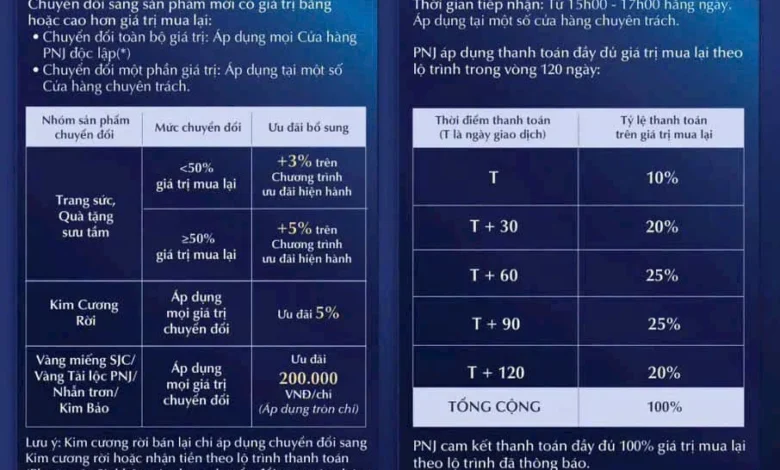
For customers opting for the cash liquidity route, the process is facilitated through specialized service centers. Under the established protocols, transactions are typically processed between 3:00 PM and 5:00 PM at designated locations. The payment structure is currently distributed across five distinct tranches, labeled relative to the transaction date (T):
- T (Transaction Day): The customer receives an immediate 10% of the total repurchase value.
- T+30: An additional 20% is disbursed.
- T+60: A further 25% is released.
- T+90: Another 25% is paid out.
- T+120: The final 20% balance is settled, concluding the company’s obligation.
This schedule effectively ensures that within 60 days, the customer has received 55% of the total value, and by 90 days, 80% of the obligation is fulfilled. The new adjustments are expected to compress these timelines for specific categories, potentially offering faster liquidity for customers while allowing the company to retain more operational agility.
Incentives and Strategic Trade-offs
PNJ has long utilized its buyback policy as a competitive advantage. To continue incentivizing loyalty, the company provides substantial "added value" for customers who choose the exchange path rather than the cash path.
For jewelry and collectibles, customers who exchange at least 50% of the repurchase value are eligible for an additional 3% bonus over current market rates. If the exchange value exceeds 50%, this bonus increases to 5%. For loose diamonds, a flat 5% incentive is applied to all exchange values, though with a strict caveat: loose diamonds can only be exchanged for other loose diamonds or processed via the cash-liquidity track. They are ineligible for exchange into other jewelry categories, a measure implemented to ensure compliance with governmental regulatory mandates regarding precious metal trading (notably Decree 232/2025/ND-CP).
For customers opting to transition into "safe haven" assets—such as SJC gold bars, PNJ gold rings, or specific gold bullion products—the company provides a fixed incentive of 200,000 VND per tael, demonstrating PNJ’s commitment to facilitating gold-to-gold transitions for its most conservative investor base.
Market Implications and Financial Analysis
The decision by PNJ to tighten and refine its payment schedule reflects broader trends in the Vietnamese retail sector, where companies are increasingly moving toward "just-in-time" financial operations. The jewelry market, characterized by high-value inventory and significant fluctuations in raw material costs, requires a delicate balance between customer satisfaction and balance sheet health.
By shortening the duration of cash outflows, PNJ is essentially reducing its exposure to short-term liquidity risks. For the retail investor, this implies a more efficient, albeit structured, process for liquidating gold assets. It also underscores PNJ’s dominant market position; by standardizing these complex payment flows, the company forces a level of discipline on the secondary market that smaller competitors may find difficult to emulate.
From a macroeconomic perspective, PNJ’s move aligns with the State Bank of Vietnam’s ongoing efforts to stabilize the domestic gold market. By formalizing and potentially accelerating the repurchase cycle, PNJ helps prevent the buildup of "shadow" liquidity in the informal gold trade. The ability for customers to combine cash and exchange options—where a portion of the value is used for new purchases and the remainder is taken as cash—demonstrates the company’s focus on retaining its customer base even when those customers seek to liquidate their holdings.
Looking Ahead
As PNJ moves forward with these adjustments, the market will be watching to see how quickly the company can process these "shortened" timelines. The lack of detailed public disclosure regarding the exact duration of these new, compressed windows suggests that PNJ is maintaining a level of flexibility, allowing management to adjust based on current gold spot prices and retail demand.
For stakeholders and investors, the move is viewed as a positive signal of management’s focus on operational discipline. While some customers may prefer the previous, longer-term liquidity schedule, the majority of PNJ’s long-term clientele appear to value the security of a government-compliant, institutionally-backed buyback process over the immediacy of the informal sector.
In conclusion, the policy adjustment by PNJ is not merely a change in accounting; it is a strategic maneuver to solidify the company’s financial resilience in a volatile economic landscape. By balancing the needs of the consumer with the necessity of capital efficiency, PNJ continues to solidify its reputation as the benchmark for professional jewelry retail in Southeast Asia. As the company refines its internal processes, the focus remains on maintaining the trust that has made it a household name, ensuring that even as payment cycles evolve, the value of the PNJ brand remains untarnished.