Developing Data Infrastructure to Serve Digital Transformation and Drive Digital Economic Growth


The Vietnam – Asia DX Summit 2024, held on May 28, marked a pivotal moment in the nation’s strategic trajectory toward becoming a regional leader in the digital economy. During the event, Minister of Information and Communications Nguyen Manh Hung emphasized a fundamental shift in national development philosophy: data has officially replaced traditional raw materials as the primary engine for progress. In a historic reversal of economic logic, human ingenuity is now being applied to create new resources through data, rather than merely depleting the planet’s finite natural reserves.
The Shift to a Data-Centric Economic Model
For decades, industrialization was synonymous with the extraction of physical commodities. Minister Hung highlighted that the modern digital age necessitates a departure from this "extractive" mindset. Today, digital development is generative; it produces value, insight, and efficiency that compound over time. The "Vietnam – Asia DX Summit" serves as the primary forum for this discourse, bringing together government policymakers, technology visionaries, and enterprise leaders to chart a course for the next decade of digital evolution.
The government’s commitment to this transition is codified in the "National Data Strategy to 2030," which was approved by the Prime Minister following extensive consultation by the Ministry of Information and Communications (MIC). This strategy is not merely a technical guideline but a cornerstone of national security and economic sovereignty. It mandates the construction of a robust, secure, and interoperable data infrastructure, which will serve as the foundation for all future digital services, AI development, and public sector reforms.

A Chronology of Strategic Implementation
The path to a mature data economy in Vietnam has been marked by several key legislative and administrative milestones over the past five years. Following the initial rollout of the e-Government framework in the early 2010s, the focus shifted toward "Digital Transformation" (DX) in 2020.
In February 2024, the government formally issued the National Data Strategy, setting specific targets for the integration of administrative databases and the liberalization of non-sensitive data for commercial use. This was followed by the May 2024 summit, where technical leaders and policymakers began the granular work of defining the "rules of the road" for data governance. The discussions held on May 29, specifically those regarding the "Management and Efficient Operation of Enterprises Based on Data," focused on the practical application of these high-level policies within the private sector.
Understanding the Pillars of National Data Strategy
Tran Minh Tan, Deputy Director of the National Institute of Information and Communications Strategy (under the MIC), outlined six fundamental pillars that define the national approach to data management. During his keynote address at the summit, he underscored that the government intends to act as a "conductor" rather than a sole operator.
The core objectives include:

- Public Data Development: Aggregating and cleaning state-held datasets to improve public service delivery.
- Data Marketplace Creation: Establishing the legal and technical frameworks to allow for the secure sharing of data between sectors, fostering innovation.
- Economic Growth Integration: Leveraging big data to identify market inefficiencies and drive productivity in key sectors like manufacturing, agriculture, and logistics.
- Sovereignty and Security: Ensuring that data flows across borders are monitored and that critical infrastructure remains protected from cyber threats.
- Universal Accessibility: Promoting data literacy among the general population to ensure that the benefits of the digital economy are distributed equitably.
- Infrastructure Standardization: Defining common protocols for data storage and processing to ensure that different agencies and private firms can communicate seamlessly.
"Data infrastructure—including big data, large-scale data, structured, and unstructured datasets—will form the bedrock of our digital transformation," Tan stated. "Our overarching goal is for the state to provide the leadership and direction, while enabling the entire population and the business community to participate in and benefit from the value created by this data."
Implications for the Private Sector: The Case for SMEs
While the national strategy is often discussed in the context of government bureaucracy, the ultimate success of Vietnam’s digital transformation rests on the agility of its small and medium-sized enterprises (SMEs). Nguyen Ngoc Le, Director of Business at MISA—a leading Vietnamese software firm—argued that the most significant barrier to digital adoption is not cost, but a lack of structural maturity.
"Many businesses wait until they have reached a massive scale before they attempt to implement data-driven management," Le observed. "This is a strategic error. By the time a company is large, the cost of retrofitting its legacy data systems is often prohibitive. Enterprises should integrate data management and AI-driven analytics from the very moment of their inception."
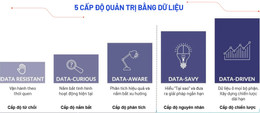
MISA’s analysis of the local business landscape reveals that a significant portion of Vietnamese SMEs are currently stuck at what is known as "Level 2" of the digital maturity model—characterized by rudimentary data entry and manual storage, with little to no integration between departments. This leads to "data silos," where marketing, sales, and accounting departments operate on disparate platforms, resulting in fragmented reporting and missed strategic opportunities.

Overcoming Barriers to Digital Adoption
During the technical sessions, industry experts identified three primary obstacles that prevent SMEs from achieving full data maturity:
- Application Clutter: The use of disconnected, "quick-fix" software solutions that do not communicate with one another.
- Data Incompatibility: Legacy systems that cannot export data in formats compatible with modern ERP (Enterprise Resource Planning) tools.
- High Initial Costs: The perception that comprehensive digital transformation is only for large corporations, leading smaller firms to avoid investing in scalable architecture.
To address these challenges, platforms like MISA AMIS have been developed to act as a unified ecosystem. By integrating accounting, human resources, and customer relationship management (CRM) on a single cloud-based interface, these tools allow for the creation of real-time, visual dashboards. This gives management a "single source of truth," enabling faster, data-backed decision-making.
Furthermore, the introduction of AI-integrated assistants—such as MISA AVA—is beginning to automate routine tasks, such as generating financial summaries and predicting inventory needs. This represents a significant shift in how smaller firms compete in an increasingly crowded market, allowing them to punch above their weight class by maximizing the utility of their existing data.
Broader Economic Impacts
The implications of these developments extend far beyond the corporate boardroom. For the Vietnamese economy, the successful execution of the National Data Strategy is expected to yield several long-term benefits:
- Improved GDP Efficiency: By reducing the "information asymmetry" between the public sector and private enterprises, the government can better allocate resources, reduce waste in public procurement, and streamline tax compliance.
- Job Creation: As the data economy matures, there is an exponential need for data scientists, cloud architects, and cybersecurity specialists. The government’s focus on data education is designed to ensure that the workforce of 2030 is equipped for these roles.
- Regional Competitiveness: By positioning Vietnam as a secure, transparent, and data-friendly jurisdiction, the country aims to attract high-tech foreign direct investment (FDI) from multinational corporations looking to diversify their supply chains in Southeast Asia.
The Road Ahead: Challenges and Monitoring
While the vision is ambitious, implementation will remain a complex process. The Ministry of Information and Communications has emphasized that the next phase involves the mandatory publication of "Data Lists" by all ministries, departments, and provincial governments. This transparency will be the ultimate test of the strategy’s success. Without a clear, standardized directory of what data is available and how it can be accessed, the "Data Marketplace" will remain a theoretical construct rather than a functional economic engine.
Furthermore, the government must balance the push for data liquidity with strict privacy regulations. As Vietnam moves toward a more digitized society, the risk of data breaches and the misuse of personal information grows. The upcoming legislative sessions are expected to address these concerns by strengthening the legal framework surrounding data protection, ensuring that the drive for economic growth does not come at the expense of individual security.
In conclusion, the Vietnam – Asia DX Summit 2024 has served as a necessary catalyst for a unified national dialogue. By treating data as a vital national resource, Vietnam is signaling its intent to bypass the traditional stages of industrial growth, aiming instead for a leapfrog into a high-value, digital-first economy. The success of this vision now depends on the collaborative efforts of the public sector to provide the framework, and the private sector to innovate within those boundaries, ensuring that every byte of information contributes to the broader goal of national prosperity.