Fatal Intersection Collision in Elazığ Sparks Renewed Debate on Urban Traffic Safety and Speed Control Measures

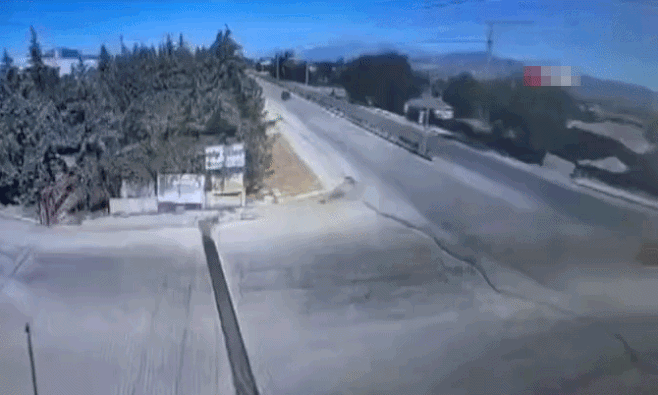
A devastating traffic accident at an urban intersection in the eastern Turkish city of Elazığ has left two women dead, two others injured, and ignited a fierce public debate regarding intersection design, driver responsibility, and municipal traffic safety regulations. The fatal collision, which occurred on September 16, involved a high-speed Mercedes sedan and a Fiat hatchback carrying professionals traveling for work. Captured entirely by closed-circuit surveillance cameras, the catastrophic impact has drawn intense scrutiny from local authorities, traffic safety experts, and the broader community, highlighting the persistent dangers of urban intersections and the catastrophic consequences of excessive vehicular speed.
Chronology of Events on September 16
The sequence of events leading to the tragedy unfolded in a matter of seconds at a controlled multi-directional junction located within a commercial and industrial sector of Elazığ. According to preliminary findings derived from police reports and surveillance footage reviewed by local media agency IHA, the incident began at approximately mid-day under clear weather conditions, ensuring optimal visibility for all motorists using the roadway.
The victims, two women aged 36 and 51, were occupants of a Fiat hatchback traversing the intersection at a moderate speed. Both women were residents of another Turkish province who had traveled to Elazığ on professional assignment, working within a nearby industrial zone to oversee regional operations. As their vehicle lawfully entered the intersection, a Mercedes sedan traveling along the intersecting roadway approached at a remarkably high velocity.
Surveillance footage shows that the driver of the Mercedes failed to decelerate or execute any evasive steering maneuvers prior to impact. The sedan struck the passenger side of the Fiat at a right angle with tremendous force. The violence of the collision was such that the lighter vehicle was instantly flipped onto its side, spun violently off the roadway, and suffered catastrophic structural deformation. Emergency services, including municipal fire rescue units, medical personnel, and local traffic police, were dispatched to the scene immediately following automated emergency alerts and witness calls. Despite rapid intervention, the two female occupants of the Fiat were pronounced dead at the scene due to severe blunt-force trauma. Two other individuals involved in the crash sustained varying degrees of injuries and were transported to regional medical facilities for urgent treatment.
Detailed Incident Analysis and Video Evidence
The release of the surveillance video by news agency IHA has provided investigators with crucial empirical evidence while simultaneously fueling intense public discourse across social media platforms and local forums. The footage reveals several critical elements of the crash dynamics that forensic accident reconstruction teams are currently examining.
Forensic analysis of the video indicates that the Mercedes sedan entered the intersection without any discernible reduction in speed. Traffic safety specialists who reviewed the recording noted the complete absence of skid marks prior to the point of impact, suggesting that the driver may have been severely distracted, fatigued, or operating the vehicle significantly above the posted speed limit. Conversely, the footage also displays the steady, unhurried progression of the Fiat as it entered the intersection, unaware of the rapidly approaching hazard from its peripheral view.
This juxtaposition of high-velocity negligence and routine urban transit has divided public opinion. A significant segment of local residents and online commentators argues that excessive speed by the Mercedes driver was the primary catalyst for the disaster. These observers contend that urban thoroughfares, particularly those intersecting with industrial zones where commercial traffic is frequent, demand rigorous adherence to speed limits and heightened driver attentiveness.
On the other hand, another faction of commentators has raised questions regarding situational awareness and defensive driving principles, questioning why the driver of the Fiat did not observe the incoming vehicle. However, transportation analysts emphasize that human cognitive reaction times at high closing speeds often render defensive evasion impossible when one party is traveling at a reckless velocity.
Infrastructure and Municipal Traffic Safety Concerns
Beyond the immediate actions of the drivers involved, the tragedy in Elazığ has directed critical attention toward the infrastructure and traffic management systems governing the intersection where the collision occurred. Local community members and urban planners have begun questioning the adequacy of the intersection’s design, traffic signaling, and regulatory signage.
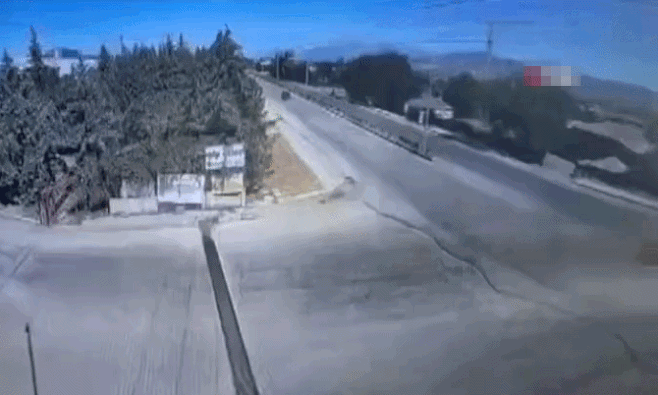
Questions have been formally raised regarding whether the junction was adequately equipped with functional traffic lights, yield signs, or speed-calming measures such as rumble strips or raised crosswalks. Intersections connecting industrial districts to major urban arteries frequently experience high volumes of mixed traffic, combining heavy commercial vehicles, delivery vans, and standard passenger automobiles. Transport safety advocates argue that municipal authorities must implement proactive infrastructure enhancements in such zones to mitigate the inherent risks posed by human error and unlawful driving behaviors.
Traffic engineers emphasize that modern urban design relies heavily on the "Safe System" approach, which assumes that human beings will inevitably make mistakes and that road infrastructure and vehicle technology must be engineered to prevent those mistakes from resulting in fatal outcomes. The absence of adequate visual clearances, combined with potentially ambiguous right-of-way indicators, can transform standard intersections into hazardous zones. Municipal officials in Elazığ have confirmed that a comprehensive audit of the intersection’s current signaling and visibility parameters is currently underway as part of the broader official investigation.
Official Investigations and Legal Proceedings
The Elazığ Chief Public Prosecutor’s Office, in coordination with the regional traffic police department, has launched a multi-faceted investigation to determine the exact legal liabilities and contributing factors of the fatal crash. Investigators are analyzing multiple streams of evidence, including the recovered surveillance footage, black-box data retrieved from the vehicles (if available), toxicology reports of the drivers, and witness testimonies gathered from individuals present at the scene.
Authorities have indicated that preliminary charges of vehicular manslaughter resulting from negligence are being considered pending the final conclusion of the forensic accident reconstruction report. The identity of the driver of the Mercedes sedan has been recorded by police, and formal interrogation sessions are scheduled to establish whether factors such as mechanical failure, impairment, or extreme speeding contributed to the catastrophic event.
The families of the deceased victims have been notified through liaison officers, and arrangements are being coordinated to transport the remains back to their home provinces for final funeral rites. Meanwhile, corporate representatives from the industrial facility where the victims were employed have released brief statements expressing profound grief over the loss of their colleagues, highlighting their dedication and professionalism during their assignment in Elazığ.
Broader Implications for Urban Road Safety in Turkey
The tragic incident in Elazığ resonates within a broader national conversation concerning road safety, traffic enforcement, and driver accountability across Turkey. Despite ongoing government initiatives and nationwide campaigns aimed at reducing traffic-related fatalities, excessive speed and non-compliance with intersection right-of-way rules remain persistent challenges for municipal authorities.
According to statistical data compiled by the Turkish General Directorate of Security, a significant proportion of urban traffic accidents occur at intersections, frequently driven by factors such as failure to yield, distracted driving, and disregard for speed limits. Safety advocates argue that while punitive measures—such as increased fines and point deductions on driver licenses—are essential, they must be complemented by advanced automated enforcement technologies, such as red-light cameras and point-to-point speed detection systems, particularly in high-risk industrial and commercial corridors.
Furthermore, labor organizations and industrial park management groups in Elazığ have called for a comprehensive review of commuter safety protocols for workers traveling between cities for professional duties. Ensuring the safety of regional business travelers requires not only corporate risk assessments but also a steadfast commitment from local governments to maintain universally safe roadways.
As the legal proceedings progress and municipal authorities evaluate the infrastructural demands of the accident site, the community in Elazığ continues to mourn the lives lost. The incident serves as a grim reminder of the fragile nature of urban transit safety and the devastating price of vehicular recklessness at city intersections.