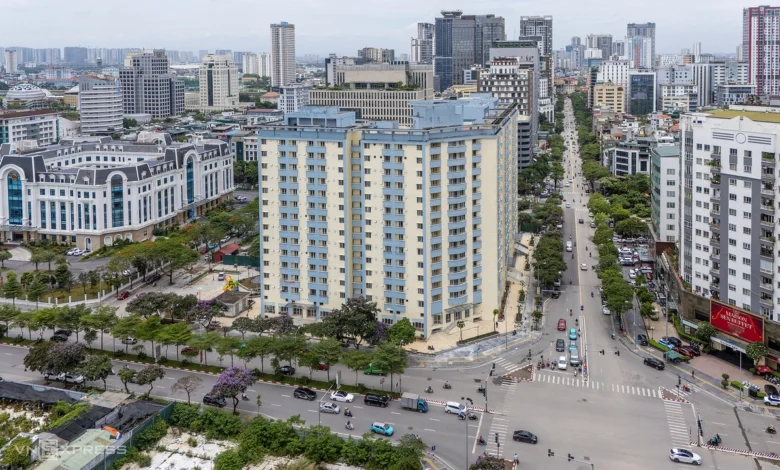
The Vietnamese government has officially issued Resolution 303, dated September 30, marking a pivotal shift in national housing policy by mandating a significant increase in social housing stock specifically designated for rent. This directive requires local authorities to ramp up the development of rental-focused social housing to over 191,000 units, aiming to recalibrate the market balance against the prevailing trend of rent-to-own or direct-sale models over the next four years.
This strategic move comes as the government acknowledges both the progress made in the social housing sector and the persistent, structural supply-demand mismatch. While there has been a positive trajectory in recent years, the market remains heavily skewed toward ownership, leaving a vast segment of the low-income labor force—the backbone of the industrial economy—without access to affordable, stable rental options. By pivoting toward a rental-heavy model, the administration hopes to alleviate the living costs for millions of workers, thereby enhancing labor productivity and ensuring greater macroeconomic stability.
Addressing the Housing Supply Gap
For years, the Vietnamese real estate market has been defined by a focus on "homeownership" as the primary goal. However, in major urban hubs like Ho Chi Minh City, Hanoi, and various industrial zones, skyrocketing property prices have rendered homeownership unattainable for the average worker. Resolution 303 addresses this by categorizing rental social housing as a strategic priority, essential for social security.
The government’s new mandate requires that between 2026 and 2030, provinces and cities must develop a total of 899,857 social housing units. Of this ambitious total, 191,023 units—approximately 21%—are explicitly earmarked for rental purposes, while the remaining 708,834 units will be allocated for sale or rent-to-own schemes. This shift is designed to ensure that those who are not yet financially ready to purchase a home can still secure safe, modern, and legally protected housing.
Geographic Priorities and Urban Development
The directive places significant emphasis on "Transit-Oriented Development" (TOD) and industrial clusters. The government has instructed that new social housing projects be located in regions with high economic density and along major economic corridors. This is not merely a construction mandate but an urban planning initiative. By integrating housing with public transport networks, the government aims to reduce commuting times and improve the quality of life for workers who currently reside in substandard, informal accommodations.
The allocation of targets reflects the concentration of the labor force across the country:
- Ho Chi Minh City: 181,257 units (the highest national quota).
- Hanoi: 84,000 units.
- Dong Nai: 60,054 units.
- Hai Phong: 32,850 units.
- Da Nang: 26,279 units.
- Can Tho: 13,250 units.
- Hue: 10,600 units.
Streamlining the "Green Lane" for Investment
A recurring critique of past social housing initiatives has been the cumbersome administrative process. To counter this, Resolution 303 establishes a "green lane" policy, granting priority status to social housing projects. Local governments are now required to run administrative procedures—including land acquisition, planning approval, environmental assessments, and construction permits—in parallel rather than sequentially. This is expected to slash project approval times significantly.
The Ministry of Construction has been tasked with overseeing the implementation and reporting progress to the Prime Minister. Furthermore, the resolution replaces the previous 07/2026 guidelines, providing a more robust framework for local People’s Committees to integrate social housing development into their annual economic plans.
Financial Mechanisms and Private Sector Engagement
One of the core challenges identified by the government is the lack of capital. Resolution 303 mandates that local governments prioritize budget allocations through local Housing Funds. However, the state recognizes that public funding alone is insufficient. Consequently, the resolution calls for a more active mobilization of the private sector.
Local authorities are now tasked with creating incentive structures to attract private developers who already hold suitable land banks. These incentives may include streamlined tax breaks, expedited infrastructure support, and assistance with financial capacity verification to ensure that the proposed projects are not only approved but also successfully completed.
Sociological and Economic Implications
The long-term vision behind this policy is the stabilization of the industrial labor market. In recent years, the high cost of living has been a primary driver of worker turnover in industrial zones. By providing affordable, long-term rental options, the government aims to anchor the labor force in these zones, reducing the social strain of migration and urban overcrowding.
Economists observing this shift note that moving toward a rental market is a natural progression for a maturing economy. In developed nations, rental housing often serves as a primary vehicle for labor mobility. By codifying this in the national agenda, Vietnam is attempting to shift the cultural paradigm from "forced ownership" to "functional housing."
Chronology of Reform
- Prior to 2026: Heavy emphasis on construction volume for sale; high barriers for low-income workers; limited rental options.
- Early 2026: Issuance of Resolution 07/2026, which initiated the push for social housing but lacked the specific focus on rental-only units.
- September 30, 2026: Official issuance of Resolution 303, formalizing the 191,000-unit rental target and creating the "green lane" administrative process.
- 2026–2030 (Implementation Phase): Ongoing monitoring by the Ministry of Construction, with local governments mandated to complete projects within the fiscal year of their launch.
Challenges Ahead
Despite the clear directives, several hurdles remain. The success of this policy depends heavily on the execution capabilities of local governments. Identifying land that is both "conveniently located" and affordable enough to keep rents low is a delicate balancing act. Furthermore, private developers remain cautious about the lower profit margins inherent in rental housing compared to high-end commercial sales.
To mitigate these risks, the government’s insistence on "integrated technical and social infrastructure" is crucial. By ensuring that schools, healthcare, and transport are part of the master plan for these social housing developments, the government is not just building roofs; it is building communities.
Conclusion
The push for 191,000 rental units is a bold intervention that signals the government’s commitment to addressing the housing crisis at its core. By aligning economic planning with social welfare, Vietnam is setting the stage for a more resilient labor market. While the logistical and financial complexities of such an ambitious scale are significant, the framework established by Resolution 303 provides a clear, actionable roadmap for the next four years. The ultimate success will be measured by the ability of local authorities to translate these quotas into habitable, affordable, and sustainable homes for the workers who drive the nation’s economic engine.